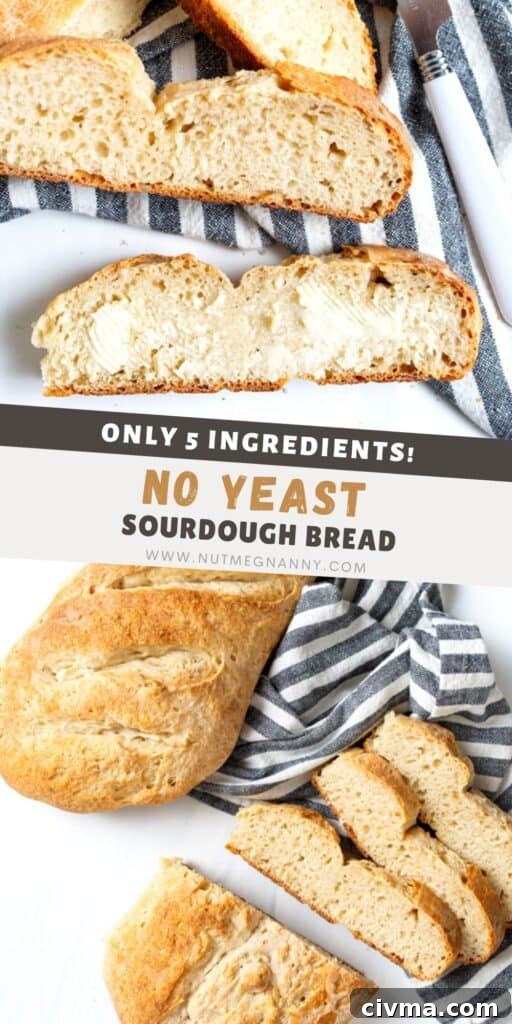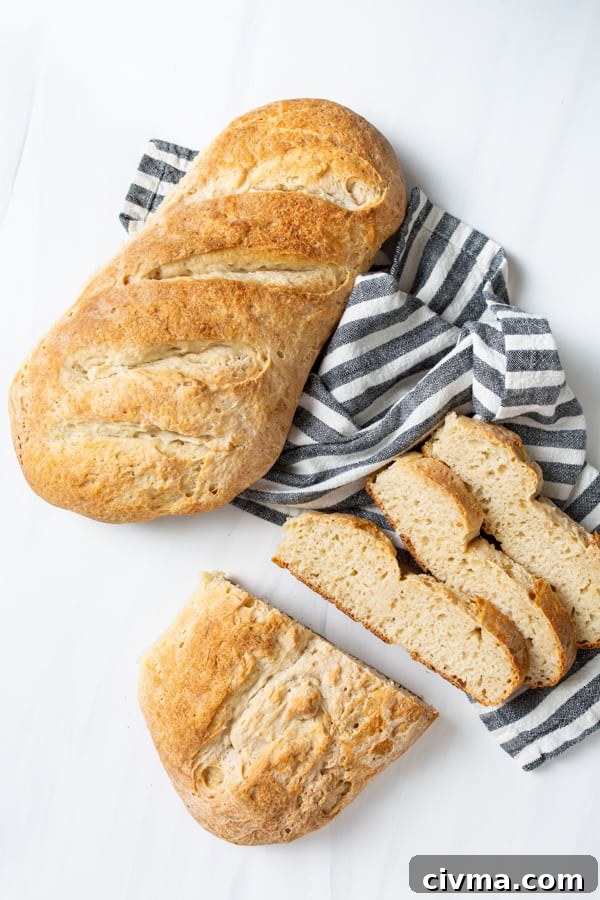
This no yeast sourdough bread recipe is wonderfully tangy, simple to make, and made with just 5 ingredients. It does take time from start to finish, but most of that time is hands-off while the dough rests, rises, and develops its classic sourdough flavor.
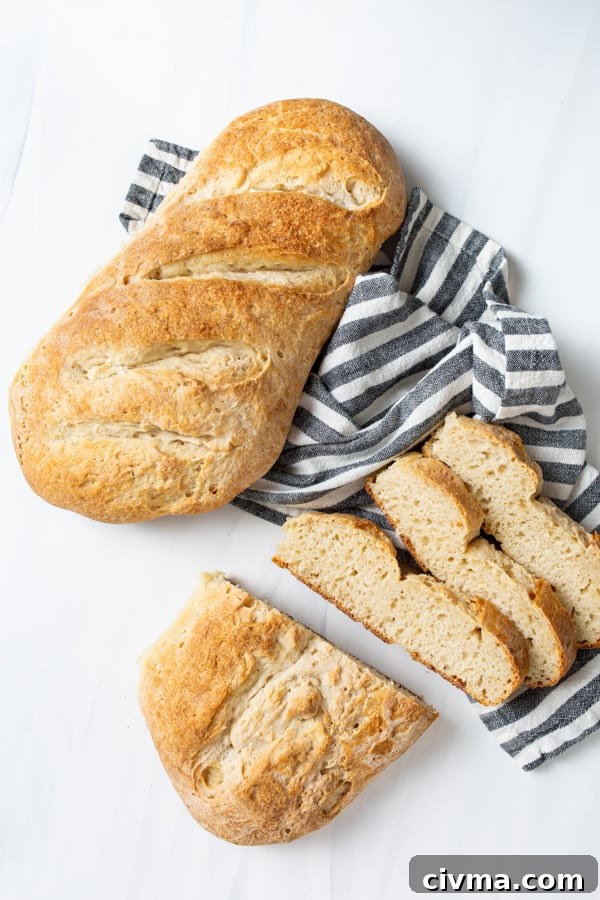
Disclosure: King Arthur Flour sent products at no charge, but all opinions are my own.
There is never a wrong time to bake bread, especially when that bread is a deeply flavorful sourdough. This no yeast sourdough bread is a great recipe to keep on hand for days when you do not have commercial yeast available or simply want to bake bread the traditional way, using the natural strength of a fed sourdough starter.
Because this recipe does not use added yeast, it needs more time than a quick sandwich loaf. The dough rests at room temperature, chills overnight, rises slowly, and then bakes into two golden loaves with a bold, tangy flavor. The process may look long, but the active work is very manageable. Most of the recipe is waiting for the starter and dough to do what they naturally do best.
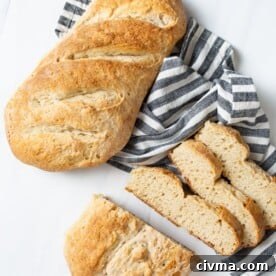
The result is a crusty, chewy, extra tangy sourdough bread that tastes wonderful with salted butter, makes excellent toast, and freezes beautifully. Since the recipe makes two loaves, you can enjoy one right away and save the other for later.
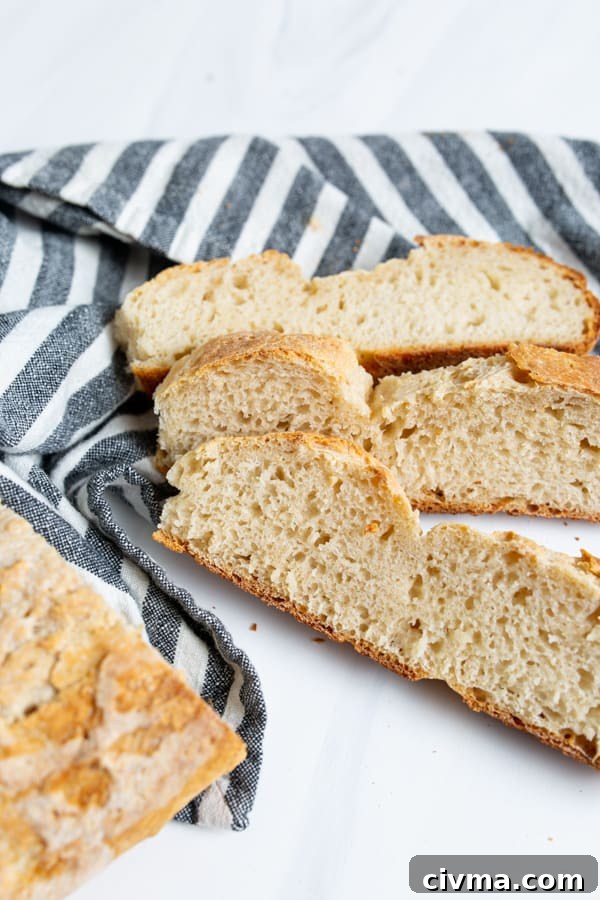
How No Yeast Sourdough Bread Works
The sour flavor in sourdough bread comes from the natural fermentation of the dough. As the dough rests and ferments, acids develop and create that unmistakable sourdough taste. Chilling the dough encourages a sharper, tangier flavor, which is why this recipe includes an overnight rest in the refrigerator.
This method is ideal if you love sourdough bread with a stronger bite. The starter provides the natural leavening, while the long rest gives the dough time to build flavor and structure. If you are new to sourdough baking, this recipe is a good place to begin because the ingredient list is short and the instructions are straightforward.
A strong, well-fed sourdough starter is important for success. Since there is no added yeast, the starter is responsible for helping the dough rise. Once the loaves are baked, they are perfect for slicing, toasting, serving with soup, or spreading with plenty of butter.
Do You Need Yeast for Sourdough Bread?
No. Traditional sourdough bread does not require commercial yeast when you have an active, healthy sourdough starter. The starter contains the natural leavening needed to help the dough rise and develop flavor.
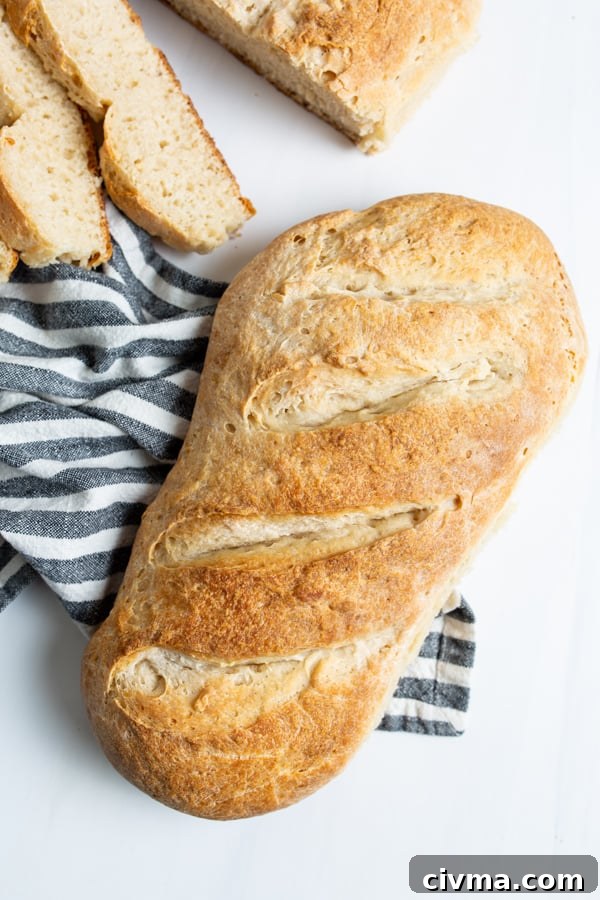
Freezing Sourdough Bread
This sourdough bread freezes very well, making it a practical recipe when you want fresh homemade bread without baking every few days. After the loaf has cooled completely, wrap it tightly in plastic wrap and place it in a large freezer-safe zip-top bag.
For the best flavor and texture, use frozen sourdough bread within 3 months. It can be stored longer, but the taste is usually best when enjoyed within that time frame. To defrost, remove the bread from the freezer and let it thaw on the countertop.
What Can I Use Sourdough Bread For?
Fresh sourdough bread is delicious on its own, especially with salted butter, but it is also useful in many savory and breakfast-style recipes. Its sturdy texture and tangy flavor make it excellent for salads, stuffing, toast, and homemade croutons.
- Use cubed sourdough bread in a grilled sourdough panzanella salad.
- Turn it into a flavorful bacon corn sourdough stuffing.
- Toast slices and top them with ricotta and tomato for a simple breakfast or lunch.
- Cut it into cubes and bake homemade garlic butter croutons.
- Use it as the base for a sourdough kale, sausage, and bacon stuffing.
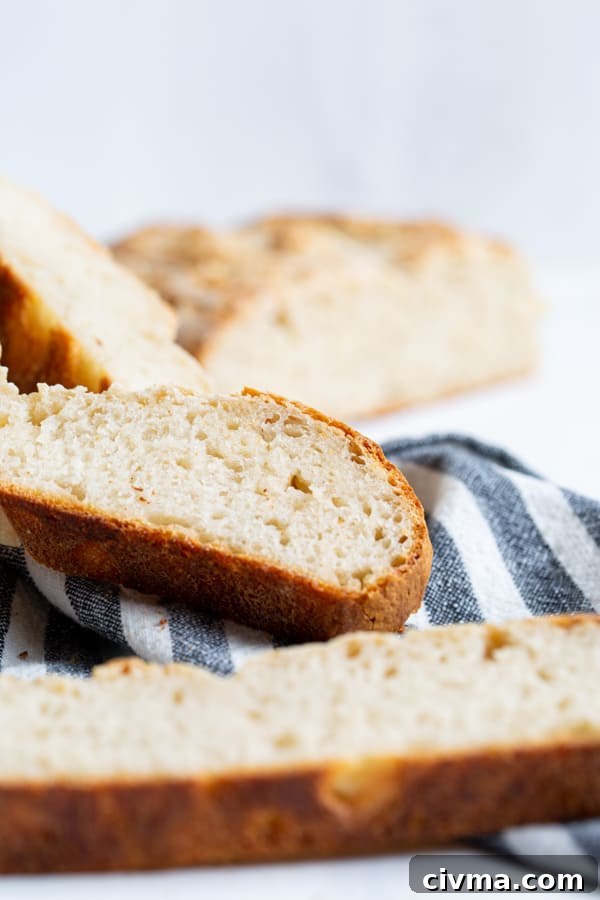
What Is Sourdough Discard?
If you are new to sourdough baking, sourdough discard is the portion of starter that is removed before feeding. To keep a starter active, you refresh a small amount with fresh flour and water. The leftover starter is called discard.
Discard can be thrown away, shared, composted, or used in other recipes. If you keep your sourdough starter on the counter and feed it often, using the discard in baked goods is a helpful way to reduce waste.
How Can I Use My Sourdough Discard?
Sourdough discard can add flavor and texture to many baked goods. It works especially well in quick breads, breakfast cakes, and sweet loaves.
- Make sourdough discard banana bread for a new twist on a classic favorite.
- Use discard in a cinnamon crumb cake with a generous buttery crumb topping.
- Try cinnamon raisin sourdough bread for a sweet breakfast loaf that is delicious toasted with butter.
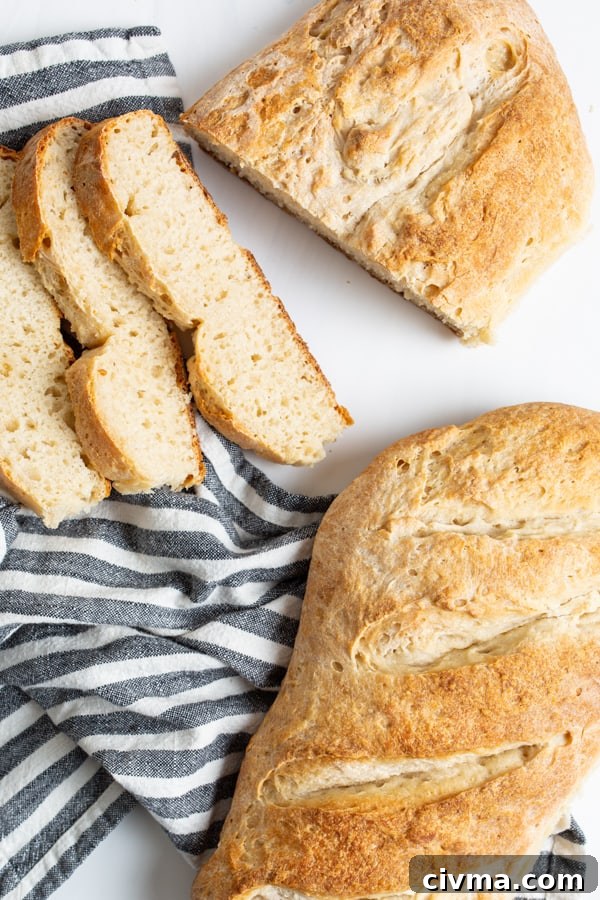
FAQ for This No Yeast Sourdough Bread Recipe
Add 1/2 teaspoon sour salt or citric acid along with the kosher salt for a sharper flavor.
Yes. Wrap cooled sourdough bread in plastic wrap, place it in a freezer-safe bag, and freeze for up to 3 months for the best taste.
Let the frozen loaf thaw on the countertop until fully defrosted.
For best results, use a strong starter that has been fed for at least one week. A more mature starter may produce better and more reliable results.
Unbleached flour is recommended, though the recipe has also worked with bleached flour.
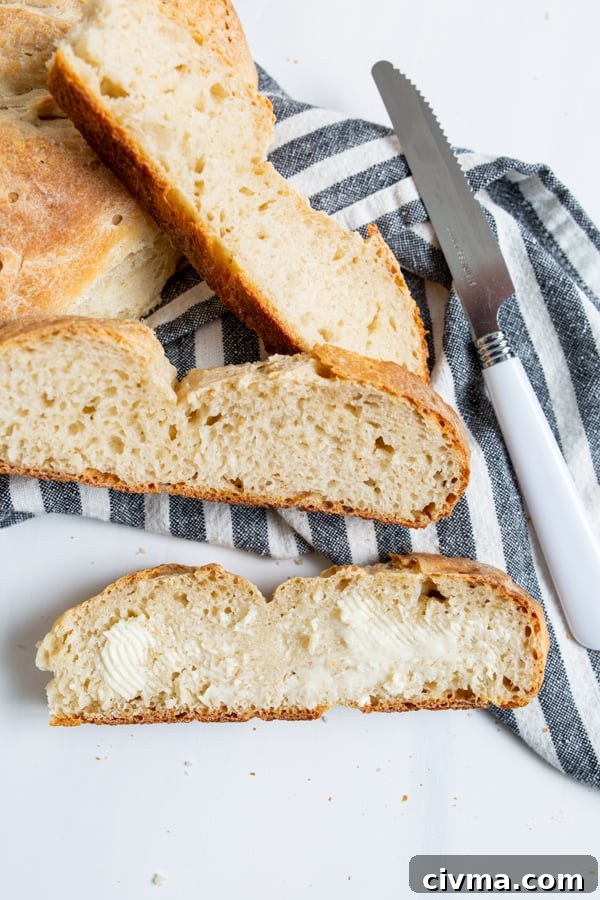
More Bread Recipes
- Cinnamon Raisin Sourdough Bread
- Pumpkin Yeast Bread
- Cranberry Rosemary Focaccia
- Sourdough Discard Banana Bread
No Yeast Sourdough Bread
Equipment
-
All-purpose flour
-
Large mixing bowl
-
Fed sourdough starter
Ingredients
- 1 cup fed sourdough starter, 227 grams
- 1-1/2 cups lukewarm water, 340 grams
- 5 cups all-purpose flour, divided, 602 grams
- 1 tablespoon granulated sugar
- 2-1/4 teaspoons kosher salt
Instructions
-
In a large bowl, combine the sourdough starter, water, and 3 cups of flour. Beat vigorously for 1 minute.
-
Cover the bowl and let the mixture rest at room temperature for 4 hours.
-
Refrigerate overnight, about 12 hours. The dough should expand and relax during this rest.
-
After chilling, add the remaining 2 cups of flour, sugar, and kosher salt.
-
Knead by hand or with a dough hook until a smooth dough forms. The flour will gradually work into the dough.
-
Cover and let the dough rise until light, airy, and filled with visible bubbles. This may take up to 5 hours or longer, depending on the strength of the starter and the temperature of the kitchen. For best structure, gently deflate and fold the dough once every hour.
-
Remember that sourdough without added yeast can be unpredictable. Use the timing as a guide and focus on how the dough looks and feels.
-
Transfer the dough to a lightly floured or lightly greased work surface and divide it in half.
-
Gently pat each piece to release large air bubbles. Shape each portion into a loose round, cover, and rest for about 10 minutes.
-
To shape into bâtards: Place the dough on a lightly floured surface and gently stretch it into an oval.
-
Fold the top third toward the center and press to seal. Fold the top corners toward the center, press again, then repeat the folding process. Fold the dough in half and seal the seam firmly.
-
Turn the dough seam-side down and gently roll it with cupped hands to round the surface and slightly taper the ends.
-
Place the shaped loaves on a lightly greased or parchment-lined baking sheet.
-
Cover and let rise until very puffy, about 2 to 4 hours or longer. The loaves may spread before baking, but they will lift in the oven.
-
Near the end of the rise, preheat the oven to 425 degrees F.
-
Spray the loaves with lukewarm water to help keep the crust soft during the first part of baking.
-
Slash the loaves with one long cut, two diagonal cuts, or another pattern of your choice. Make the cuts fairly deep using a serrated bread knife or lame.
-
Bake for 25 to 30 minutes, until the bread is a deep golden brown.
-
Remove from the oven and cool on a rack before slicing.
-
Store loosely wrapped at room temperature for several days, or freeze for longer storage.
Notes
Nutrition
Calories: 1220kcal
Carbohydrates: 256g
Protein: 35g
Fat: 4g
Saturated Fat: 1g
Polyunsaturated Fat: 2g
Sodium: 4374mg
Fiber: 9g
Sugar: 8g
Nutrition information is automatically calculated and should be used only as an approximation.
Additional Info