Traditional Sicilian Fish Couscous from Trapani
Fish couscous is one of the most treasured dishes in the culinary tradition of Trapani, a coastal town in western Sicily. This recipe comes from a family tradition and is inspired by the way it was prepared by my grandmother. It is a dish with clear North African roots, adapted over time to the local ingredients of Sicily, especially fresh fish, extra virgin olive oil, onions, garlic, and semolina.
In Trapani, fish has always been an essential part of everyday cooking. This couscous was once considered a simple, humble dish because it was made with ingredients that were easy to find and relatively inexpensive. Today, however, it is one of the most beloved Sicilian recipes and is known throughout Italy and beyond. Unlike instant couscous, this traditional version is made from semolina and steamed slowly, allowing it to absorb the deep flavor of the fish broth. It takes time, but the result is rich, fragrant, and unforgettable.
For the Fish Broth
Ingredients:
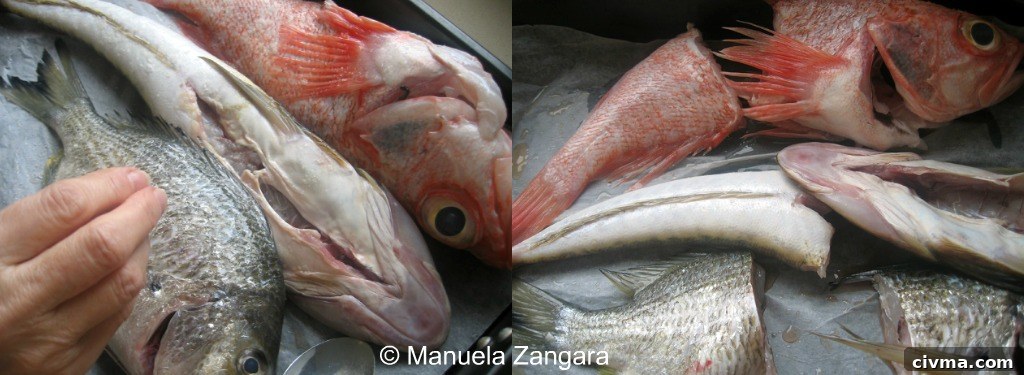
1.5 to 2 kg – 3.3 to 4.4 lbs fish for soup, cleaned, salted, and with the heads on
7 to 8 garlic cloves
3 medium onions, minced
1 tbsp parsley, chopped
1 small tin double tomato concentrate
10 tbsp extra virgin olive oil
½ to ¼ tsp salt, or to taste
4 lt – 135 oz. water
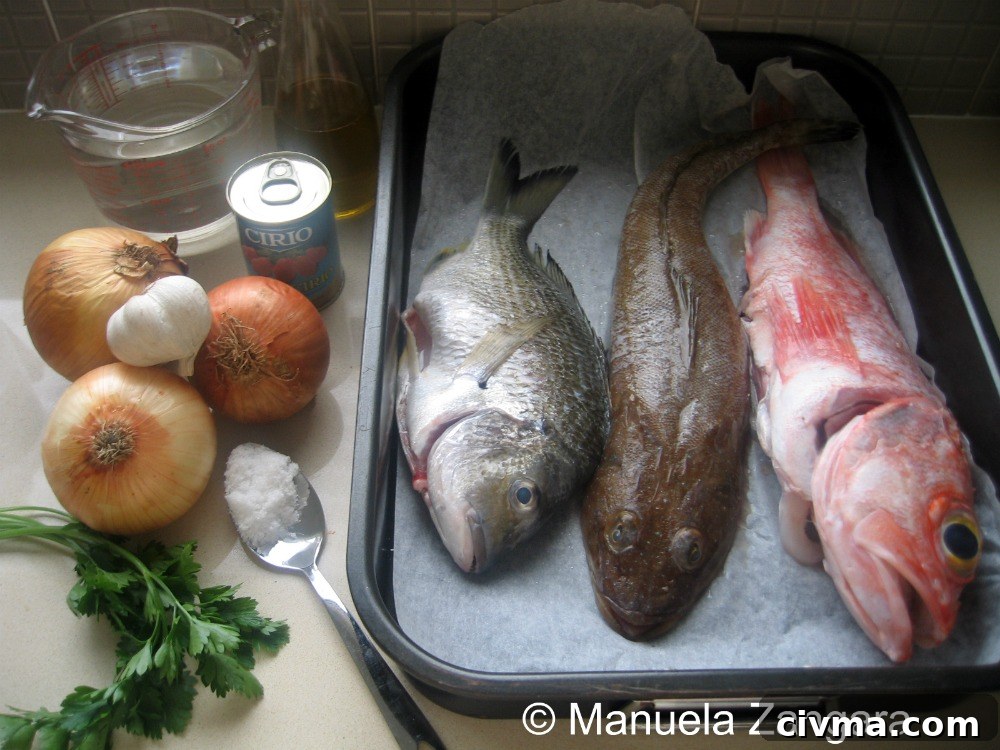
Begin by crushing half of one onion together with all the garlic cloves and the parsley. A mortar and pestle is ideal for this step, as it creates a fragrant paste that will give the broth its characteristic flavor. Set this mixture aside while you prepare the base of the soup.
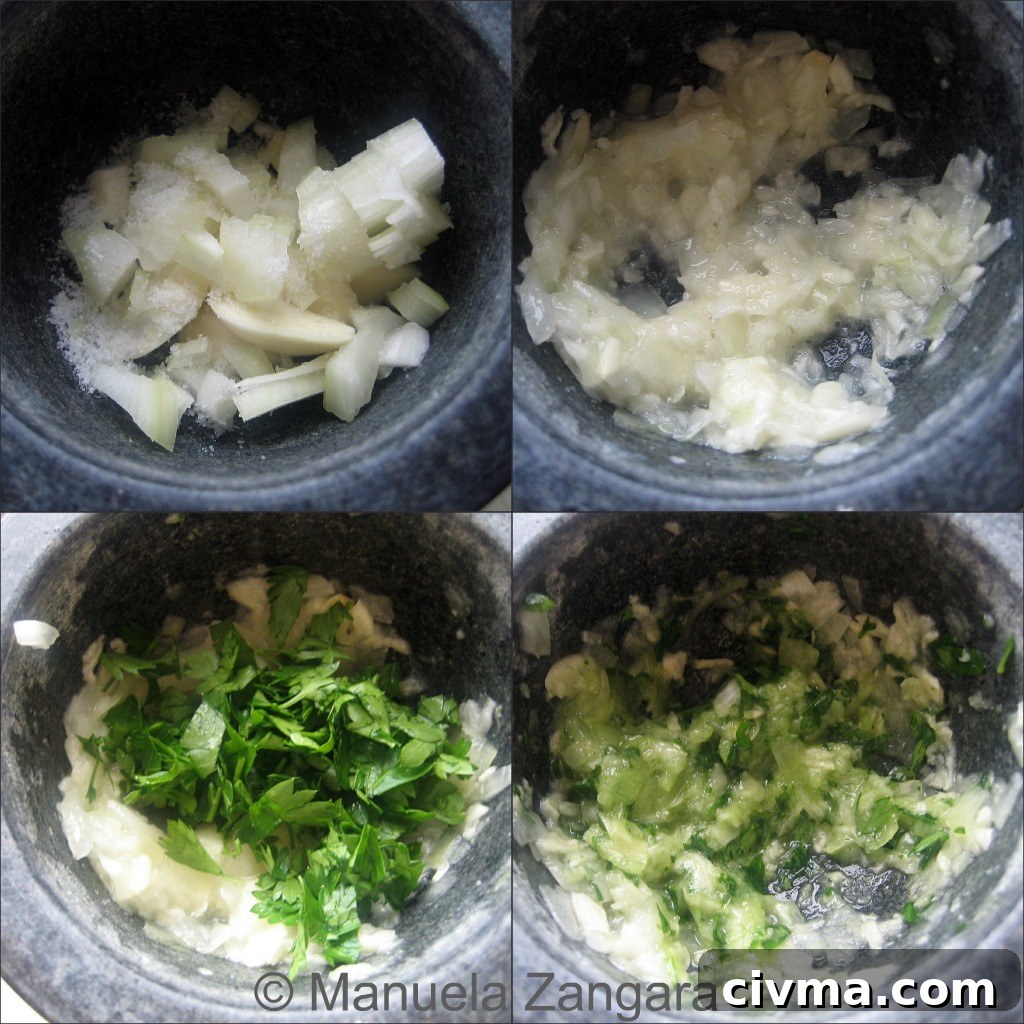
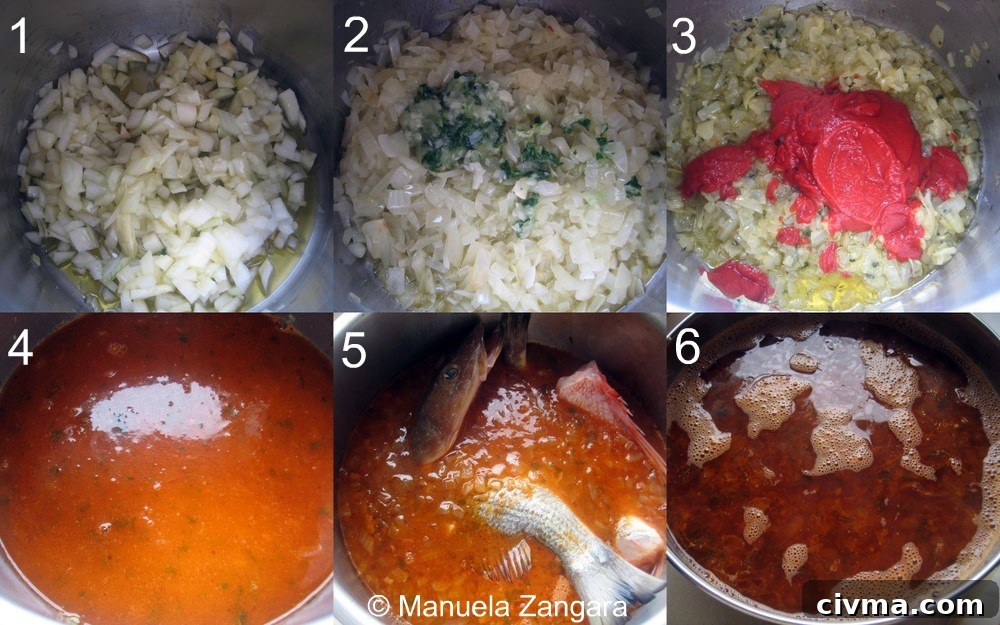
Mince the remaining onions and place them in a large pot with the extra virgin olive oil. Cook gently over very low heat. The onions should soften and become translucent, but they must not brown. After about 5 minutes, add the crushed garlic, onion, and parsley mixture. Stir well and cook for another 3 to 4 minutes.
Add the tomato concentrate, mix carefully, and let it cook for a couple of minutes so the flavor becomes deeper and more rounded. Traditionally, my grandmother would remove 2 or 3 tablespoons of this mixture at this point and reserve it to add to the couscous later. This step is optional, but it adds an extra layer of flavor.
Pour in the water and bring everything to a boil. Add the fish and salt, then lower the heat and simmer gently for about 1 hour. The broth should become aromatic and full-bodied, with the fish releasing all its flavor into the liquid.
Note: Cooking time depends on the size of the fish. If you are using large fish, cut them in half horizontally. After about 30 minutes, remove the tail sections and set them aside so they can be served later with the couscous. Continue simmering the broth with the heads, which can be discarded after straining. If the fish are small, they may break down almost completely in the broth, which is perfectly fine.
Strain the stock through a sieve and keep it warm. If you have reserved pieces of fish, they can be added back later when serving.
For the Couscous
Serves 6 to 8 people
Ingredients for the “’ncucciatura”
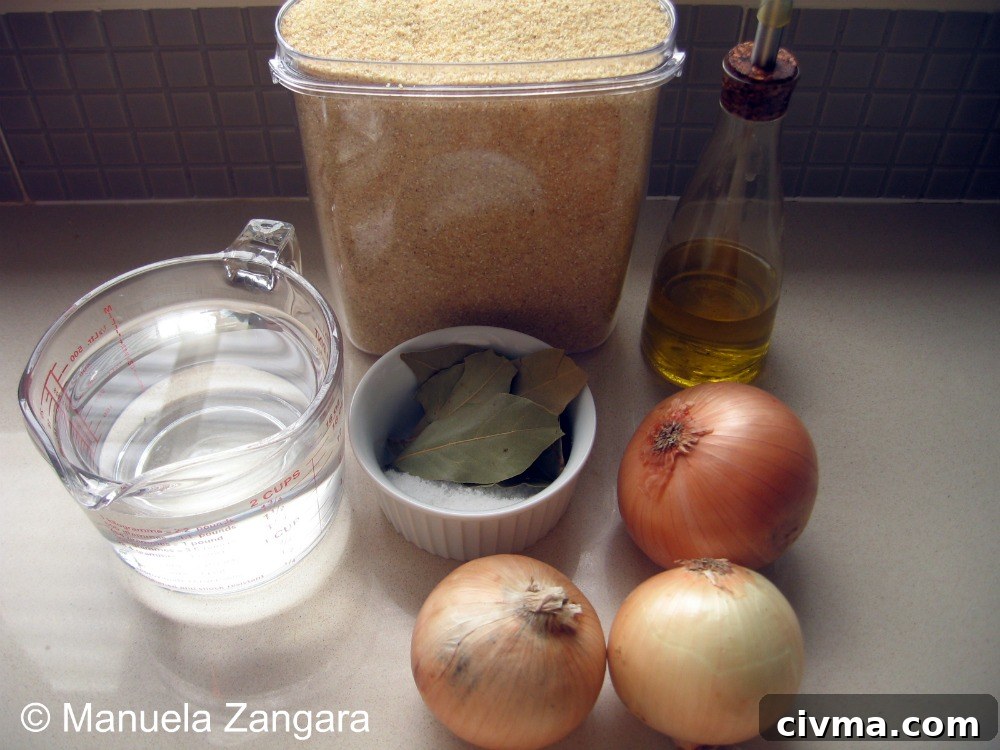
1 kg – 2.2 lbs semolina*
5 bay leaves
2 medium onions, roughly chopped
250 ml – 1 cup salted water, seasoned like pasta water with ½ to 1 tbsp salt
½ tsp freshly ground pepper
200 ml – 7 oz. extra virgin olive oil
*The semolina should be about 1 mm – 0.04 inches thick before cooking.
Ingredients for Steaming
Water for the steamer
5 garlic cloves
10 peppercorns
2 bay leaves
½ cinnamon stick
Flour and water, to seal the steamer
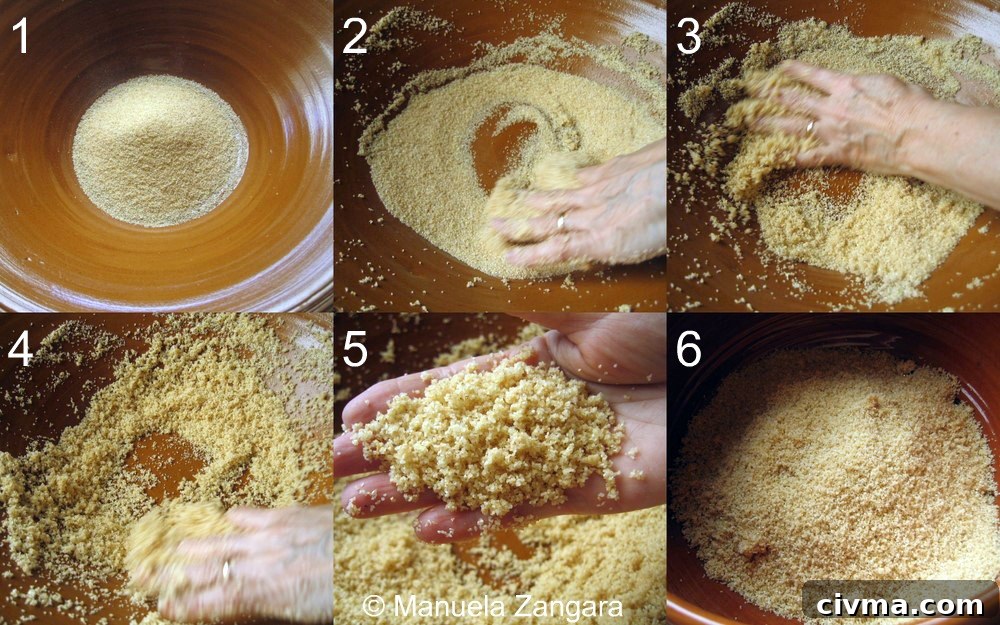
The first step in making couscous from scratch is turning the semolina grains into larger couscous pellets. In Sicilian, this process is called ’ncucciata. It may sound difficult, but it is a simple traditional technique that only requires patience and a gentle hand.
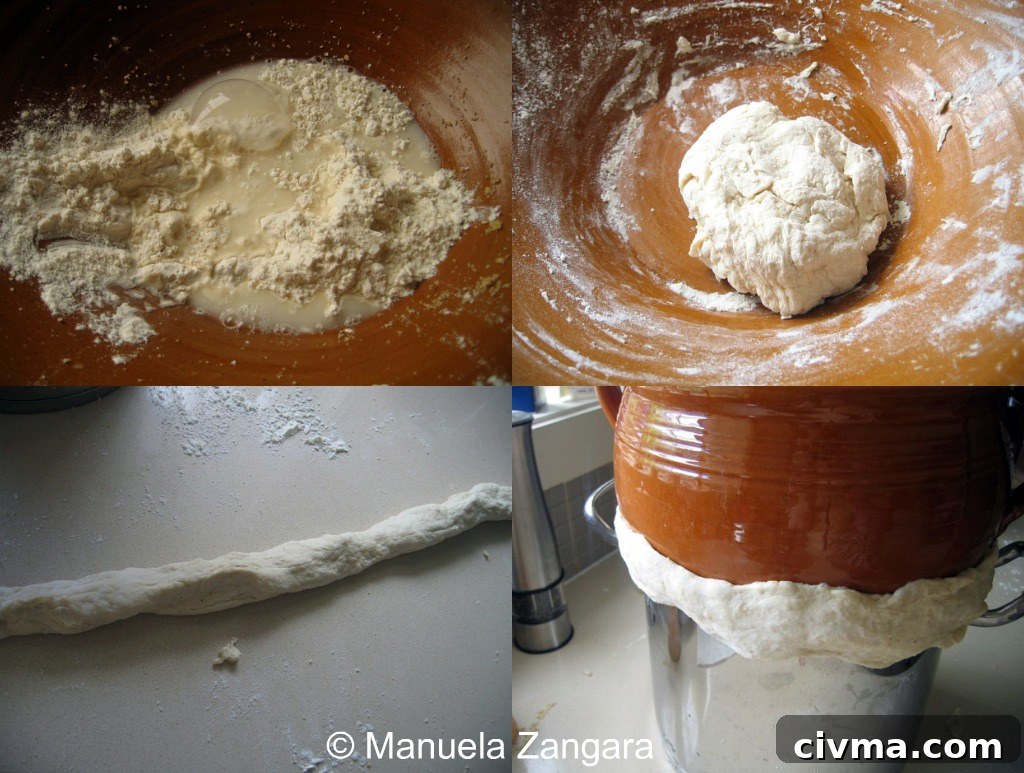
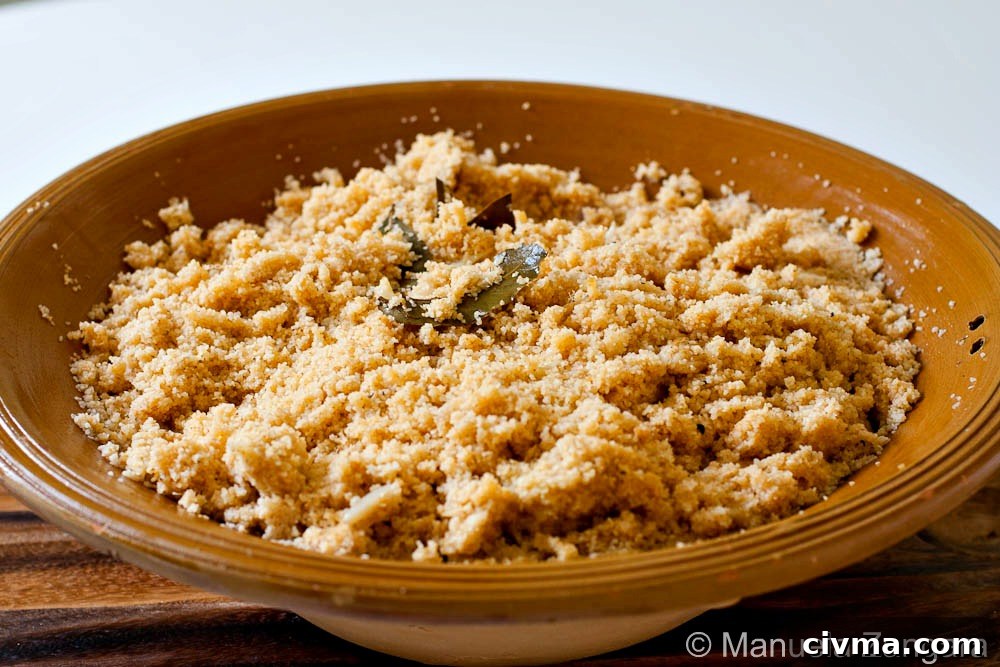
Use a large, wide bowl. A traditional terracotta bowl from Trapani, called a mafaradda, is ideal, but any large shallow bowl can work. Place a couple of handfuls of semolina in the bowl and add 2 or 3 spoonfuls of salted water. Add the water gradually; the mixture should never become soggy. Using your hand, rub and rotate the semolina in circular movements. The grains will begin to come together into small pellets. They should become about two to three times larger than the original semolina grains.
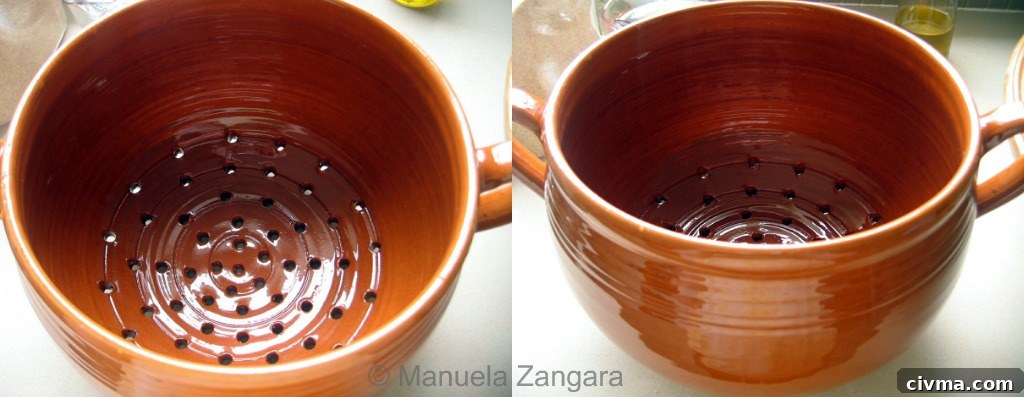
Once each batch is ready, transfer it to the cuscusera, the traditional couscous steamer. Repeat the process until all the semolina has been transformed into couscous. A modern couscous steamer can also be used. It is made of two parts: a lower pot that holds boiling water and an upper perforated pot that allows the steam to rise and cook the couscous gently.
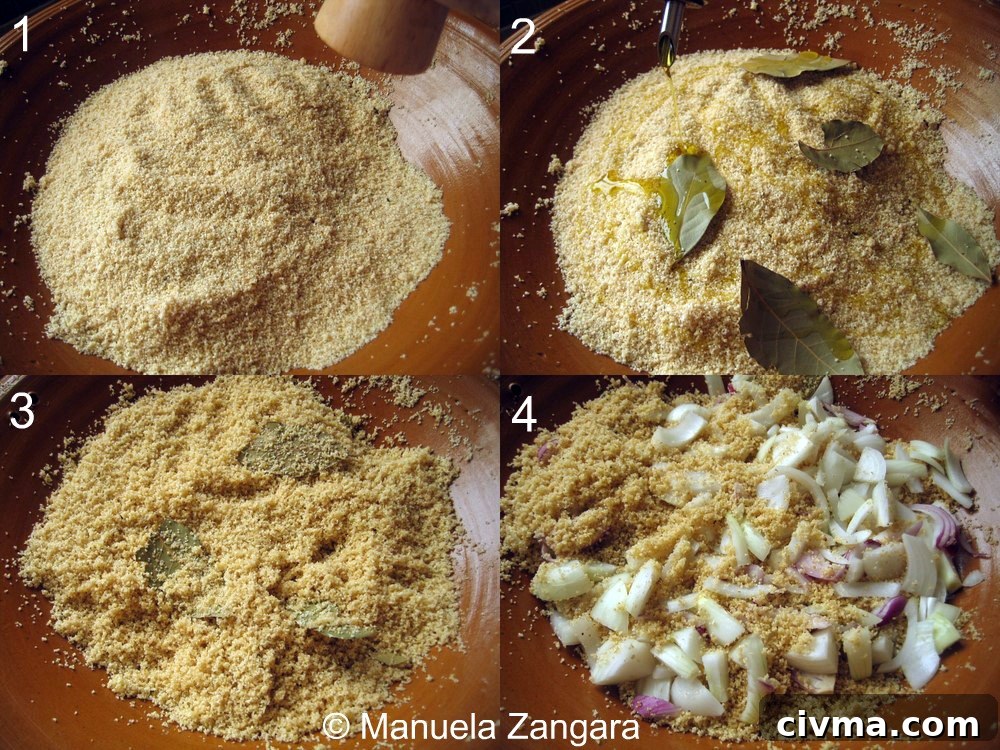
Transfer all the couscous back into the mafaradda. Add the freshly ground pepper and bay leaves. Pour in the extra virgin olive oil and mix with your hand using the same circular movement, making sure there are no lumps. Add the roughly chopped onions and mix again until everything is evenly distributed. Return the couscous to the cuscusera.
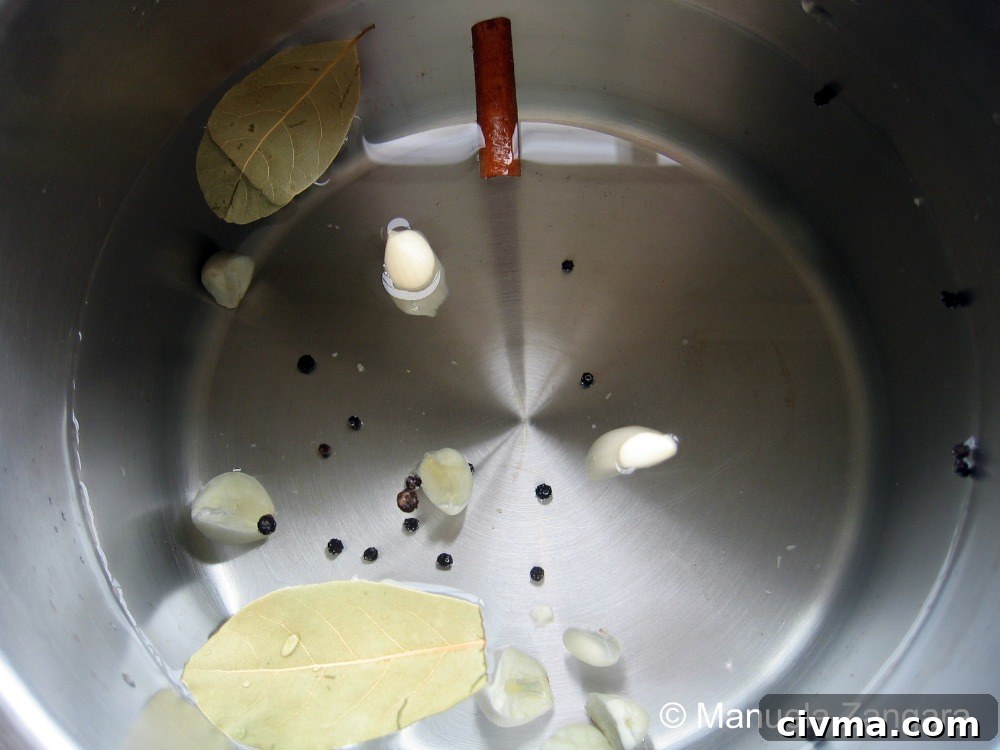
Fill the lower pot of the steamer with water. Add the garlic cloves, cinnamon stick, peppercorns, and bay leaves. These aromatics perfume the steam and give the couscous a subtle, warm fragrance.
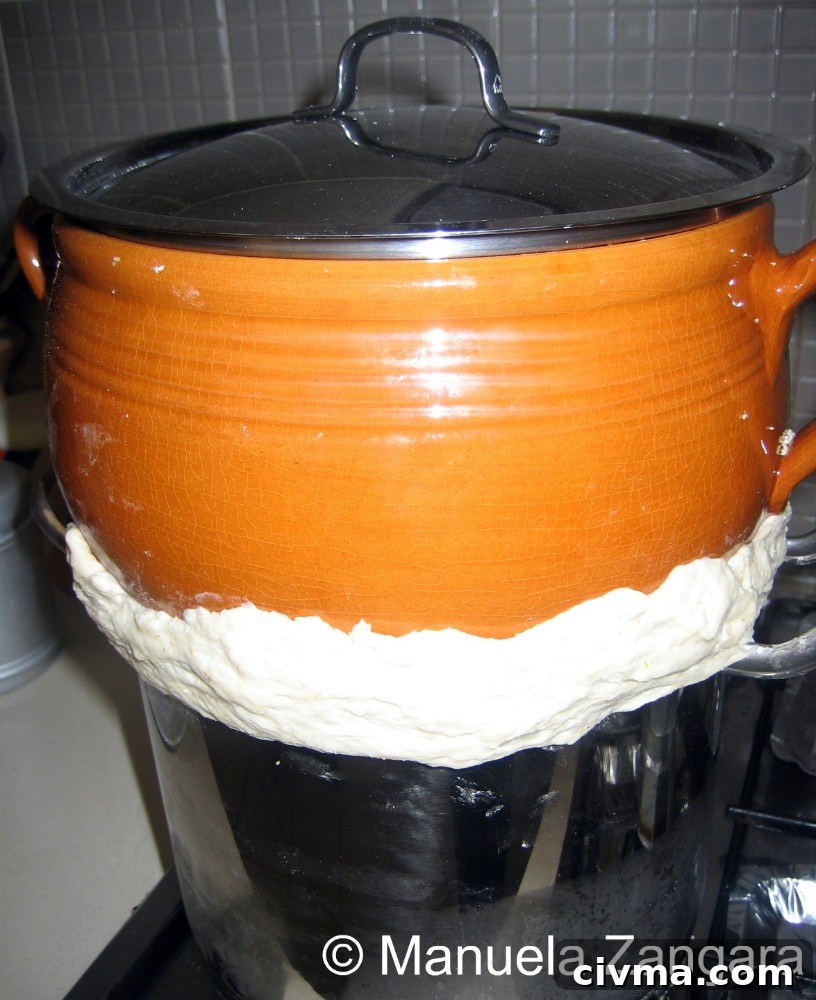
Place the upper pot containing the couscous over the lower pot. Make sure the water does not touch the couscous. To prevent steam from escaping, make a simple sticky dough with flour and water and press it around the joint between the two pots. This helps the steam rise directly through the couscous.
Place the pots over the heat. Start with a high flame for about 10 minutes to bring the water to a boil, then reduce the heat to low. Cook the couscous, partially covered, for about 1 hour and 30 minutes from the moment the water begins to boil. Stir the couscous occasionally so the steam is evenly distributed and the grains cook uniformly.
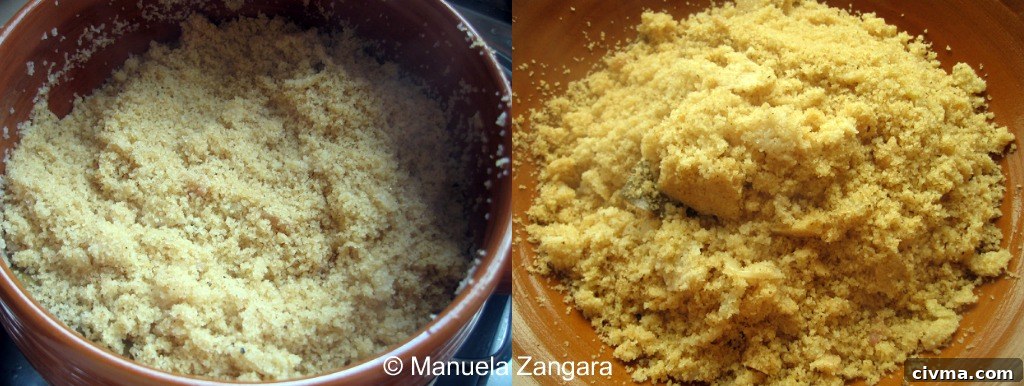
While the couscous is cooking, clean the mafaradda, as it can also be used as a serving dish. When the couscous is fully cooked, transfer it back into the bowl.
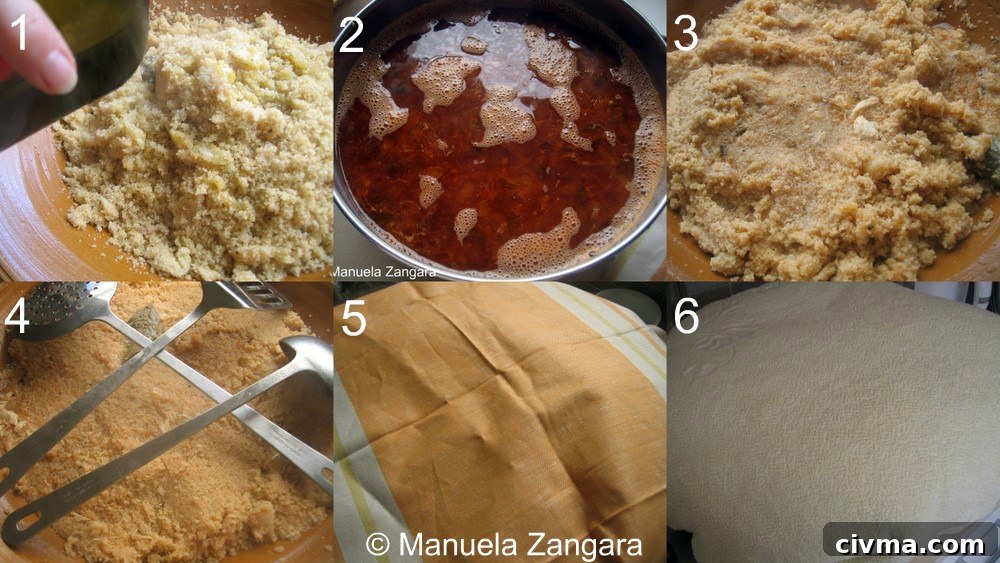
Drizzle the couscous with a little extra virgin olive oil. Add more than half of the hot fish stock, along with the reserved garlic, onion, and parsley mixture if you saved it earlier. At this stage, the couscous should look very moist. Do not worry if it seems too wet; it will absorb the broth as it rests.
Mix well, then cover the couscous completely with a lid or clean towels to keep it hot. Let it rest for 1 hour and 30 minutes. This resting time is essential because it allows the grains to absorb the fish broth and become tender, flavorful, and aromatic.
Serving Sicilian Fish Couscous
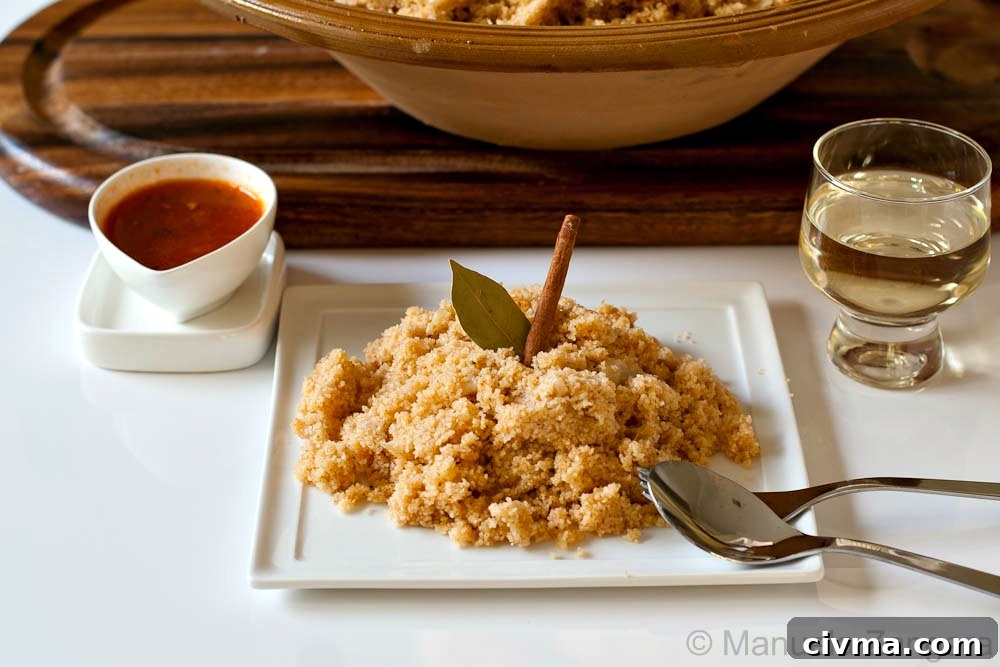
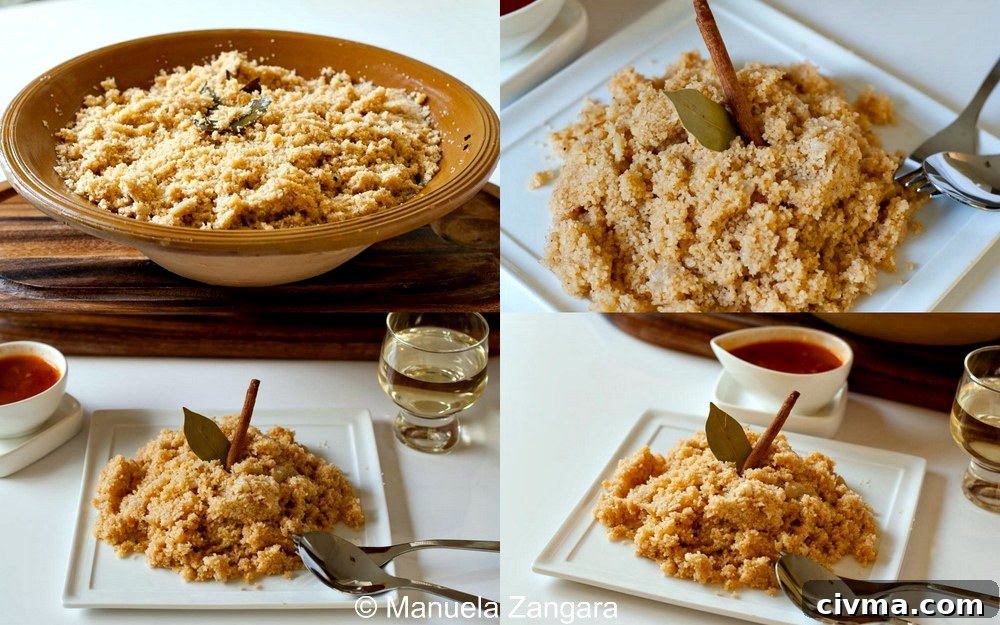
Serve the couscous hot, with the remaining fish stock on the side. If you kept pieces of cooked fish aside, place them on top of the couscous or serve them separately. The best way to enjoy this traditional Sicilian fish couscous is to spoon a little more hot broth over each portion just before eating.
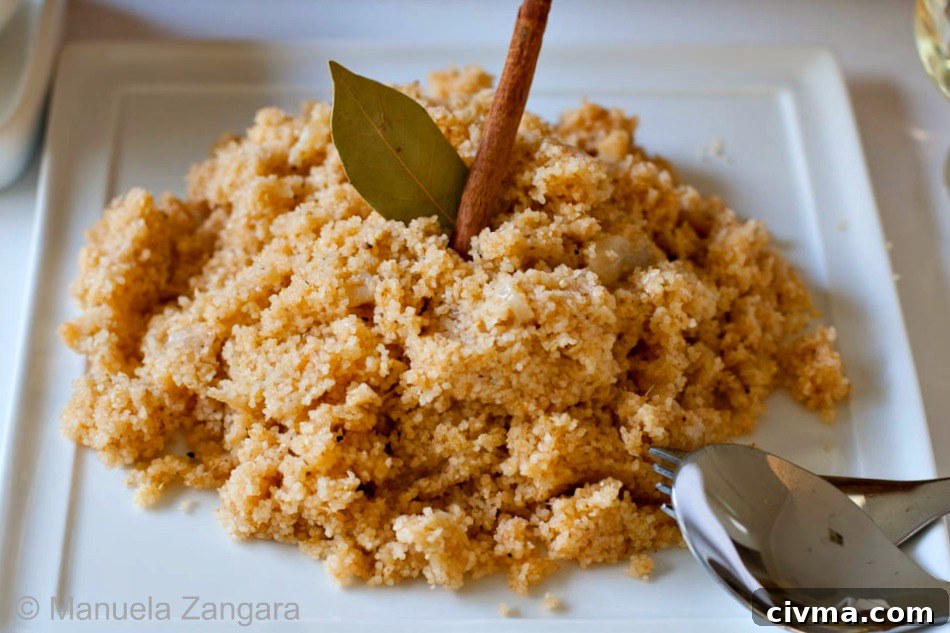
This dish is deeply comforting and full of Mediterranean flavor. The couscous is soft but still textured, the broth is rich and fragrant, and the fish adds the unmistakable taste of the Sicilian sea. It is a recipe that takes time, but every step contributes to the final result.