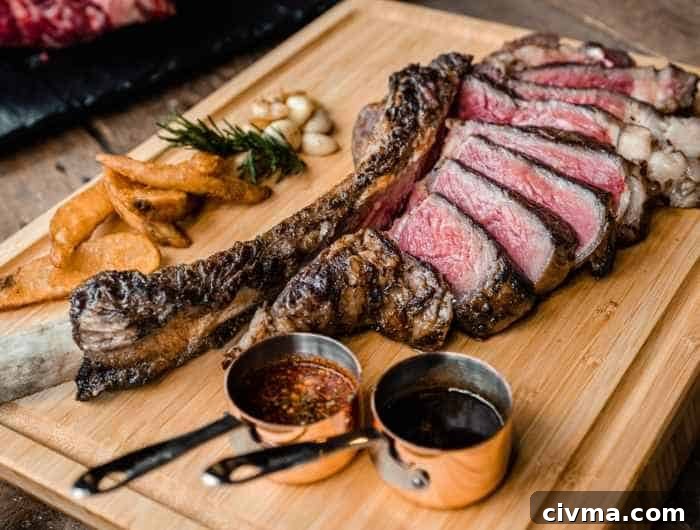
Tomahawk steak is a show-stopping cut of beef rib that commands attention on any grill or plate. What exactly is it, and does it live up to the reputation? This guide covers what a tomahawk steak is, how it differs from similar cuts, where people commonly buy it, and practical tips for prepping and cooking to the right temperature.
- What is a Tomahawk Steak?
- Tomahawk Steak vs. Ribeye
- Tomahawk Steak vs. Cowboy Steak
- Do Tomahawk Steaks Taste Better?
- How Much Does a Tomahawk Steak Cost?
- Where to Buy Tomahawk Steak
- How to Cook a Tomahawk Steak
- Meat Prep
- What are Safe Internal Temperatures?
For chefs and home cooks who value premium ingredients, the tomahawk steak represents an impressive centerpiece. This bone-in ribeye offers both dramatic presentation and a rewarding cooking challenge: get the crust right while keeping the interior juicy and properly cooked.
If you want to learn how to prepare a tomahawk to its full potential, keep reading for practical details on the cut, its flavor profile, and step-by-step cooking options.
What is a Tomahawk Steak?
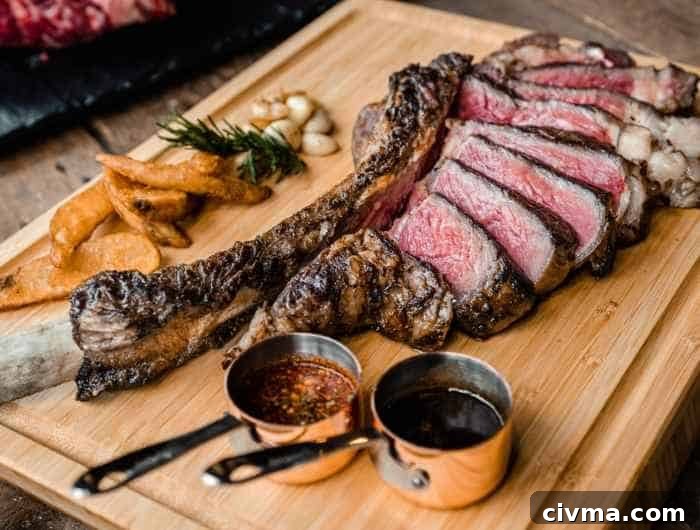
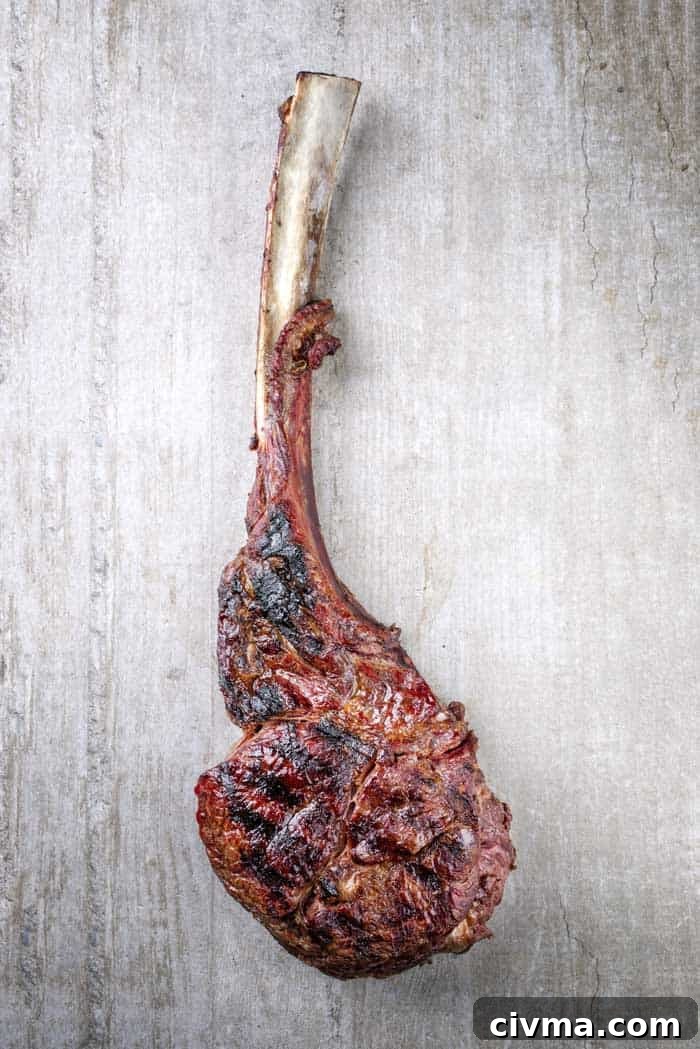
The tomahawk steak takes its name from the long, hatchet-like rib bone that extends from the meat, giving the cut a distinctive, dramatic look. Essentially it is a ribeye steak with a long section of the rib bone left intact and “frenched” — the meat and fat are trimmed cleanly from the bone for presentation.
Typically cut from the rib primal, a tomahawk includes the longissimus dorsi and adjacent muscles that make ribeye steaks so tender and well-marbled. Most tomahawks are at least two inches thick with a bone that often measures several inches, and the whole steak commonly weighs around 2 to 3 pounds.
Tomahawk Steak vs. Ribeye
Both come from the same rib area, so the flavor and marbling are very similar. The main difference is presentation and size: the tomahawk retains the long rib bone and is cut much thicker, while a standard ribeye is boneless or has a shorter bone and is generally smaller and thinner.
Tomahawk Steak vs. Cowboy Steak
The cowboy steak is another bone-in ribeye, but with a shorter, less dramatic frenched bone. Both steaks share the same rich marbling and beefy flavor; the tomahawk is usually larger and more theatrical, while the cowboy is more compact and easier to handle on the grill.
Do Tomahawk Steaks Taste Better?
Taste largely depends on marbling, quality, and cooking method rather than the bone itself. The tomahawk’s thickness is an advantage when properly cooked: it allows time to develop a deep, caramelized crust while the interior remains evenly cooked and juicy. That contrast of charred exterior and pink interior is what many enthusiasts prize.
Thicker cuts behave differently from thin steaks, giving you more control to achieve a desirable crust without overcooking the center. In skilled hands, a tomahawk can be exceptionally flavorful and tender.
How Much Does a Tomahawk Steak Cost?
Price varies widely by source, quality, and whether the beef is grain- or grass-fed. Expect to pay more than for a standard ribeye because you’re buying a larger, thicker cut and the labor involved in frenched trimming. Typical retail prices per pound can range broadly depending on region and grade.
Price Per Pound
Retail prices often fall within a wide range; this reflects differences in beef quality, grade, and sourcing. The bone and extra trimming contribute to the higher per-pound cost compared with smaller steaks.
Why Is It So Expensive?
Factors that drive cost include the size of the cut, the time and skill required to french the bone, and the fact that many high-end tomahawks come from well-marbled, higher-grade ribeyes. The visual impact and table-side appeal also add to what consumers are willing to pay.
Where to Buy Tomahawk Steak
You can purchase tomahawk steaks from specialty butchers, some grocery stores, and online retailers offering premium beef. Butchers often sell individual large cuts and can advise on thickness and trimming. Buying from a reputable source ensures proper handling, labeling, and grading.
If ordering online, look for clear descriptions of weight, thickness, and beef grade so you know what you’ll receive. Some suppliers offer American Wagyu or highly marbled varieties, which will be pricier but deliver extra richness.
How to Cook a Tomahawk Steak
Several reliable methods work well for a tomahawk. The goal is the same: cook the interior gently to the desired doneness, then finish with high heat to develop a flavorful crust.
Reverse Searing
Reverse searing starts with slow, low-temperature cooking—either in an oven or on a smoker—until the steak approaches the target internal temperature. Then it’s finished on a very hot grill or in a heavy pan to form a caramelized crust. This technique helps achieve even doneness edge-to-edge while still getting a rich sear on the exterior.
Hybrid Grilling
Hybrid grilling combines indirect, lower-heat cooking to bring the interior up slowly, followed by direct high-heat searing for color and char. Using a smoker box or a two-zone grill setup allows you to add wood smoke during the slow phase, then sear over intense heat for grill marks and texture.
Best Smoking or Low-Heat Temperatures
When smoking or roasting slowly, many cooks use temperatures in the 225–275°F (107–135°C) range. Low-and-slow temperatures give the internal temperature time to rise gradually, reducing the risk of overcooking the exterior before the center reaches the desired doneness.
Meat Prep
Proper prep matters. If your steak arrives frozen, thaw it in the refrigerator for at least 24 hours. Bring it to room temperature for 30–40 minutes before cooking, pat it dry thoroughly to promote browning, and season simply with salt and pepper or your preferred rub.
Allow ample time for slow cooking or smoking—smoking can take a couple of hours depending on thickness—then rest the steak after cooking so juices redistribute. A brief, high-heat sear usually takes only a minute or less per side if the pan or grill is very hot.
What are Safe Internal Temperatures?
Common target temperatures for doneness are 135°F (57°C) for medium-rare and 145°F (63°C) for medium. Use an instant-read thermometer to check the thickest part of the meat away from the bone. Remember to factor in carryover cooking: the temperature will typically rise a few degrees while the steak rests.