Have you ever taken cookies out of the oven and wondered why they stayed pale, thick, and barely spread? Or sliced into a cake expecting a soft, airy crumb, only to find something heavy and dense? One of the most common reasons baked goods fail is using the wrong leavening agent. Learning the difference between baking soda vs baking powder is a simple baking skill that can dramatically improve your cakes, cookies, muffins, pancakes, quick breads, and scones.
The good news is that you do not need to be a food scientist to understand how they work. Baking soda and baking powder both help baked goods rise, but they are not the same ingredient and they are not always interchangeable. Once you know when to use each one, your recipes become much easier to troubleshoot and your results become far more consistent.
Table of Contents
Quick Reference: Which Leavener for Which Recipe
If you need a quick answer, this guide will help you choose the right leavener based on the recipe you are making:
| Recipe Type | Use This | Why |
|---|---|---|
| Chocolate chip cookies | Baking soda | Encourages spread and deep golden browning |
| Snickerdoodles | Baking soda + cream of tartar | Creates lift with a classic tangy flavor |
| Vanilla cake | Baking powder | Works well in a neutral batter |
| Devil’s food cake | Both | Balances acidic cocoa and adds extra lift |
| Blueberry muffins | Baking powder | Helps create a tender, fluffy crumb |
| Banana bread | Both | Soda reacts with acidic bananas while powder supports rise |
| Buttermilk pancakes | Both | Buttermilk activates soda, while powder adds fluffiness |
| Scones | Baking powder | Provides gentle lift without strong browning |
| Brownies | Baking powder, usually | A small amount can add lift while keeping the texture fudgy |
| Gingerbread | Baking soda | Molasses is acidic and activates the soda |
Use this chart as a simple starting point. The best choice always depends on the ingredients in the specific recipe, especially whether the batter contains enough acid to activate baking soda.
What Is Baking Soda?
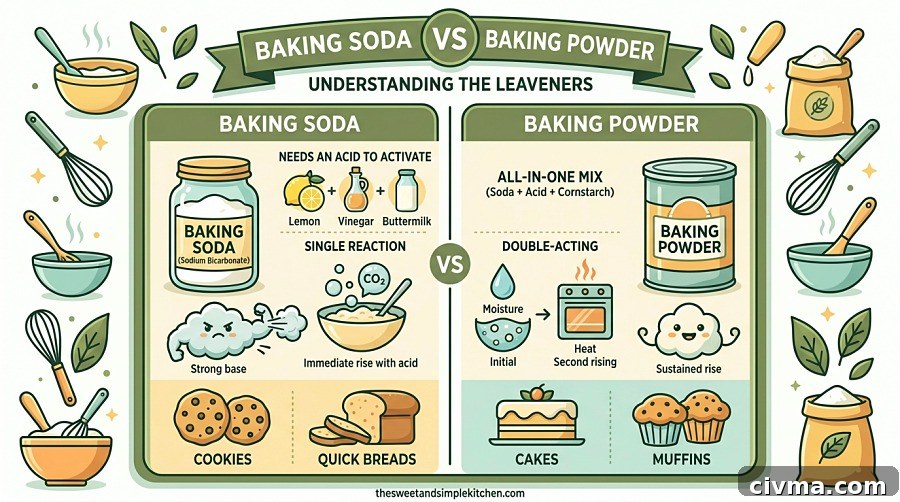
Baking soda is pure sodium bicarbonate. It is a powerful chemical leavening agent that creates lift when it reacts with both liquid and acid. On its own, baking soda is alkaline, which means it needs an acidic ingredient in the recipe before it can do its job properly.
When baking soda is mixed with an acid such as buttermilk, yogurt, lemon juice, vinegar, molasses, brown sugar, or natural cocoa powder, it produces carbon dioxide bubbles. Those bubbles expand in the batter or dough, helping baked goods rise and become lighter in texture.
Baking soda is much stronger than baking powder, so recipes usually call for small amounts. In many baked goods, only 1/4 to 1/2 teaspoon is enough. Using too much baking soda can leave an unpleasant metallic, bitter, or soapy taste. Using too little can result in baked goods that are dense, pale, or under-risen.
Baking soda also affects color and flavor. Because it is alkaline, it encourages browning through the Maillard reaction. This is one reason cookies made with baking soda often have darker edges, richer flavor, and better spread than cookies made with baking powder alone.
What Is Baking Powder?
Baking powder is a complete leavening agent. It contains sodium bicarbonate, an acid such as cream of tartar, and usually cornstarch to absorb moisture and prevent clumping. Because the acid is already included, baking powder does not require another acidic ingredient in the recipe.
Most baking powder sold in stores is double-acting baking powder. This means it reacts in two stages. The first reaction begins when the baking powder becomes wet. The second reaction happens when the batter or dough is exposed to heat in the oven or on the griddle. This two-step action gives recipes more reliable lift.
Baking powder is ideal for recipes with neutral ingredients, such as vanilla cakes, plain muffins, biscuits, and scones made with regular milk. If you used only baking soda in these recipes, there might not be enough acid to activate it, which could lead to poor rising and an off flavor.
Compared with baking soda, baking powder is milder. Recipes often use 1 teaspoon or more because it is less concentrated. It also contributes less browning, so baked goods made mainly with baking powder tend to be lighter in color and softer in appearance.
The Key Differences Between Baking Soda and Baking Powder
Although they look similar, baking soda and baking powder behave very differently in recipes. Here is a clear comparison:
| Feature | Baking Soda | Baking Powder |
|---|---|---|
| Composition | Pure sodium bicarbonate | Sodium bicarbonate, acid, and cornstarch |
| Strength | About 3 to 4 times stronger | Milder and used in larger amounts |
| Acid requirement | Needs acid from the recipe | Contains its own acid |
| Activation | Reacts when wet and combined with acid | Usually reacts when wet and again when heated |
| Browning effect | Promotes golden browning | Produces less browning |
| Texture effect | Can encourage spread and chewiness | Provides more vertical lift and tenderness |
| Typical amount | 1/4 to 1/2 teaspoon | 1 to 2 teaspoons |
| Taste if overused | Soapy, metallic, or bitter | Bitter or chemical |
The easiest way to remember the difference is this: baking soda needs acid from the recipe, while baking powder already contains acid. Baking soda is stronger and promotes browning; baking powder is gentler and creates dependable lift in neutral batters.
When to Use Baking Soda
Use baking soda when your recipe includes acidic ingredients. Common acidic ingredients in baking include:
- Buttermilk
- Yogurt
- Sour cream
- Lemon juice
- Vinegar
- Molasses
- Brown sugar
- Natural cocoa powder
- Honey
- Maple syrup
- Cream of tartar
When these ingredients are present, baking soda can react properly, creating carbon dioxide bubbles that help the batter rise. It also neutralizes some acidity, which can make the final flavor more balanced.
Baking soda is especially useful in recipes where you want browning, spread, and a deeper flavor. Chocolate chip cookies are a classic example. The acid in brown sugar helps activate the baking soda, while the alkaline nature of the soda encourages caramelization and browning. The result is often a cookie with crisp edges, a chewy center, and a more developed flavor.
Baking soda is also useful in recipes with molasses, such as gingerbread and molasses cookies. Molasses is acidic, so it activates the soda and helps create a rich, dark color and balanced taste.
When to Use Baking Powder
Use baking powder when a recipe does not contain enough acidic ingredients to activate baking soda. It is the better choice for neutral batters, including many vanilla cakes, basic muffins, biscuits, and scones.
Baking powder gives baked goods a soft, tender crumb and reliable lift. It is especially helpful when you want height without too much spread or deep browning. This is why it is commonly used in light-colored cakes and delicate quick breads.
Because most baking powder is double-acting, it also gives you a little flexibility. If your batter rests briefly before baking, the second reaction that happens with heat can still help the baked goods rise. This makes baking powder dependable for pancakes, muffins, and cakes.
However, baking powder should still be measured carefully. Too much can create a bitter or chemical flavor, and using it in a recipe that is already quite acidic may affect the final taste. If a recipe calls for baking soda, baking powder, or both, it is usually best to follow the formula as written.
Why Some Recipes Call for Both
Some recipes use both baking soda and baking powder because they need more than one effect. Baking soda reacts with acidic ingredients, improves browning, and helps balance flavor. Baking powder adds extra lift and structure, especially when the batter is heavy or needs a more reliable rise.
Banana bread is a good example. Bananas are mildly acidic, so baking soda helps with leavening and browning. But banana bread batter can be dense, so baking powder may be added to provide additional rise and prevent the loaf from becoming too heavy.
Buttermilk pancakes often use both as well. The buttermilk activates the baking soda, while baking powder gives the pancakes extra height and fluffiness. The combination helps create pancakes that are light rather than flat or gummy.
Chocolate chip cookies may also contain both, depending on the desired texture. Baking soda encourages browning and spread, while baking powder can add lift and help create a thicker cookie. When both appear in a recipe, they are usually there for a specific reason.
Can You Substitute Baking Soda for Baking Powder (and Vice Versa)?
Baking soda and baking powder are not direct substitutes. Swapping one for the other can change the flavor, color, rise, and texture of your baked goods. If you must substitute, it is important to understand what each ingredient needs in order to work.
Substituting Baking Powder for Baking Soda
Replacing baking soda with baking powder is usually not ideal. Baking powder is much weaker than baking soda, so you would need several times more baking powder to create a similar amount of lift. That much baking powder can make the final recipe taste bitter or metallic.
Baking powder also contains its own acid. If the original recipe already includes acidic ingredients, adding more acid through baking powder can affect flavor and balance. For best results, avoid this substitution unless there is no other option, and expect the final texture and taste to be different.
Substituting Baking Soda for Baking Powder
You can sometimes replace baking powder with baking soda, but only if you add an acid. A simple homemade substitute for 1 teaspoon of baking powder is:
- 1/4 teaspoon baking soda
- 1/2 teaspoon cream of tartar
Use the mixture right away, because it will begin reacting once moisture is added to the recipe.
If you do not have cream of tartar, lemon juice or white vinegar can also provide acid, although they may slightly affect the flavor. For each teaspoon of baking powder needed, use 1/4 teaspoon baking soda plus 1/2 teaspoon lemon juice or white vinegar.
If your recipe already contains acidic ingredients such as yogurt or buttermilk, baking soda may work, but the results will not be identical. You may get more browning, more spread, or a different crumb than the recipe intended.
The Substitution Rule to Remember
When possible, use the leavener listed in the recipe. Baking soda plus acid can sometimes replace baking powder, but baking powder does not reliably replace baking soda. The safest choice is to follow the recipe, especially for cakes and other delicate baked goods.
Troubleshooting: What Went Wrong?
If your baked goods did not turn out as expected, the leavener may be part of the problem. Here are common issues and what they often mean.
My Cookies Spread Too Much
Cookies that spread into thin, greasy puddles may contain too much baking soda, or the dough may have been too warm. Baking soda encourages spread, so an excess amount can cause cookies to flatten. Measure carefully and test your leavener if it has been open for a while.
My Cookies Did Not Spread At All
Pale, puffy cookies that barely spread may have been made with baking powder when the recipe needed baking soda. They may also lack enough acid to activate the baking soda. Check the recipe ingredients and make sure you are using the correct leavener.
My Cake Is Dense and Heavy
A dense cake may be caused by expired baking powder, inactive baking soda, or using baking soda in a batter without enough acid. Test your leaveners before baking and make sure the recipe has the right balance of acid and leavening.
My Muffins Have a Metallic Taste
A metallic, bitter, or soapy taste often means too much baking soda was used, or baking soda was used in a recipe that needed baking powder. Neutral batters usually need baking powder because it includes its own acid.
My Baked Goods Have a Yellow or Greenish Tint
A yellow or greenish tint can happen when too much baking soda reacts with certain ingredients, including some fruits or cocoa. The color is usually harmless, but it can be unappealing. Using the correct amount of leavener helps prevent this problem.
Everything Rose Then Fell Flat
If cakes, muffins, or quick breads rise and then collapse, the leavener may have reacted too early or the batter may have sat too long before baking. Fresh double-acting baking powder helps, but it is still best to bake batter promptly after mixing.
How to Test If Your Leaveners Are Still Fresh
Old baking soda and baking powder can cause flat, dense, or disappointing baked goods. Testing them takes less than a minute and can save an entire recipe.
Testing Baking Soda
Place 1/4 teaspoon of baking soda in a small bowl. Add 2 teaspoons of white vinegar. If it bubbles vigorously right away, the baking soda is still active. If the reaction is weak or slow, replace it.
Testing Baking Powder
Place 1 teaspoon of baking powder in a small bowl. Add 1/3 cup of hot tap water. Fresh baking powder should bubble and fizz actively. If it produces only a few weak bubbles, it has likely lost its strength.
Because many baking powders are double-acting, the heat reaction matters too. If your baking powder does not fizz well with hot water, it will not give your baked goods the lift they need.
How to Store Baking Soda and Baking Powder
Proper storage keeps baking soda and baking powder fresh and effective. Store both in airtight containers away from heat, moisture, and strong odors.
Baking soda often comes in a cardboard box, but that box is not airtight. For baking, it is best to transfer it to a sealed jar or container. Baking soda can absorb odors, so avoid storing it open near spices, onions, or other strong-smelling foods.
Baking powder is especially sensitive to moisture. Even a small amount of humidity can start the reaction inside the container, weakening the powder before you use it. Always use a dry measuring spoon and close the container tightly after each use.
Label containers with the date they were opened. Unopened baking soda lasts about 2 years, while opened baking soda is best used within about 6 months. Unopened baking powder lasts about 9 months, and opened baking powder is usually best within 3 to 6 months. When in doubt, test before baking.
Frequently Asked Questions
Do I need more baking soda or baking powder?
You usually need more baking powder than baking soda because baking soda is about 3 to 4 times stronger. Many recipes use only 1/4 to 1/2 teaspoon of baking soda, while baking powder is commonly measured by the teaspoon.
What happens if I use baking powder instead of baking soda?
Your baked goods may not brown properly and may not rise the way the recipe intended. Because baking powder is weaker than baking soda, using enough to replace baking soda can also create a bitter or chemical taste.
Can I use baking soda instead of baking powder?
Only if you add acid. To replace 1 teaspoon of baking powder, use 1/4 teaspoon baking soda plus 1/2 teaspoon cream of tartar. Without acid, baking soda will not activate properly in a neutral batter.
When should I use baking soda vs baking powder?
Use baking soda when the recipe includes acidic ingredients such as buttermilk, yogurt, lemon juice, brown sugar, or molasses. Use baking powder when the batter is neutral and does not contain enough acid. Some recipes use both for better balance and lift.
What does baking soda do in a recipe?
Baking soda creates carbon dioxide bubbles when combined with liquid and acid. These bubbles help baked goods rise. It also promotes browning and helps neutralize acidic flavors.
What does baking powder do in baking?
Baking powder helps baked goods rise by producing carbon dioxide bubbles. It contains both a base and an acid, so it can work even when the recipe does not include acidic ingredients. Double-acting baking powder reacts when wet and again when heated.
Can I use both baking soda and baking powder in one recipe?
Yes. Many recipes use both. Baking soda reacts with acid and improves browning, while baking powder adds extra lift. Recipes such as banana bread, buttermilk pancakes, and some cookies often benefit from both leaveners.
Is bicarbonate of soda the same as baking soda?
Yes. Bicarbonate of soda and baking soda are the same ingredient: pure sodium bicarbonate. The name used often depends on the country.
Why did my cookies flatten?
Cookies can flatten because of too much baking soda, warm dough, overly soft butter, or expired leavener. Baking soda encourages spread, so accurate measuring is important. Chilling soft dough can also help control spreading.
How long do baking soda and baking powder last?
Unopened baking soda lasts about 2 years, and opened baking soda is best within about 6 months. Unopened baking powder lasts about 9 months, while opened baking powder is usually best within 3 to 6 months. Store both airtight and test for freshness when needed.
The Sweet & Simple Takeaway
Understanding baking soda vs baking powder starts with one key question: does the recipe contain acid? If it does, baking soda may be the right choice. If it does not, baking powder is usually the better option. If the recipe has acid but also needs extra lift, it may call for both.
Baking soda is pure sodium bicarbonate. It is strong, needs acid to activate, promotes browning, and can help cookies spread. Baking powder contains both the base and the acid, making it ideal for neutral batters that need dependable lift and a tender crumb.
For the best baking results, measure carefully, use the leavener specified in the recipe, store both ingredients properly, and test them regularly for freshness. Once you understand how these two pantry staples work, you can bake with more confidence and troubleshoot recipes with ease.
Now you know which leavener to choose, why it matters, and how to avoid common baking mistakes. Happy baking!