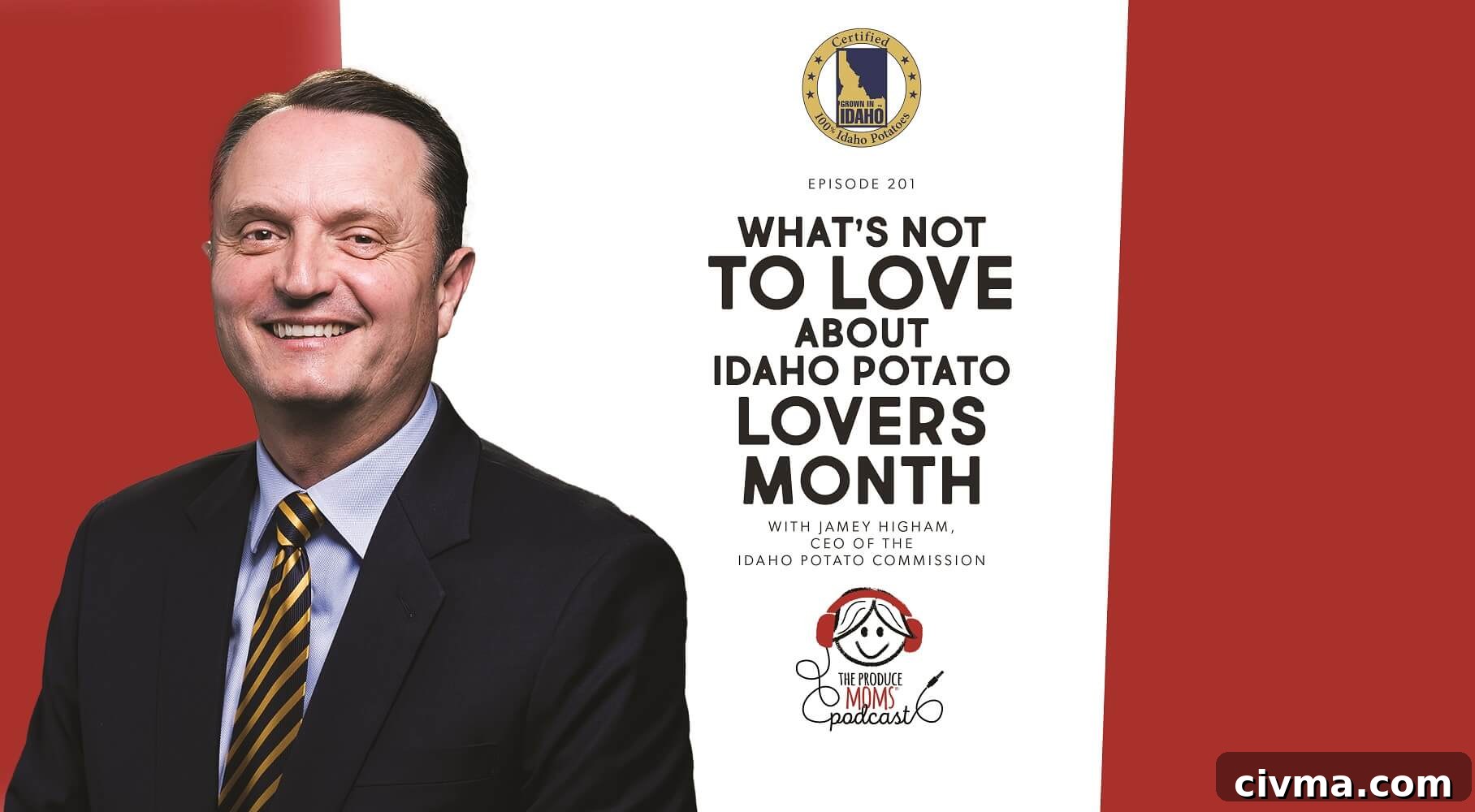
“I’ve got some potato DNA in my blood!” — Jamey Higham, CEO of the Idaho Potato Commission
Raised in Shelley, Idaho, Jamey Higham grew up at the center of potato country. After working briefly in automotive marketing at Ford, he returned to the produce industry and, in 2002, refocused his career on potatoes. Recently appointed CEO of the Idaho Potato Commission, Jamey leads the organization that protects, promotes, and builds the reputation of Idaho potatoes around the world.
The Idaho Potato Commission’s mission is to lead marketing efforts for the “Grown in Idaho” seal, ensuring consumers know the potatoes they buy meet consistent quality standards. The Commission is guided by nine members — five of whom are potato growers — with the remaining seats representing shipping, packaging, and processing sectors. Together they support growers and retail partners who deliver Idaho potatoes to stores and consumers everywhere.
“I really think that’s a tip of the hat to what you all have done at the Idaho Potato Commission to turn an entire state into being synonymous with a big, agricultural commodity that you grow.” – Lori Taylor (6:01-6:13)
February is officially Idaho Potato Lovers Month. Originally declared “Potato Lovers Month” 50 years ago and focused specifically on Idaho potatoes for the last 30 years, February has become a time for the Commission to highlight the crop. Each year the Commission runs a retail display contest; thousands of grocery stores and retailers enter to showcase Idaho potatoes. These displays reflect strong partnerships between the Commission and retailers and help shoppers spot the best Idaho-grown potatoes.
What makes Idaho ideal for potatoes?
Idaho’s climate—warm days and cool nights—combined with rich volcanic ash soils creates ideal growing conditions. Many Idaho potato farms are multi-generational, with long experience in harvest timing, storage, and shipping practices that preserve flavor, texture, and appearance. Harvest typically begins in late summer, with potatoes moving from fields to packing facilities and into advanced storage systems so they can be shipped year-round.
Timing harvest correctly is critical. Early frost can damage tubers, and shifting weather patterns can change the ideal harvest window. Experienced growers and the Commission work together to protect crop quality and ensure potatoes reach consumers at peak condition.
Potatoes and changing demand
Throughout the pandemic, potato demand remained stable because potatoes are affordable, versatile, and have a long shelf life when stored properly. Early on, home shoppers stocked up on potatoes, and when foodservice reopened, fried-potato products saw surges in demand. The resilience of the potato supply chain and the adaptability of growers and processors helped keep potatoes available through shifting market conditions.
In Idaho, you’ll also find a local favorite—“fry sauce,” a simple mix of mayonnaise, ketchup, and a touch of pickle juice—served with fries across the state. There are plenty of great ways to prepare potatoes at home too: coat in olive or avocado oil, roast in a cast-iron skillet, and season with salt, pepper, garlic, or spices like blackening seasoning or Chinese five spice.
Pro storage and preparation tips
- Do not store potatoes in the refrigerator—cold temperatures can negatively change texture and flavor.
- Store potatoes in a cool, dark place to prevent greening and sprouting.
- If you plan to mash potatoes the next day, wash them and let them soak in a pot of water overnight; this saves prep time and keeps them ready to cook.
Look for the Idaho potato seal when shopping to ensure you’re getting high-quality tubers that meet Commission standards. Whether you roast, mash, bake, or fry them, Idaho potatoes remain a reliable, nutritious, and delicious choice.
How to get involved
- Join The Produce Moms Group on Facebook and continue the conversation with other produce professionals and enthusiasts.
- Reach out to The Produce Moms to share where you are in life and business or to learn more about the podcast and community.
If you enjoyed this episode, subscribe and leave a review on your preferred podcast platform—your feedback helps the show reach more listeners and supports the community.
Previous episodes you may enjoy
- Episode 200: Lori Taylor and Helina Fox
- Episode 199: Brian Coates
- Episode 198: Pamela Riemenschneider
- Episode 197: Brian Antle
- Episode 196: Ryan Atwood and Ryan Lockman