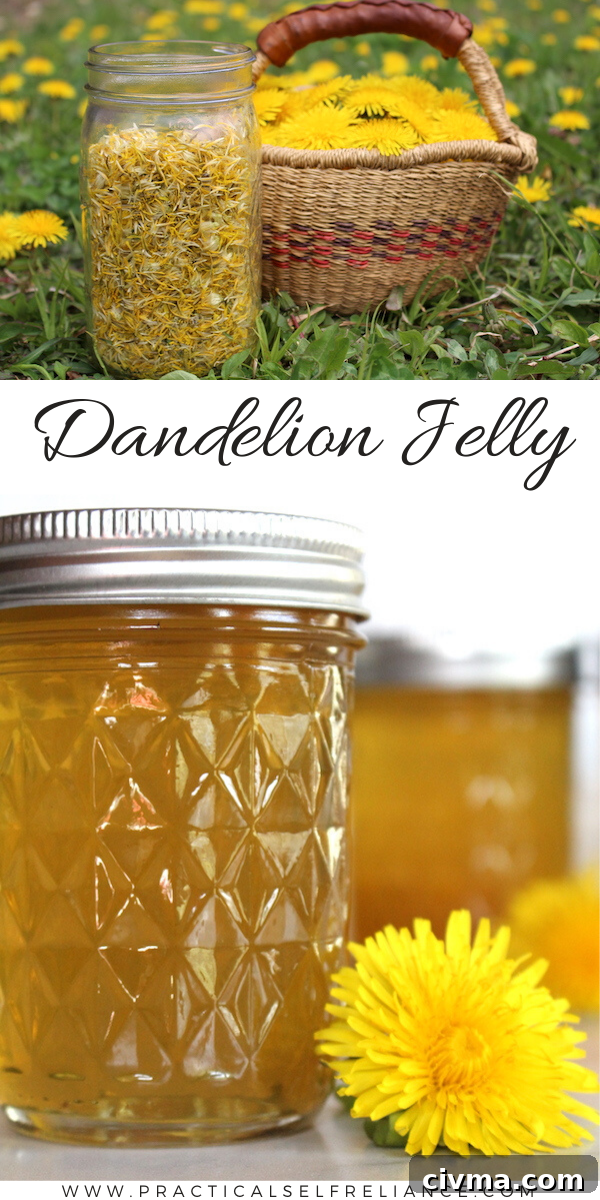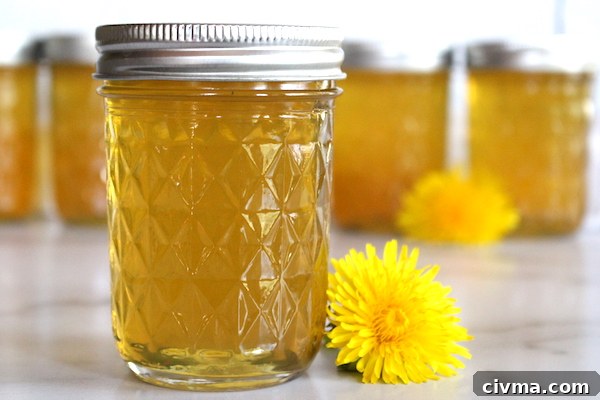
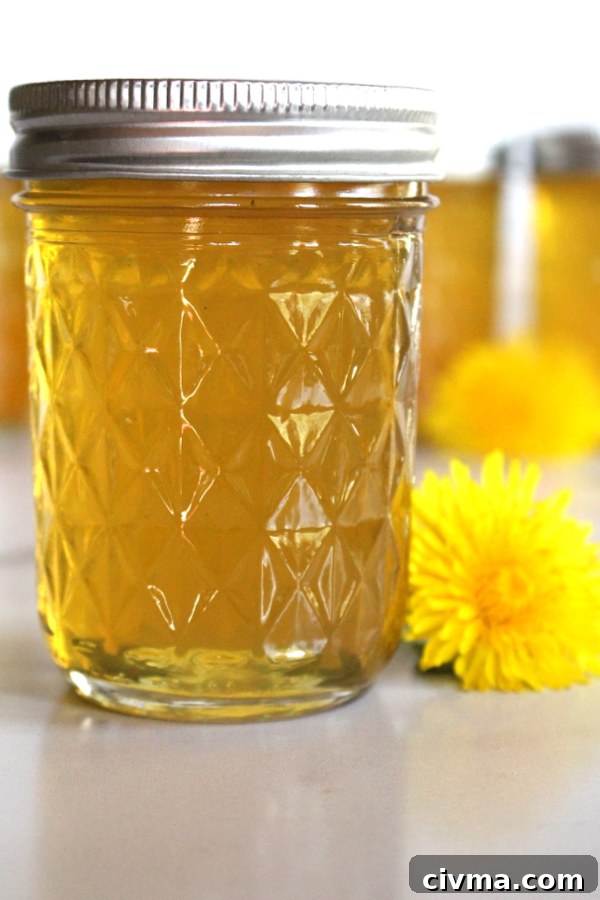
Dandelion jelly tastes like sunshine in a jar, with a delicate floral sweetness that makes morning toast feel extra special.
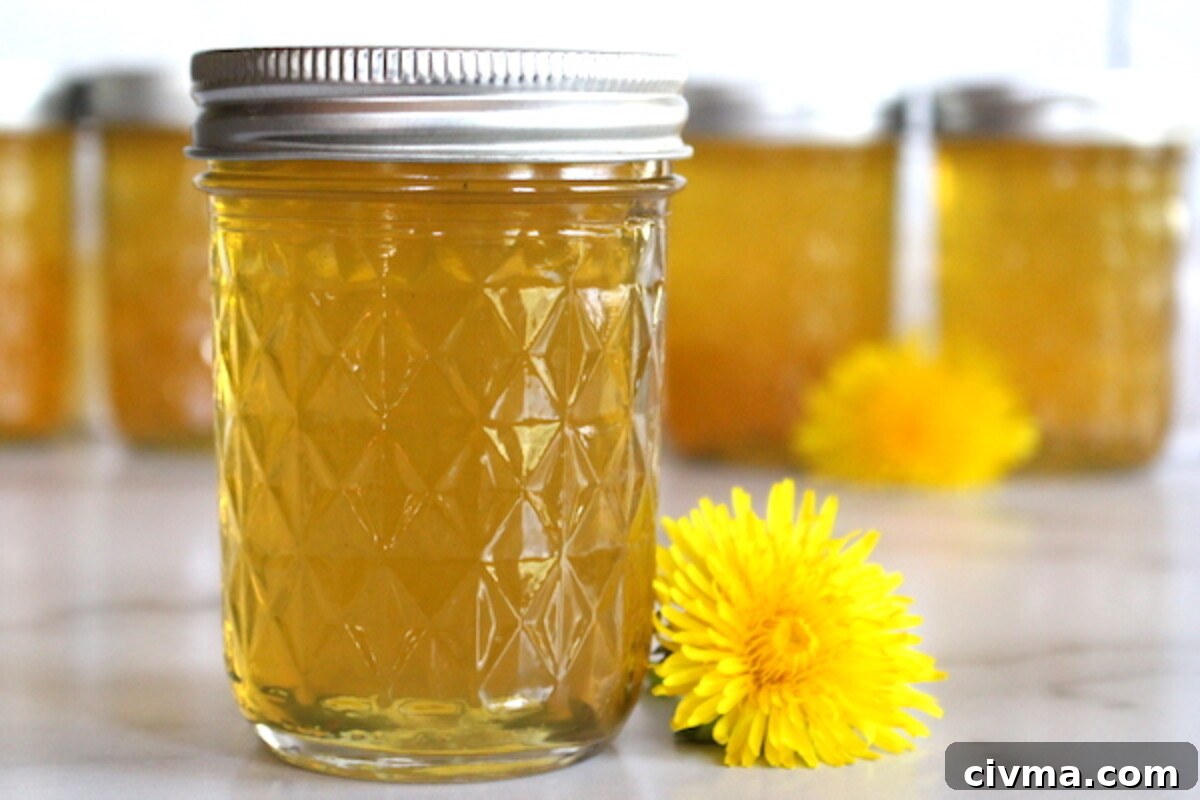
Homemade dandelion jelly is a beautiful way to turn a familiar spring flower into a bright, golden spread. If you enjoy floral jellies, this simple recipe is one of the easiest places to start because dandelions are widely available, easy to identify, and full of gentle honey-like flavor.
This dandelion jelly recipe uses fresh yellow dandelion petals, sugar, lemon juice, pectin, and water. The result is a smooth, clear jelly with a warm color and a light floral taste. It is lovely on toast, biscuits, muffins, scones, or anything that benefits from a sweet springtime spread.
What Does Dandelion Jelly Taste Like?
Dandelion jelly has a soft floral flavor that often reminds people of light honey. It is sweet, bright, and gentle rather than overpowering. The lemon juice in the recipe helps balance the sugar and lifts the flavor, but it does not make the jelly taste strongly of lemon.
Because the flavor is mild, the quality of the flowers matters. Use fresh, fully open blossoms from a clean area, and remove as much of the green material as possible. The yellow petals provide the best color and flavor, while the green parts can add bitterness.
Ethically Harvesting Dandelions
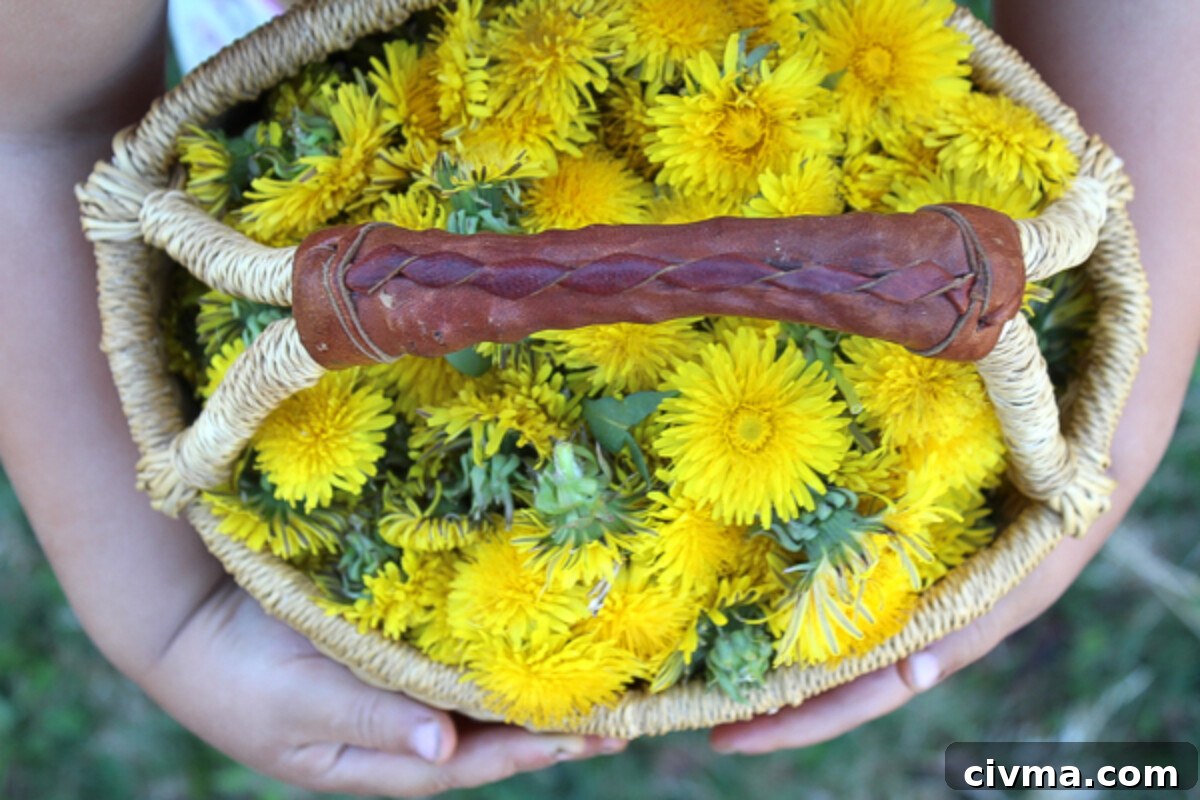
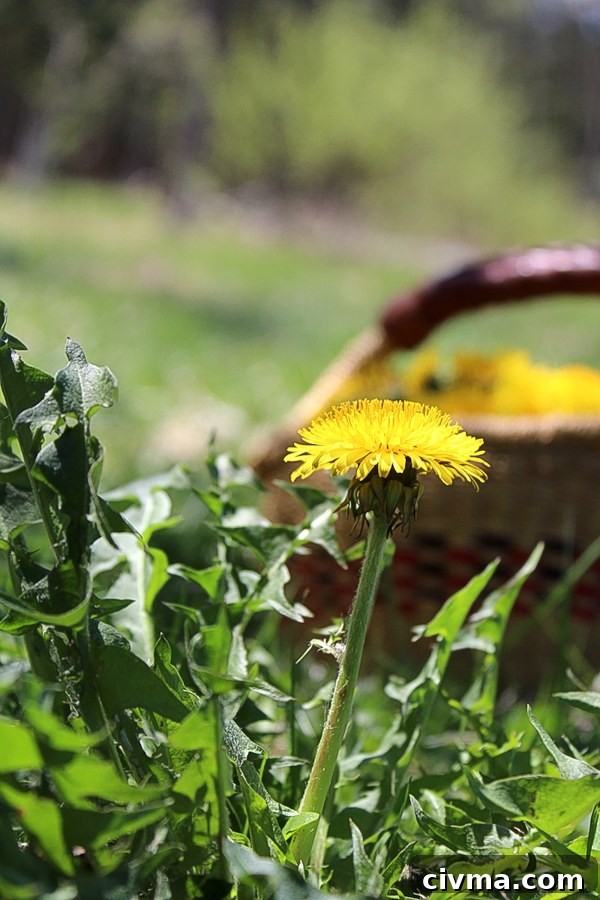
Dandelions are often treated as weeds, but they are also useful edible plants. When harvesting dandelions for jelly, choose a clean location that has not been sprayed with herbicides, pesticides, or lawn chemicals. Avoid roadsides, public paths with heavy foot traffic, and areas where pets may frequently pass.
It is also important to harvest responsibly. Dandelions are common in many places, but that does not mean every flower should be picked. Leave plenty of blossoms behind for pollinators and for the plant to continue growing. A good foraging habit is to take only what you need from areas where the plant is abundant.
Harvesting dandelion flowers can also encourage the plant to produce more blossoms, but ethical foraging still matters. Gather from a healthy patch with many flowers, and spread your picking across the area rather than clearing one spot completely.

If you have dandelions growing in your own yard, consider letting some of them bloom before mowing. A lawn dotted with yellow flowers can provide food for bees and enough blossoms for a small batch of homemade dandelion jelly.
How to Make Dandelion Jelly
Making dandelion jelly is similar to making other homemade jellies. First, the petals are infused in boiling water to make dandelion tea. That tea is then combined with lemon juice, pectin, and sugar before being boiled briefly and poured into jars.
The basic process is simple:
- Harvest fresh dandelion flowers from a clean, unsprayed area.
- Separate the yellow petals from the green parts.
- Steep the petals in boiling water to make dandelion tea.
- Strain the tea and combine it with lemon juice and pectin.
- Bring the mixture to a boil, add sugar, and boil again.
- Pour the jelly into jars and allow it to cool and set.
Harvesting Dandelions for Jelly
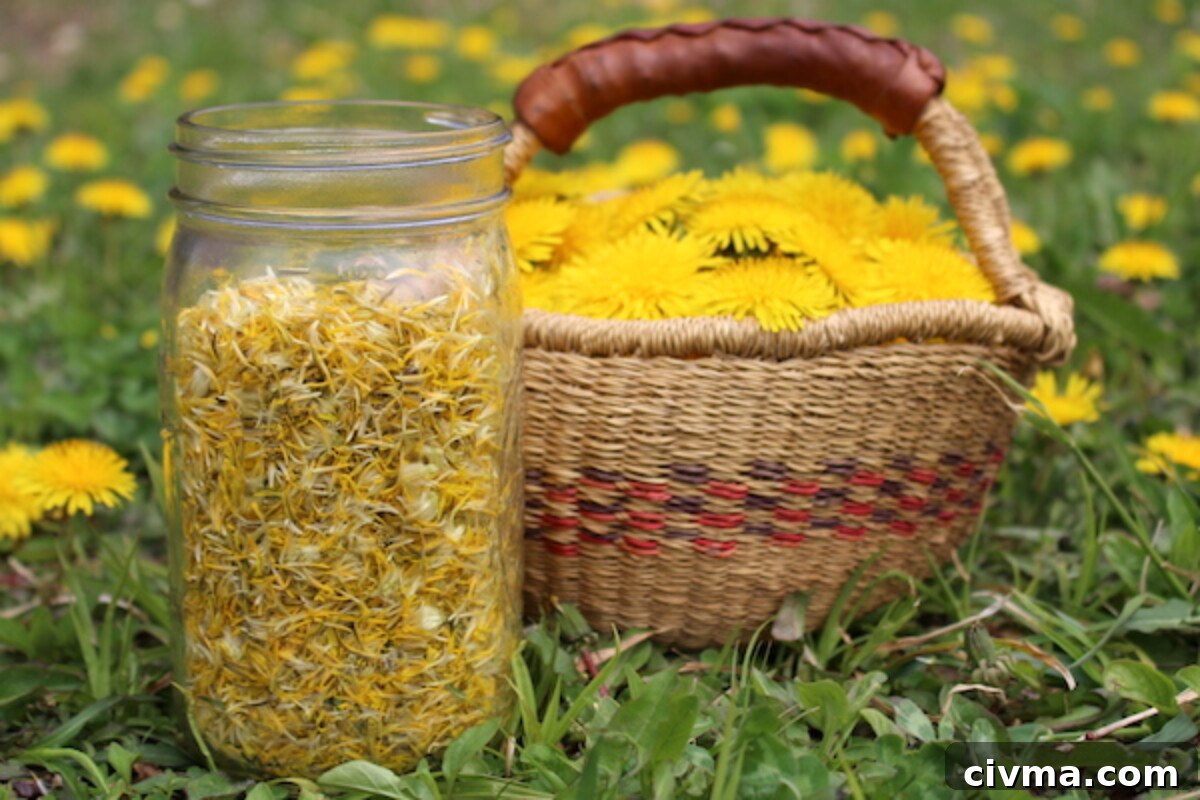
For this recipe, you will need about 8 cups of whole dandelion flower heads. Once the petals are removed, that should give you roughly 4 cups of loose yellow petals or about 2 cups packed petals.
The picking itself usually goes quickly, especially if you are harvesting from a thick patch of flowers. The longer part is cleaning the blossoms. To prepare the petals, tear each flower open and pull away the yellow petals, leaving behind the green sepals and base. This step takes patience, but it is worth doing carefully because too much green material can make the finished jelly taste bitter.
Set up somewhere comfortable while you work. A shaded table outdoors or a quiet spot indoors makes the task easier. The petals do not have to be perfect, but the cleaner they are, the more delicate and pleasant the final flavor will be.
Making Dandelion Tea
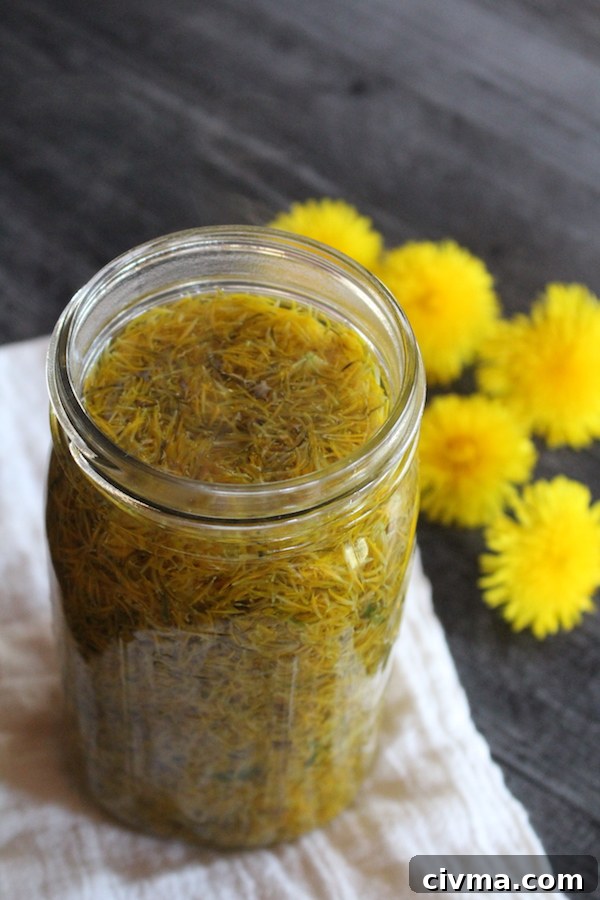
After the petals are cleaned, place them in a heatproof jar or bowl. Pour 4 cups of boiling water over the petals and let them steep for at least 1 hour. For a stronger infusion, the tea can steep for up to 24 hours.
Once the tea has steeped, strain it through a fine mesh strainer or cheesecloth. Press or squeeze the petals well to remove as much liquid as possible. You should have about 3 3/4 to 4 cups of dandelion tea. This tea is the flavorful base of the jelly.
Pectin for Dandelion Jelly
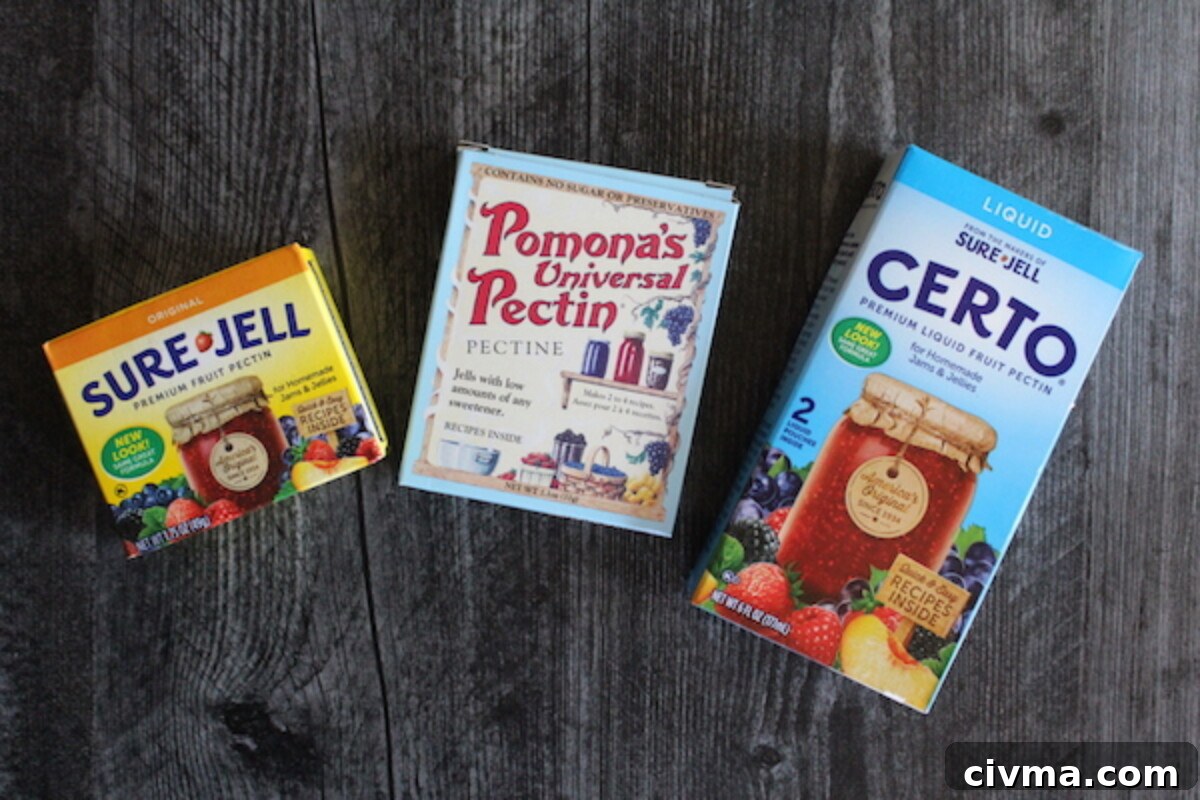
Dandelion petals do not contain enough natural pectin to set into jelly on their own, so added pectin is needed. Powdered pectin is a reliable choice for this recipe and gives the jelly a smooth, spoonable set.
Different pectins work in different ways, so always follow the directions for the type you use. Traditional powdered pectin generally requires a full amount of sugar to set properly. Low-sugar pectin can be used if you prefer a less sweet jelly, but the method and measurements may change.
- Powdered pectin: A common option for classic jelly. This recipe uses one 1.75-ounce box with 4 cups of sugar.
- Liquid pectin: This can work, but it usually requires more sugar than powdered pectin.
- Low-sugar pectin: This is useful if you want to reduce the sugar, but follow the package instructions carefully.
Making Dandelion Jelly
Pour the strained dandelion tea into a heavy-bottomed saucepan or jam pot. Add 2 tablespoons of lemon juice, or use 1/2 teaspoon of citric acid for a more neutral flavor. Stir in the powdered pectin, but do not add the sugar yet.
Place the pot over high heat and bring the mixture to a full rolling boil. Once it is boiling hard, add the sugar all at once and stir until dissolved. Return the mixture to a hard boil and boil for 1 to 2 minutes.
Remove the pot from the heat and carefully pour the hot jelly into prepared jars. Seal the jars and let the jelly cool undisturbed. Dandelion jelly may take 12 to 48 hours to fully set, so give it time before deciding whether it has finished firming up.
Dandelion Jelly Recipe Variations
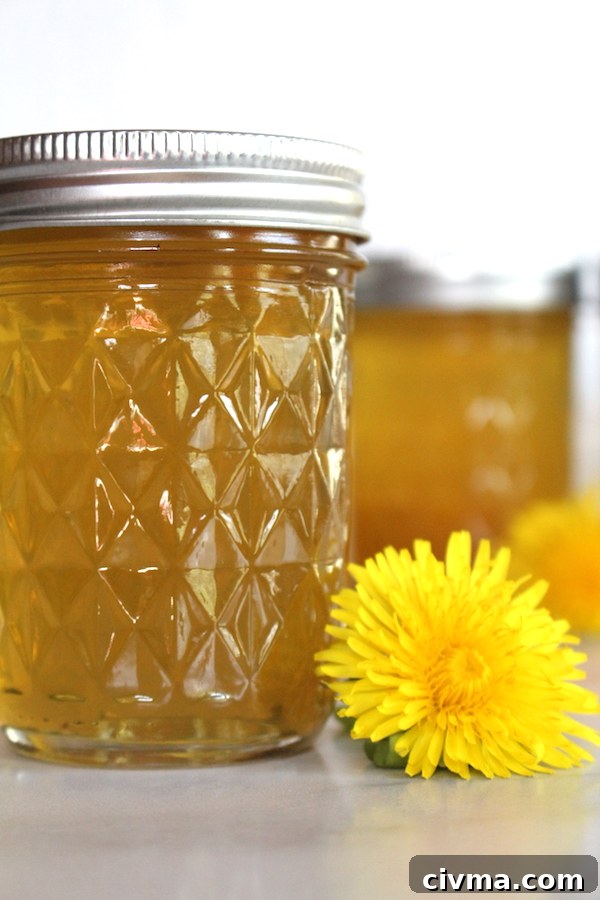
Classic dandelion jelly lets the natural honey-like flavor of the petals shine. If you enjoy floral preserves, you can experiment with gentle flavor combinations, but keep in mind that dandelion is subtle and can be easily overpowered.
Lavender, violet, lilac, and strawberry are all flavors that can pair with spring jellies, though stronger flowers and fruits may become the main flavor. If this is your first batch, it is best to make plain dandelion jelly so you can appreciate its delicate taste.
Canning Dandelion Jelly Safely
Dandelion jelly can be stored in the refrigerator for short-term use, or it can be processed in a water bath canner for pantry storage. If you do not want to can it, simply pour the jelly into clean jars, refrigerate after cooling, and use within several weeks. It may also be frozen for longer storage.
For water bath canning, acidity is important. Dandelion petals do not provide the acidity that many fruits naturally contain, so lemon juice or citric acid is required. The added acid helps make the jelly suitable for safe water bath processing and also brightens the flavor.
Prepare the water bath canner before cooking the jelly. Once the jelly is ready, ladle it into canning jars, leaving 1/4 inch headspace. Apply two-piece canning lids and process the jars in a boiling water bath for 10 minutes. Remove the jars and let them cool on a towel. Check the seals after 24 hours. Any unsealed jars should be refrigerated and used first. Properly sealed jars can be stored in a cool pantry for 12 to 18 months.
Dandelion Jelly
Equipment
-
Water bath canner, optional
-
Half-pint canning jars
-
Heavy-bottomed saucepan or jam pot
-
Fine mesh strainer or cheesecloth
Ingredients
- 4 cups dandelion petals, or 2 cups packed petals
- 4 cups sugar
- 2 Tbsp. lemon juice, or 1/2 tsp citric acid
- 1 box powdered pectin, 1.75 ounces
- Boiling water
Instructions
-
Harvest about 8 cups of fresh dandelion flower heads from a clean, unsprayed area. Remove the yellow petals and discard most of the green portions. You should have about 4 cups loose petals or 2 cups packed petals.
-
Place the petals in a heatproof jar or bowl. Pour 4 cups of boiling water over them and let the mixture steep for at least 1 hour, or up to 24 hours for a stronger infusion.
-
Strain the petals, pressing or squeezing them to remove as much liquid as possible. Measure the liquid; you should have about 3 3/4 to 4 cups of dandelion tea.
-
Pour the dandelion tea into a heavy-bottomed saucepan. Add the lemon juice and powdered pectin. Do not add the sugar yet.
-
Bring the mixture to a full rolling boil over high heat.
-
Add the sugar all at once and stir until dissolved. Return the mixture to a hard boil and boil for 1 to 2 minutes.
-
Remove from heat and pour the jelly into prepared jars. Seal and allow the jelly to cool and set for at least 12 hours. It may take up to 48 hours to fully set.
Canning Dandelion Jelly Optional
-
Prepare a water bath canner before cooking the jelly. Lemon juice or citric acid is required if you plan to can the jelly.
-
Ladle the hot jelly into canning jars, leaving 1/4 inch headspace. Apply two-piece canning lids.
-
Process the jars in a boiling water bath for 10 minutes. Remove the jars and let them cool completely on a towel.
-
Check seals after 24 hours. Refrigerate any unsealed jars and use them first. Properly sealed jars can be stored in the pantry for 12 to 18 months.
Notes
Low-sugar pectin: Use the amount of sugar and pectin recommended by the package instructions.
Liquid pectin: Liquid pectin usually requires more sugar to set properly, so adjust according to the directions on the box.
Dandelion Recipes
If you enjoy cooking with dandelions, there are many other ways to use these cheerful spring flowers and greens. They can be made into drinks, desserts, herbal preparations, and creative seasonal treats.
- Dandelion wine
- Dandelion shortbread cookies
- Dandelion ice cream
- Dandelion gummy bears
- Dandelion tincture
- Dandelion and burdock herbal bitters
Jelly Recipes
Once you learn how easy homemade jelly can be, it is tempting to keep experimenting with new flavors. Floral jellies, fruit jellies, and wild-foraged preserves are all wonderful additions to a pantry.
- Blackcurrant jelly
- Rhubarb jelly
- Prickly pear jelly
- Hawthorn jelly
- Chokecherry jelly
- Raspberry jelly