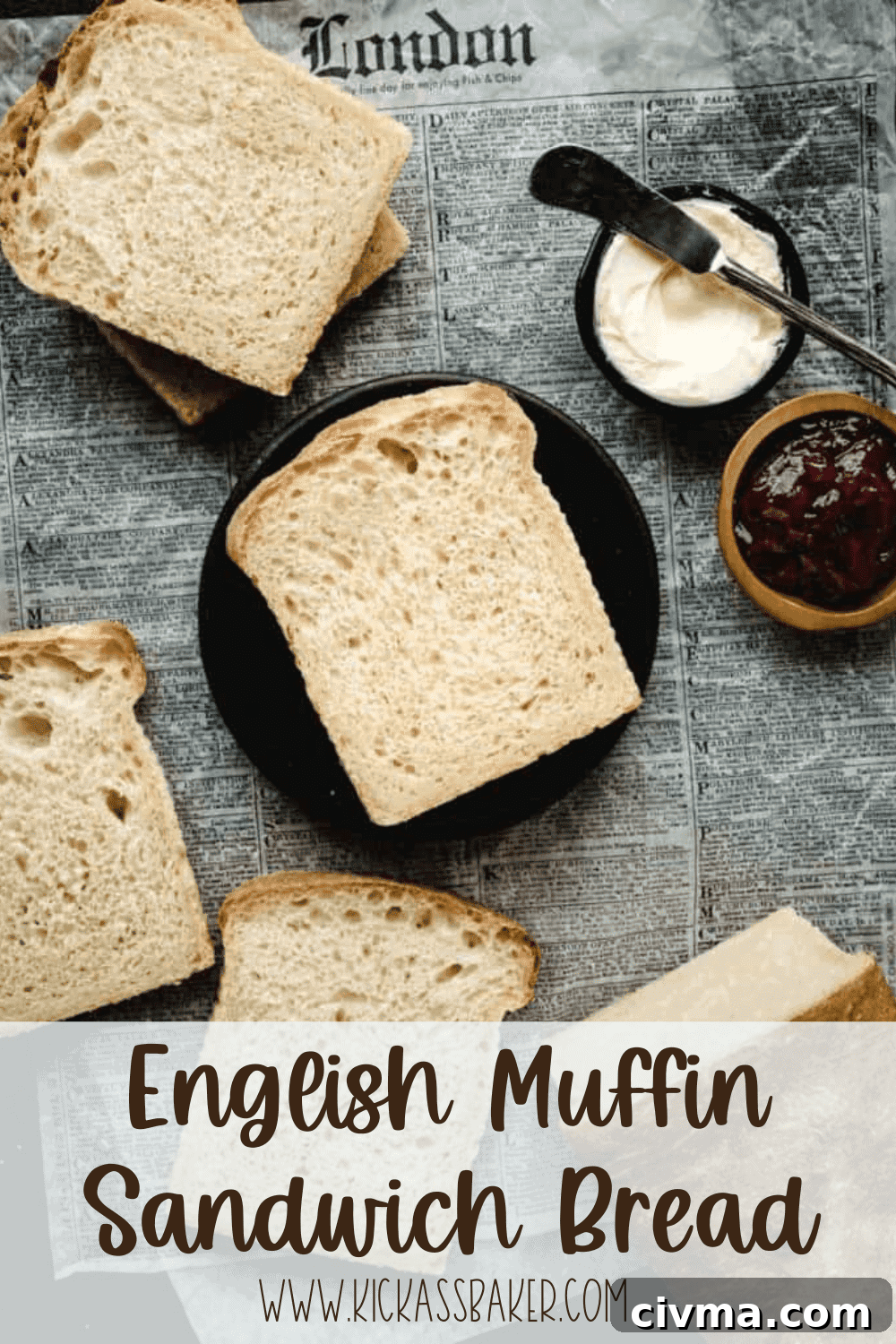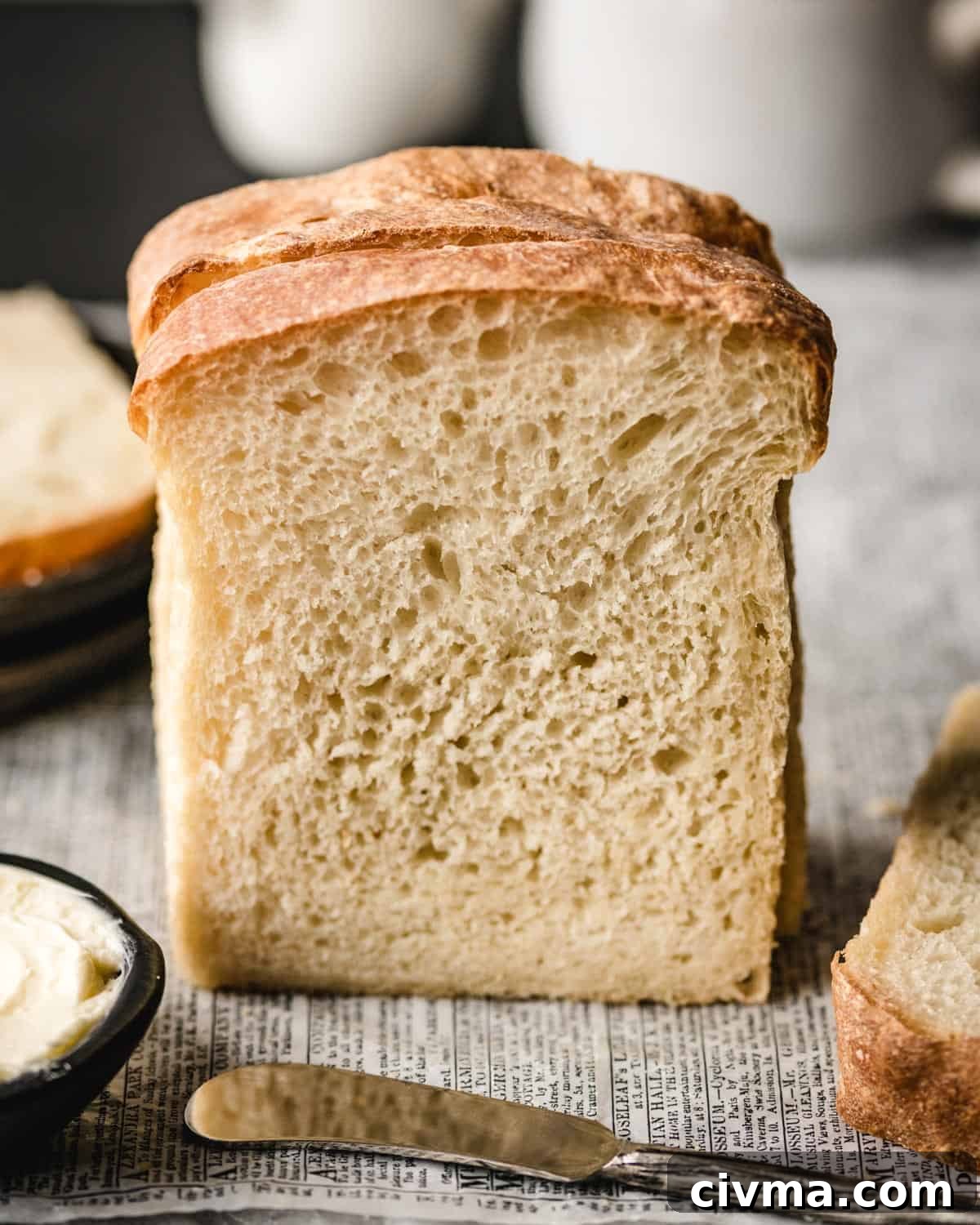
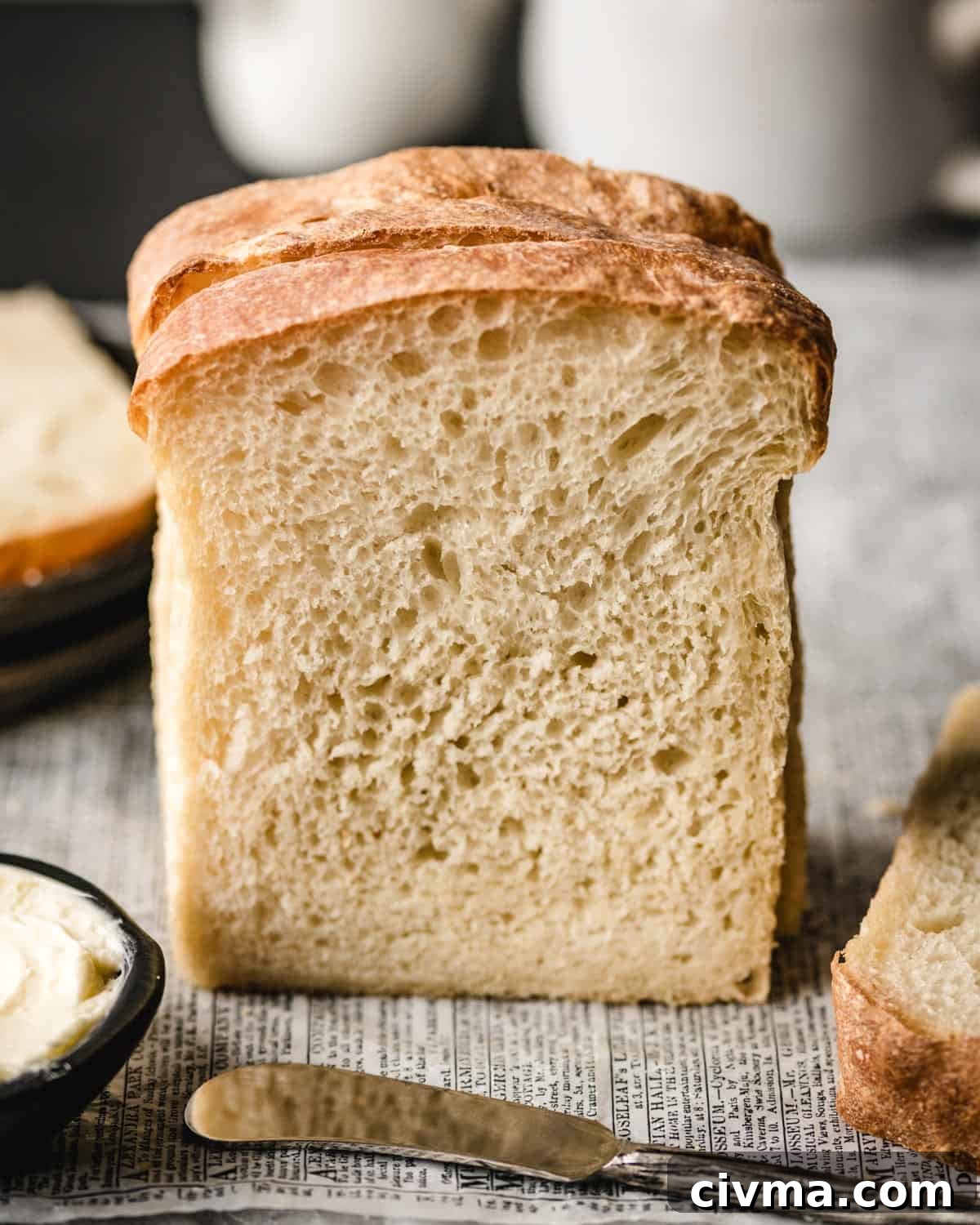
Looking for the best bread for sandwiches? This English Muffin Loaf has the beloved nooks and crannies of a traditional English muffin and works perfectly for sandwiches or toast. The dough is essentially the same as for individual English muffins, but this version skips several steps so you can bake a loaf that captures the same open, chewy texture ideal for slicing and filling.
Disclosure: As an Amazon Associate, I earn from qualifying purchases.
What makes this the Best Sandwich Bread?
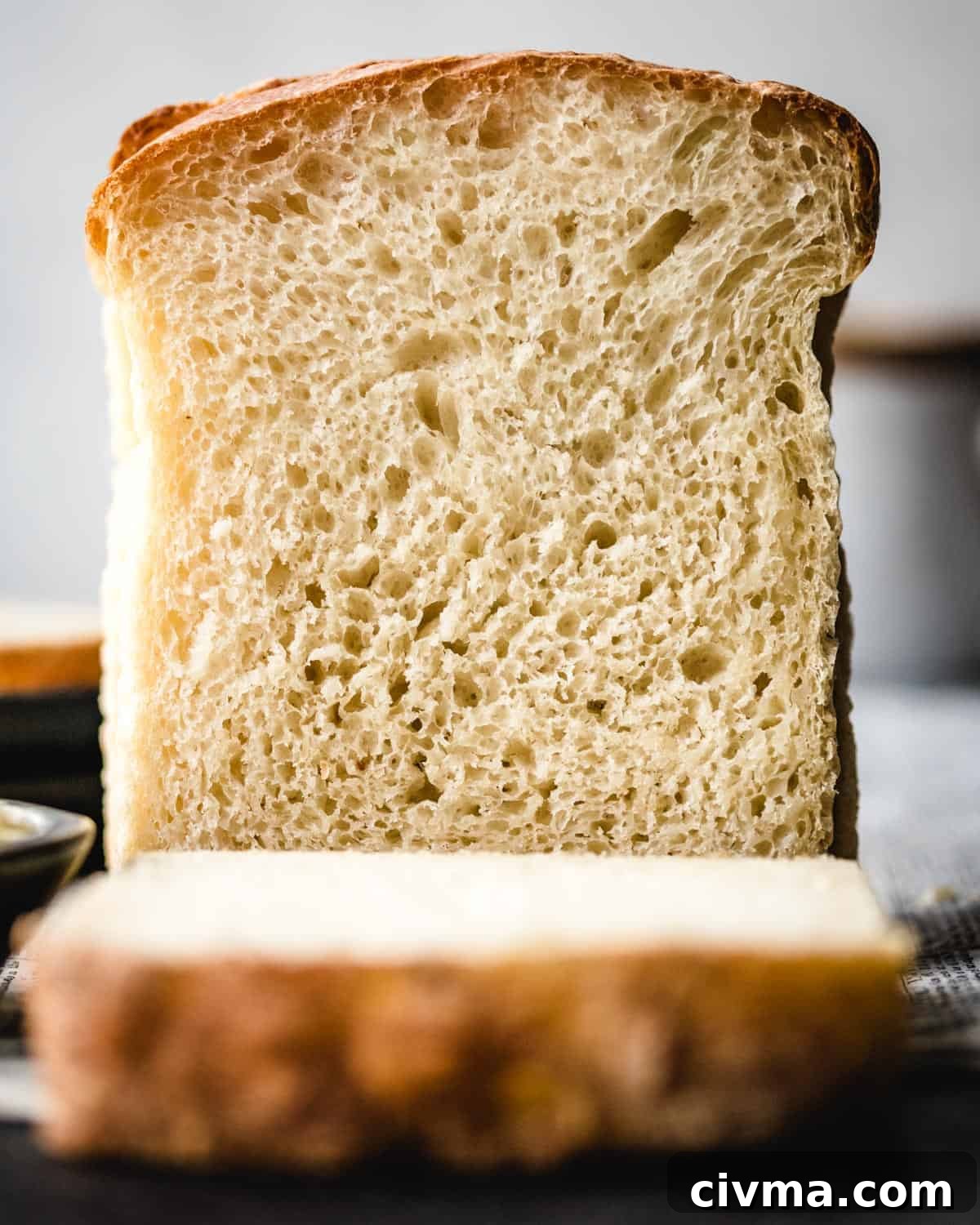
What sets this loaf apart are the nooks and crannies that trap butter, jam, egg, or any sandwich filling. Those irregular holes are characteristic of English muffins and give each bite a delightful chewy texture and extra flavor.
This loaf is simpler and less time-intensive than shaping individual muffins, yet it delivers much of the same texture and appeal. If you enjoy making English muffins from scratch you’ll appreciate this easier option when you want a sandwich-friendly loaf without more complicated steps.
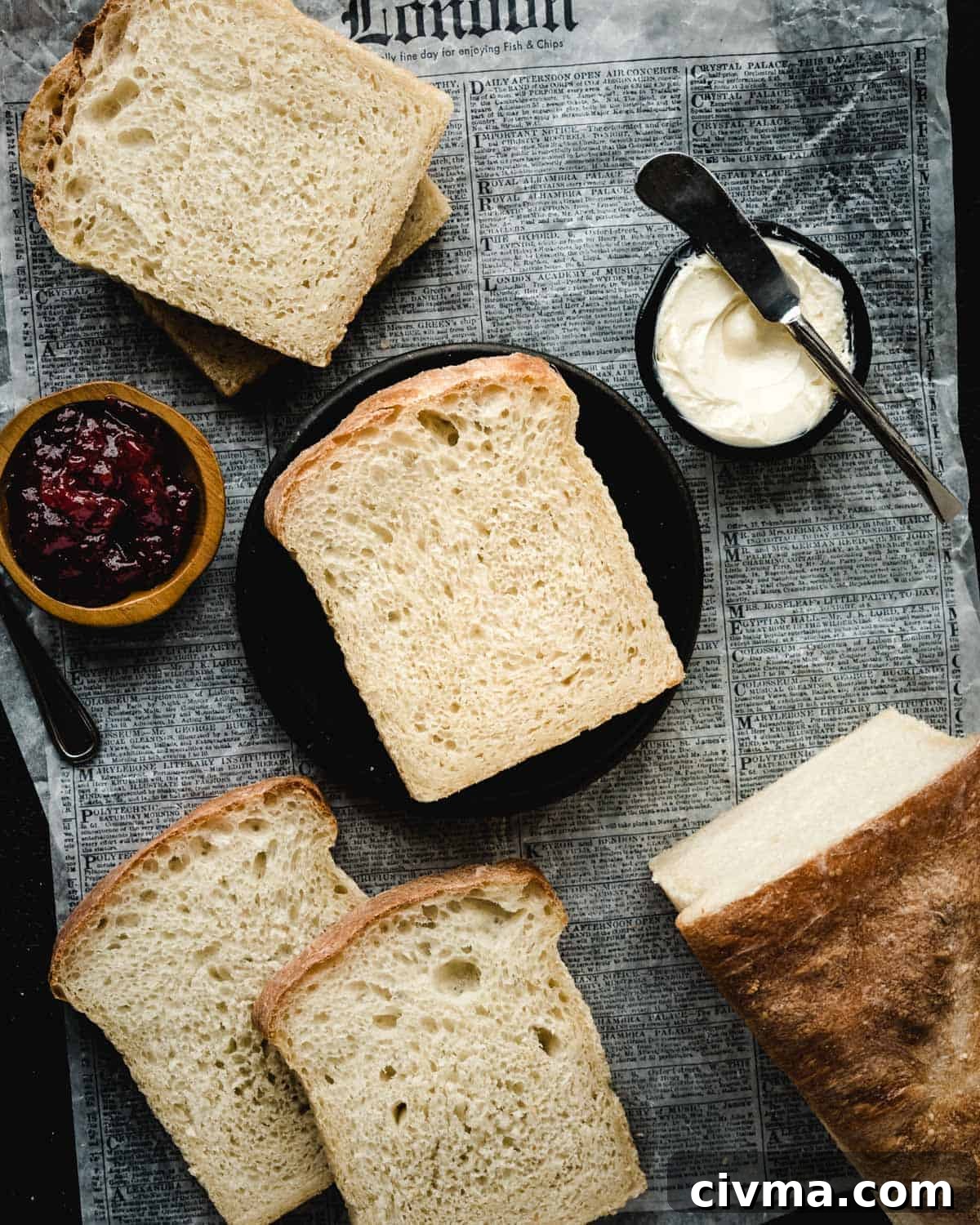
It’s an excellent choice for breakfast sandwiches, grilled cheese, or any sandwich where you want a sturdy but tender bread. The loaf also toasts exceptionally well, bringing out the aroma and emphasizing the nooks and crannies.
How to Make Homemade English Muffin Bread using a Stand Mixer
This dough benefits from a stand mixer fitted with a dough hook. The dough is relatively high-hydration, meaning it contains more water than a typical loaf dough. That hydration helps create the open interior and soft crumb, but it also makes the dough somewhat sticky—another reason a mixer is helpful.
Once kneaded until smooth and elastic, the dough rests in the refrigerator overnight. That slow, cool fermentation hydrates the flour fully, strengthens gluten structure, produces gas bubbles that form the nooks and crannies, and most importantly develops flavor. Leaving the dough overnight gives the loaf a richer, more complex taste than a quick-rise recipe.
How to Prepare Easy English Muffin bread
Begin by combining the dry ingredients in the bowl of a stand mixer: bread flour, salt, yeast, and a little sugar. Add the lukewarm water and oil, and mix on low with the dough hook until the mixture comes together. Increase speed and knead until the dough is shiny, smooth, and elastic—about 13 to 15 minutes in a stand mixer.
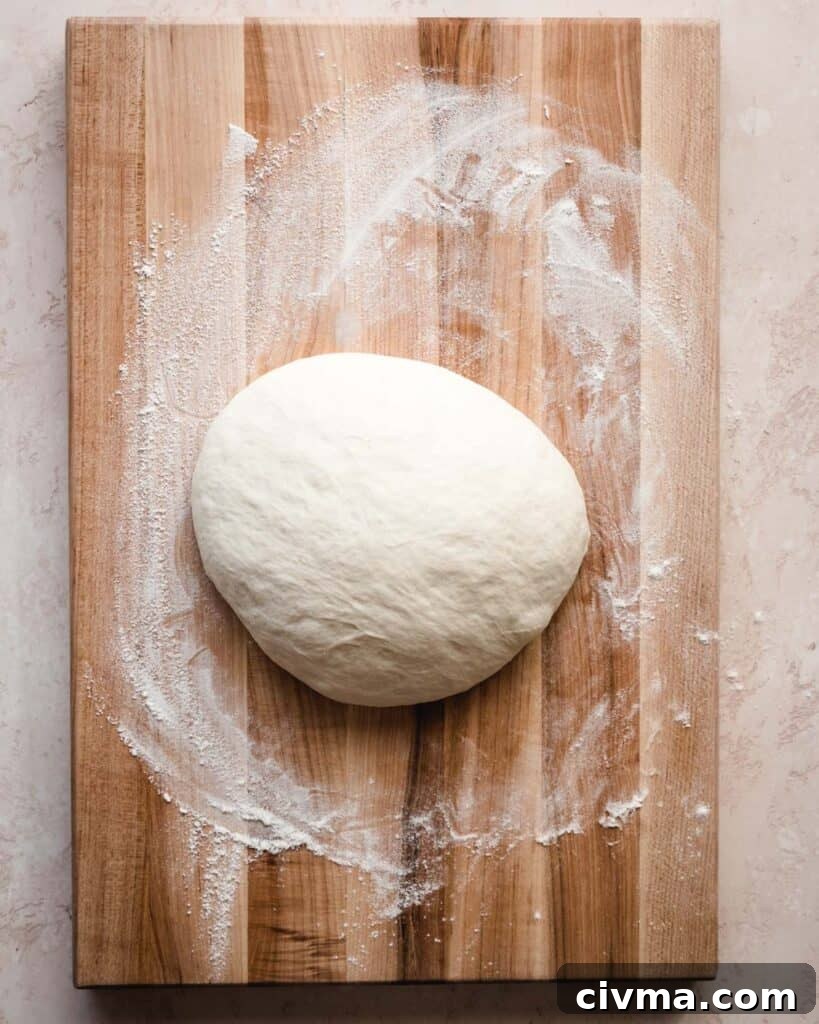
Place the dough in a lightly oiled bowl, turn it to coat with oil, cover, and refrigerate overnight. The next morning, remove the dough and let it rest at room temperature, covered, for about 15 minutes to take the chill off and allow the gluten to relax.
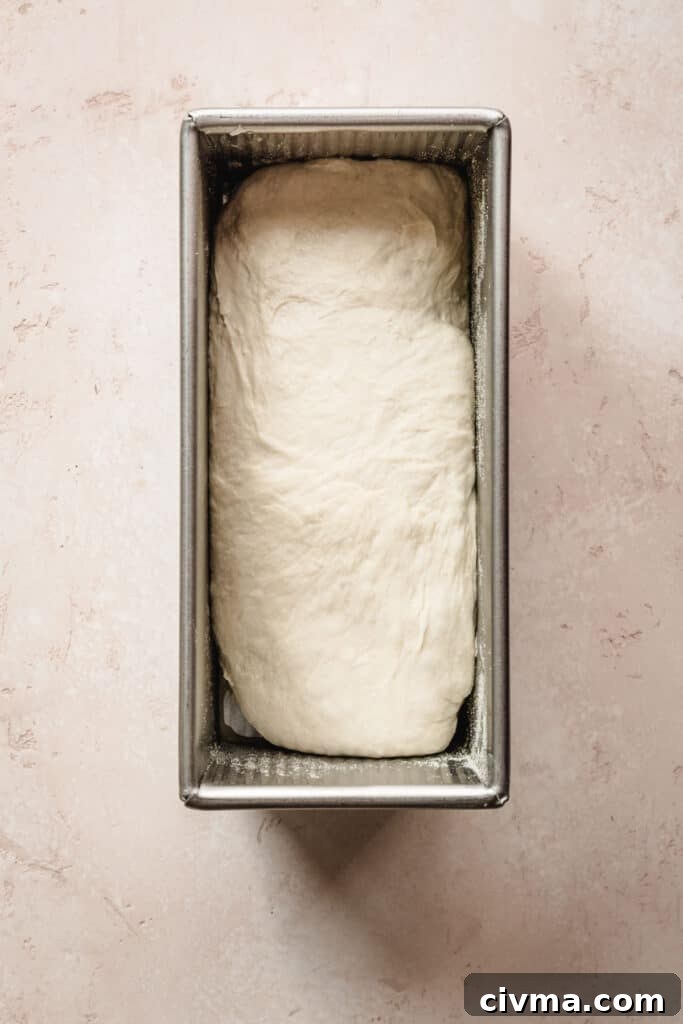
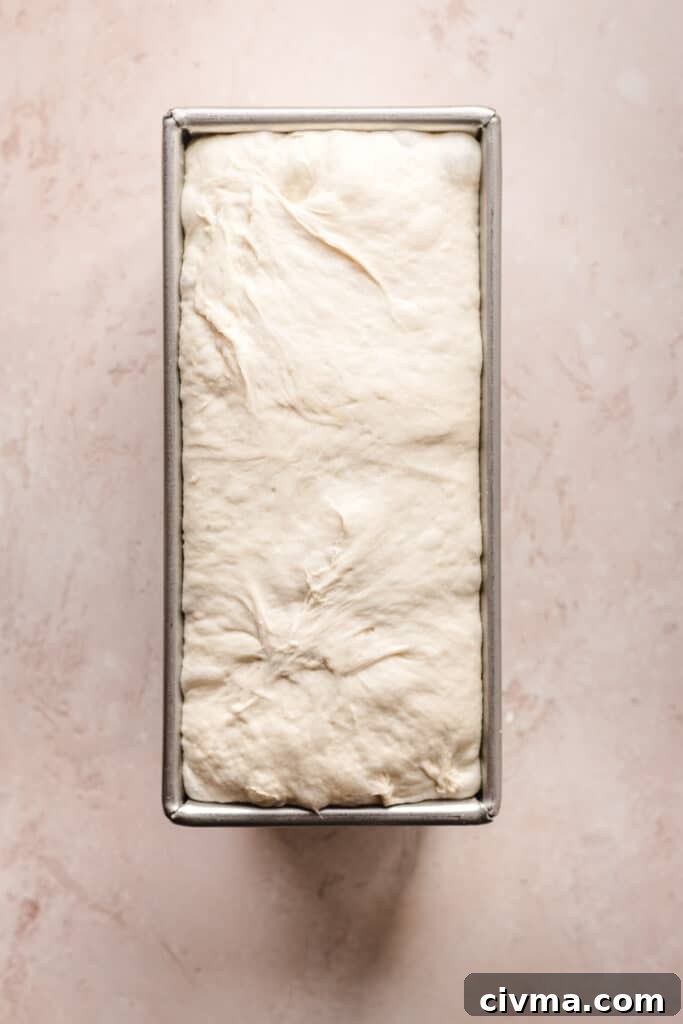
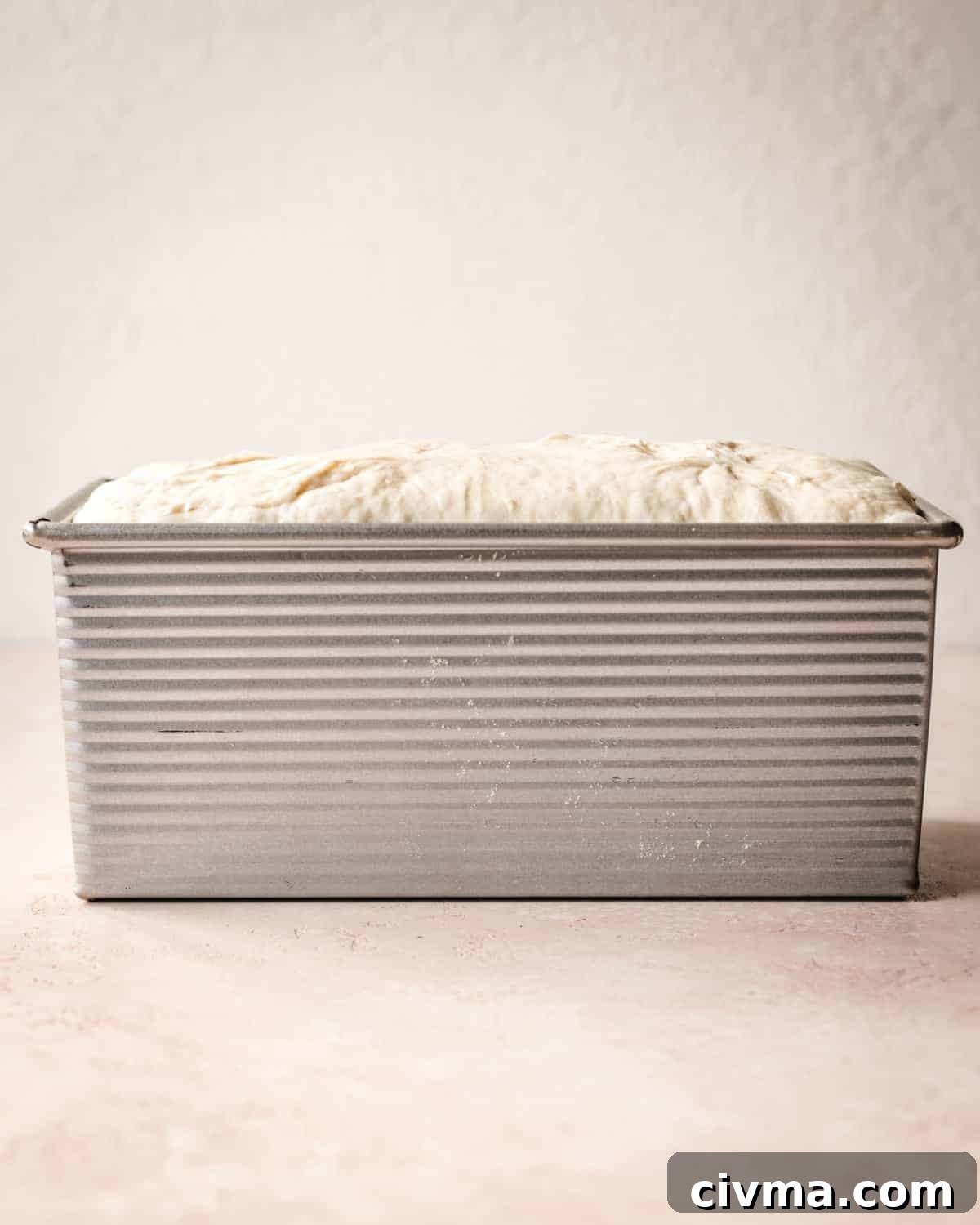
Prepare a loaf pan by coating it lightly with oil and dusting with semolina flour. Shape the dough into a loaf without pressing all the air out—preserve those bubbles from the overnight rise. Place the shaped loaf seam-side down in the pan, cover, and let it rise in a warm spot until the top of the loaf reaches the rim of the pan.
Bake at 400°F (204°C) for roughly 25 minutes, or until an instant-read thermometer inserted into the center registers about 190°F (88°C). Cool the bread in the pan for 10 minutes, then transfer to a wire rack and allow it to cool completely—at least one hour—before slicing. Slicing too soon can leave the crumb gummy; patience results in the best texture.
FAQs
Can I substitute all-purpose flour for the bread flour in this recipe?
Yes. Bread flour gives a chewier texture and better gluten structure, but you can substitute equal amounts of all-purpose flour if that’s what you have on hand. Expect a slightly softer and less elastic crumb.
How do I store this bread?
Store cooled loaves at room temperature in a tightly sealed plastic bag for 3–4 days. If you need to keep the bread longer, refrigerate for up to two weeks. For best texture, toast slices straight from the refrigerator or freezer.
How can I freeze this bread?
Slice the loaf and arrange the slices in a single layer on a baking sheet. Freeze until firm, then transfer the frozen slices to a freezer-safe bag. The bread will keep up to three months. Reheat frozen slices directly in a toaster until warmed through.
Can I make this bread without an electric mixer?
Yes. The recipe can be mixed and kneaded by hand, but the dough is sticky and high-hydration, so expect a messier process and a longer kneading time—around 15–20 minutes. Use a large bowl and a wooden spoon to combine ingredients, then turn the dough onto a lightly floured surface and knead until smooth. Avoid adding too much extra flour; keep kneading and the dough will become elastic.
What kind of loaf pan should I use?
A Pullman loaf pan produces a tall, uniform sandwich loaf if you have one, but a standard 9×5 loaf pan works fine as well. Semolina on the pan helps create a pleasant crust and prevents sticking.
Ingredients
- 4 cups plus 2 tablespoons bread flour
- 3 ¼ teaspoons salt
- 2 ¼ teaspoons active dry yeast
- 1 teaspoon granulated sugar
- 1 ¾ cups lukewarm water (85°F to 90°F / 29°C to 32°C)
- 1 teaspoon vegetable oil (plus more for brushing the bowl)
- Semolina flour for dusting
Instructions
- In the bowl of a stand mixer, whisk together the bread flour, salt, yeast, and sugar.
- Add the lukewarm water and oil. Using the dough hook, mix on medium-low until the ingredients come together, scraping the bowl as needed so no dry flour remains.
- Increase speed to medium and knead for 13–15 minutes. The dough should become shiny, smooth, elastic, and form a ball around the hook. A small amount may cling to the bottom of the bowl—this is fine.
- Brush a medium bowl lightly with oil. Place the dough in the bowl, turning it to coat lightly in oil. Cover and refrigerate overnight.
- Prepare a loaf pan by brushing with oil and dusting with semolina flour. The next morning, turn the dough out onto a lightly floured surface, press gently with fingertips to even it without deflating the bubbles, and shape it into a loaf. Let it rest 15–20 minutes under an inverted bowl to relax the gluten.
- Shape the loaf by folding and creating tension on the surface, then place seam-side down in the prepared pan. Cover and let rise in a warm spot (about 80°F) for 1–1½ hours, or until the top of the loaf reaches the rim of the pan.
- Preheat the oven to 400°F. Bake for about 25 minutes, or until the internal temperature reaches 190°F. Cool in the pan for 10 minutes, then remove and cool completely on a wire rack for at least one hour before slicing.
Notes
- Store cooled bread in a tightly sealed bag at room temperature for up to 4 days, or refrigerate up to 2 weeks.
- To freeze, slice and freeze in a single layer before transferring to a freezer-safe bag. Toast or warm frozen slices straight from the freezer.