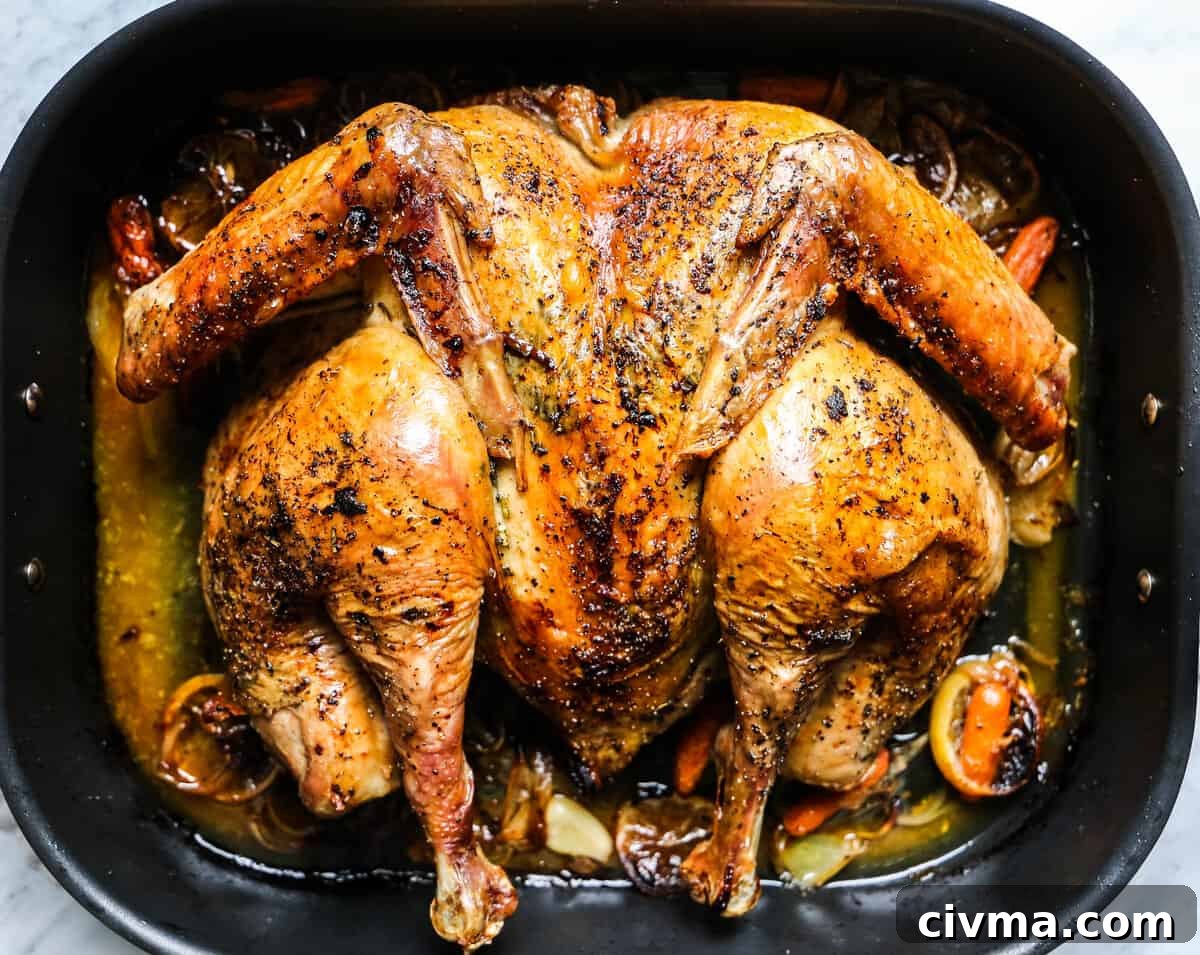
Thanksgiving is just around the corner, which means it is time to plan the menu, organize the oven schedule, and decide exactly how that turkey is going to make it to the table. If you want a flavorful, juicy bird with beautifully crisp skin and a shorter roasting time, this Whole30 Spatchcocked Turkey with Turkey Gravy is a delicious option to consider. The method may have a funny name, but spatchcocking is one of the most practical ways to roast a whole turkey evenly and efficiently.
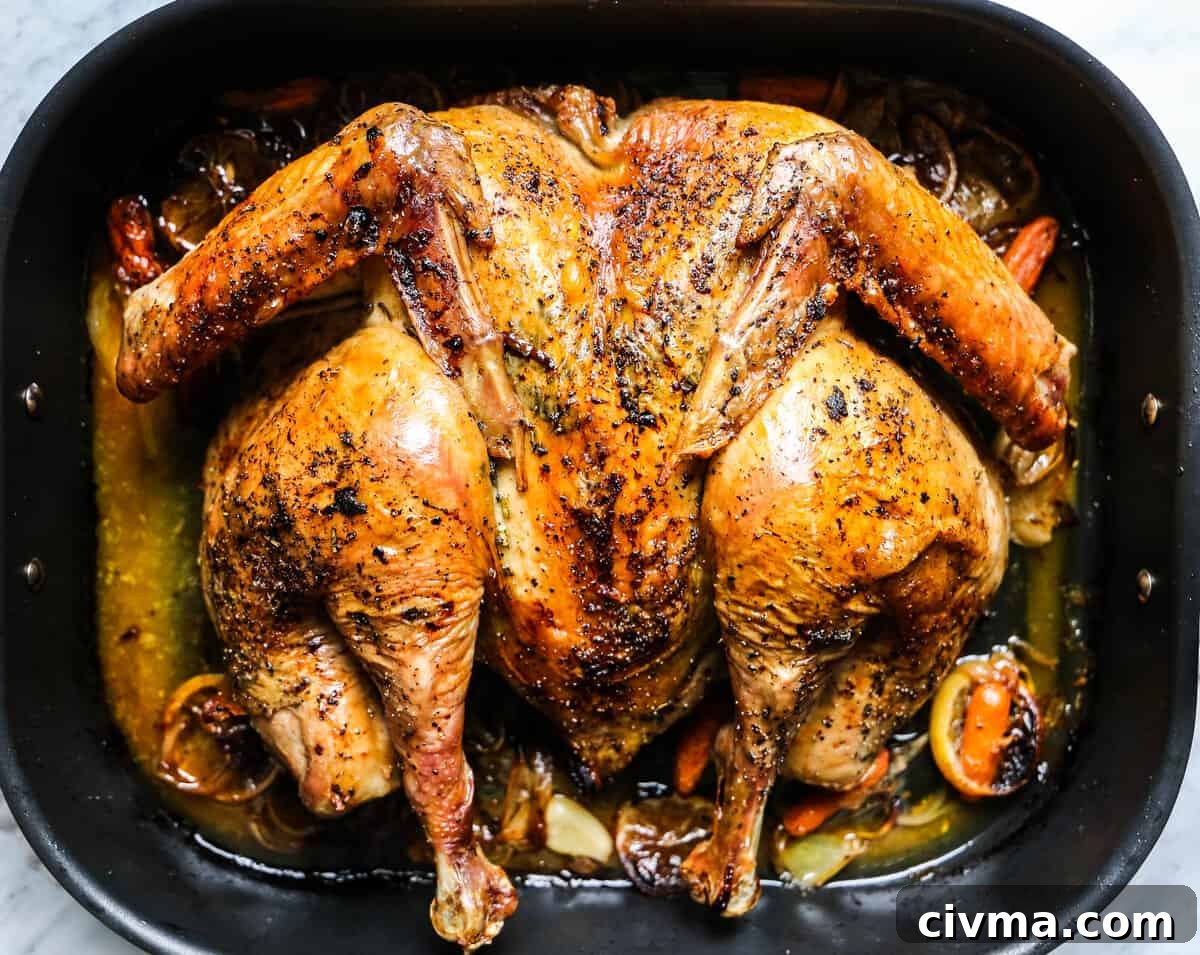
Spatchcocking simply means removing the backbone from a whole bird, such as a chicken or turkey, and flattening it before roasting. Once the turkey is opened up and laid flat, the breast, thighs, and legs are all more evenly exposed to the heat. It might sound intimidating at first, but the process is straightforward with a sturdy pair of poultry shears. Turn the turkey breast-side down, cut carefully along both sides of the backbone, remove it, and then press the bird flat. It takes a little strength, but it is not complicated.
The biggest benefit of a spatchcock turkey is even cooking. Traditional whole roasted turkeys can be tricky because the breast meat and dark meat often cook at different rates. With the turkey flattened, the heat reaches the meat more evenly, helping the skin crisp while keeping the meat juicy. This method also allows you to roast the turkey at a higher temperature at the beginning, which helps create that golden, crisp skin that everyone wants on Thanksgiving Day.
There are several reasons to try a spatchcocked Thanksgiving turkey. First, the flat shape helps the turkey cook more consistently. Second, the skin sits on top and is fully exposed, which makes it easier to get that crisp, flavorful finish. Third, the cooking time is usually much shorter than a traditional roasted turkey. Finally, the removed backbone is incredibly useful for making rich, savory turkey gravy. Combined with the giblets, neck, pan juices, herbs, and seasonings, it adds deep flavor without needing flour or dairy.
- A flattened turkey roasts more evenly from edge to center.
- The exposed skin becomes crisp, golden, and full of flavor.
- The turkey can roast faster than a traditional whole bird.
- The backbone, neck, giblets, and pan drippings help create a flavorful Whole30 turkey gravy.
If you do not need the turkey to stand upright as a centerpiece, spatchcocking is a smart and reliable way to prepare your Thanksgiving meal. Once it is roasted and rested, simply carve it and serve it with gravy and your favorite holiday side dishes. It is practical, beautiful, and packed with flavor.
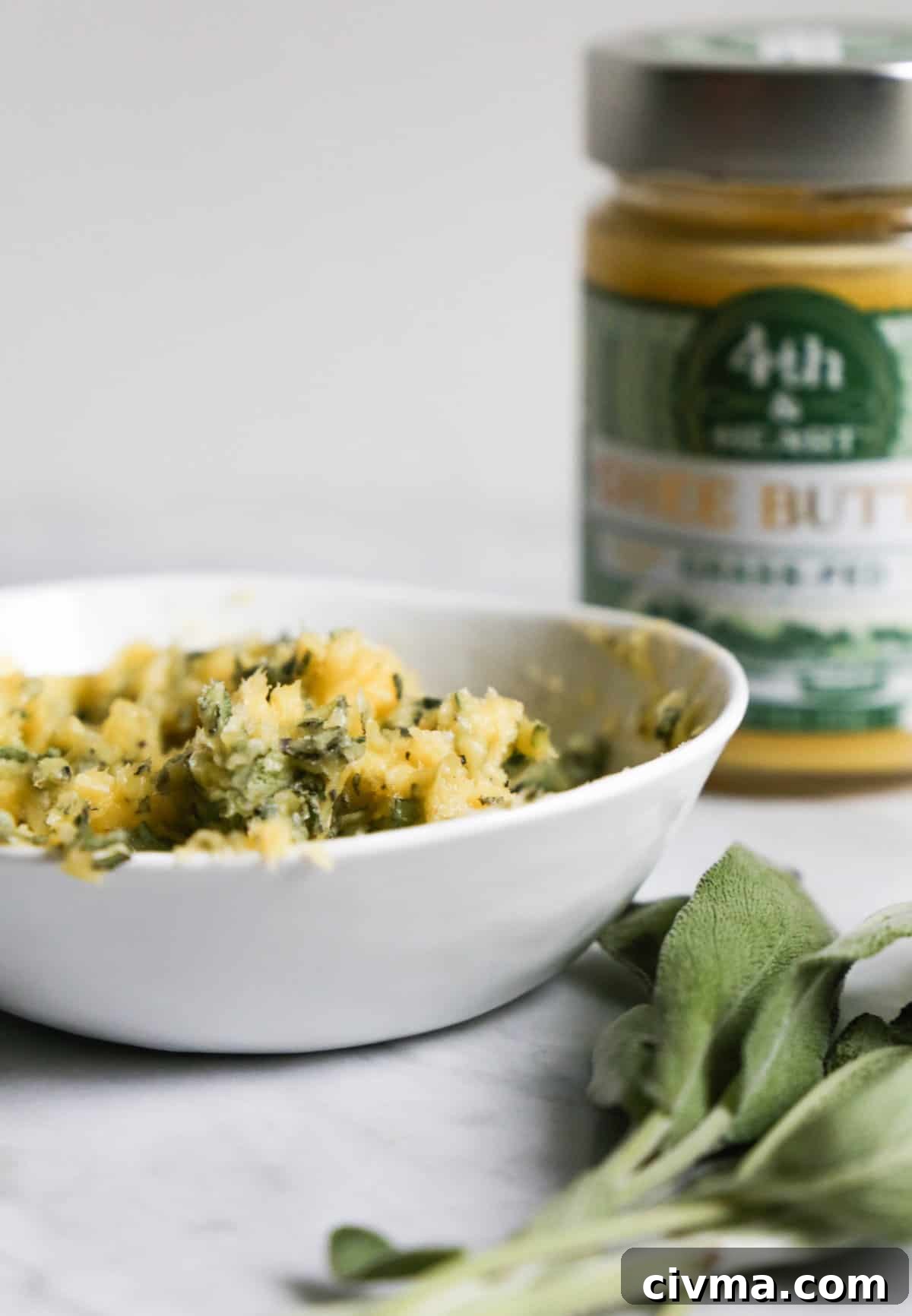
This Whole30 and Paleo-friendly roasted turkey uses ghee instead of butter. Ghee gives the turkey a rich, buttery taste while keeping the recipe compliant for those following a Whole30 or Paleo approach. Mixed with fresh sage, rosemary, thyme, and salt, the herbed ghee is spread between the skin and the meat to add moisture and flavor where it matters most. A little olive oil on the outside helps protect the skin as it roasts at high heat.
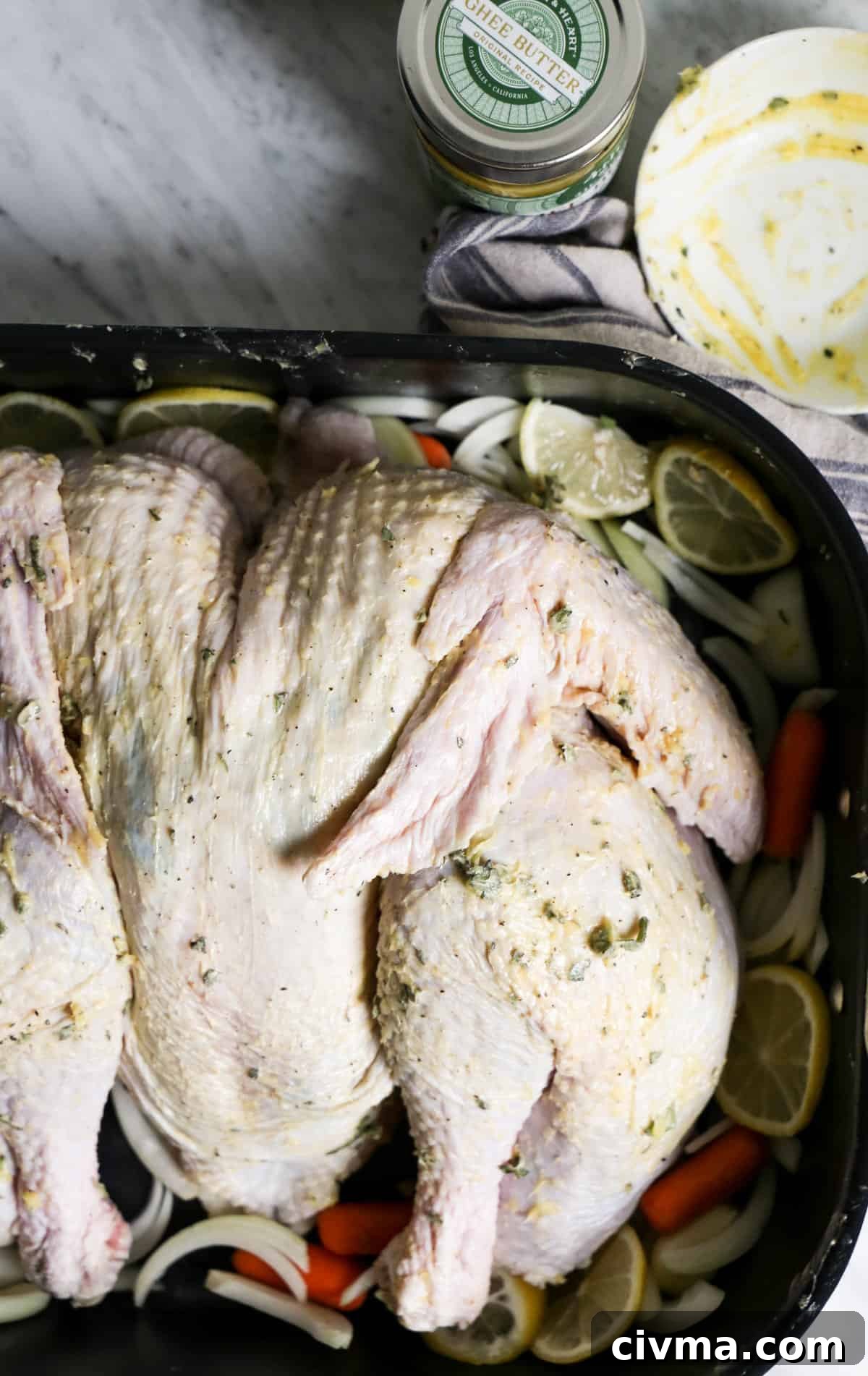
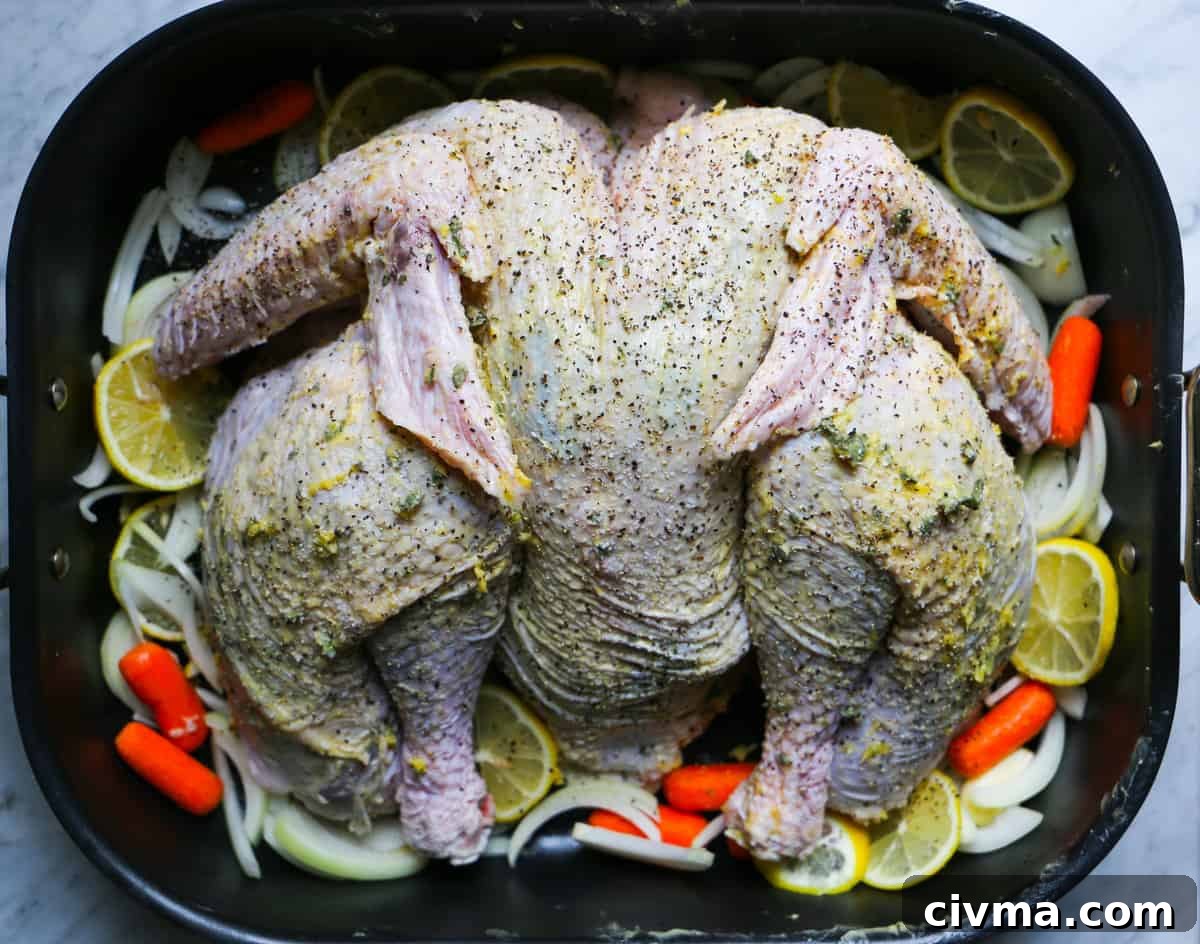
The turkey is roasted over onions, lemons, carrots, and garlic. These aromatics help flavor the drippings in the bottom of the roasting pan, which are later strained and added to the gravy. The result is a Thanksgiving turkey that feels classic and comforting but still fits a Whole30-style meal.
Happy Thanksgiving. Enjoy this Whole30 Spatchcocked Turkey with Turkey Gravy, a table full of good food, and time with the people you love.
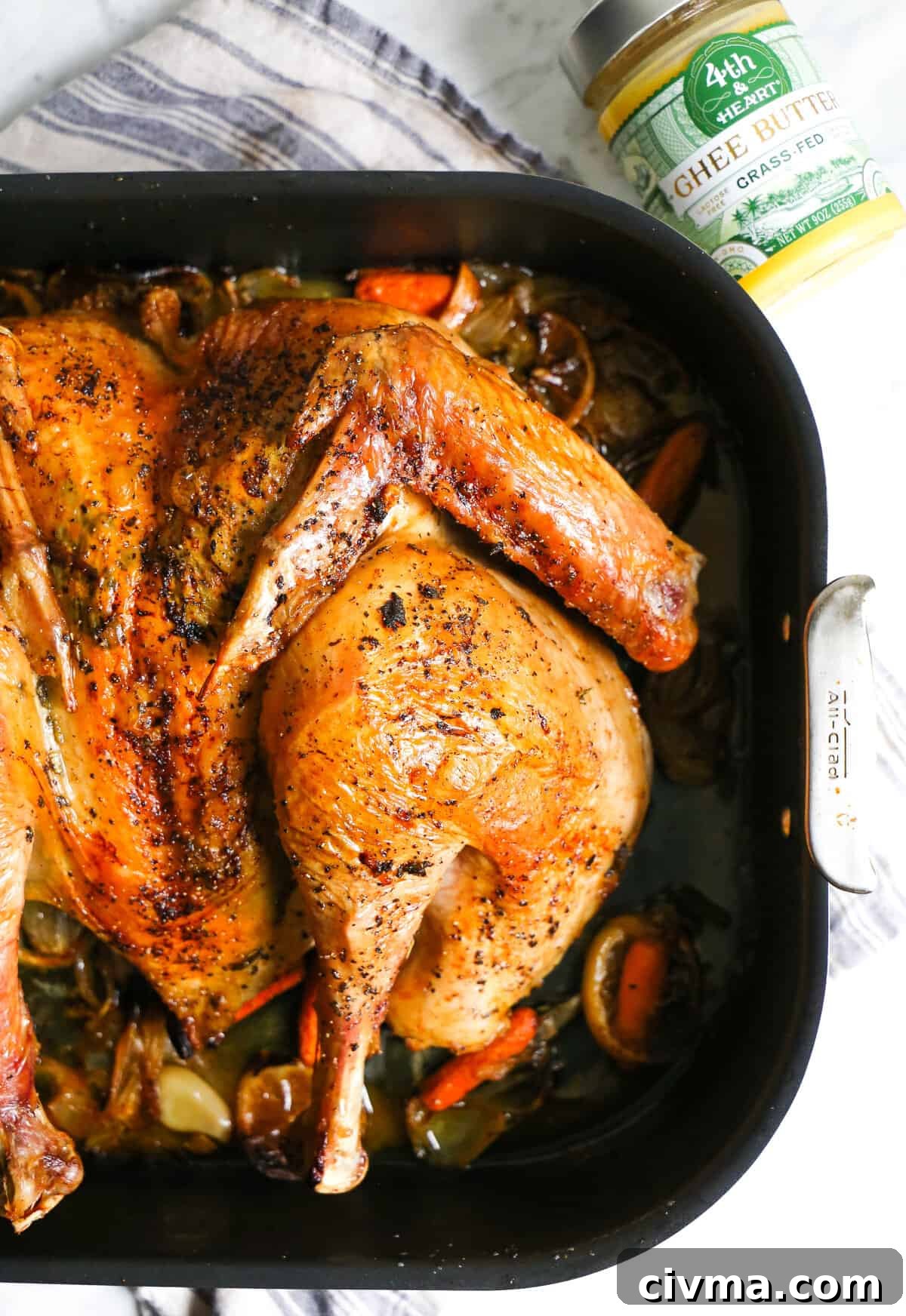
- 1 (12 to 14 lb) turkey, backbone removed and spatchcocked
- 1 onion, sliced
- 2 lemons, sliced
- 4 cloves garlic, smashed
- 2 cups baby carrots
- Kosher salt, to taste
- Coarse black pepper, to taste
- 5 tbsp grass-fed ghee
- 1 tsp kosher salt
- 1 heaping tbsp freshly chopped sage
- 1 heaping tbsp freshly chopped rosemary
- 1 heaping tsp fresh thyme leaves
- Preheat the oven to 450 degrees.
- Arrange the sliced onion, carrots, lemons, and smashed garlic on the bottom of a roasting pan. They do not need to be perfectly arranged; they are there to flavor the turkey and the pan drippings for gravy.
- Place the spatchcocked turkey over the vegetables and lemons with the open cavity facing down and the breasts facing up. Gently tuck the wing tips underneath the breasts to help prevent burning.
- In a small bowl, combine the ghee, kosher salt, sage, rosemary, and thyme. Using your hands, carefully spread some of the herbed ghee between the turkey skin and the meat. This helps season the turkey and keep it juicy.
- Pat the outside of the turkey skin dry with a paper towel. Rub the remaining herbed ghee over the top of the turkey and drizzle lightly with olive oil to help prevent burning. Season generously with kosher salt and coarse black pepper.
- Transfer the turkey to the oven and roast at 450 degrees for 30 minutes.
- After 30 minutes, baste the turkey with the juices from the pan. Use a turkey baster or spoon the juices carefully over the skin. Reduce the oven temperature to 350 degrees.
- Continue roasting at 350 degrees, basting every 20 minutes, for about 1 hour more, or until the thickest part of the thigh registers 175 degrees on a meat thermometer.
- Remove the turkey from the oven and let it rest at room temperature for 20 to 30 minutes before carving.
- Carve the turkey and serve with Whole30 turkey gravy and your favorite Thanksgiving side dishes.
- Save the turkey backbone, neck, and giblets for the gravy. They add important flavor to the stock.
- Turkey giblets and turkey neck, reserved from the cavity of the turkey
- Pan juices reserved from the roasted turkey
- 1 tbsp black peppercorns
- Kosher salt, to taste
- 1 bay leaf
- Water
- 3 to 6 tbsp arrowroot starch, depending on the amount of liquid and desired thickness
- 2 tbsp freshly chopped sage
- 1 tbsp fresh thyme leaves
- Black pepper, to taste
- 2 tbsp lemon juice, or the juice of 1 lemon
- Place the turkey neck and giblets in a saucepan. Add enough water to just cover the turkey parts.
- Bring the water to a boil. Add the peppercorns, two pinches of kosher salt, and the bay leaf. Reduce the heat to a gentle simmer, cover, and cook for at least 2 hours while you prepare and roast the turkey. A longer simmer will create a more flavorful stock.
- When the turkey is finished roasting, strain the stock and discard the turkey pieces. Return the strained stock to the saucepan over medium heat. Strain the juices from the bottom of the roasting pan and add them to the saucepan.
- Ladle 1 1/2 cups of the stock into a bowl and let it cool. Add 3 tbsp arrowroot starch and whisk until completely dissolved. If the stock is too hot and you do not have time to cool it, use 1 1/2 cups regular chicken broth for the slurry.
- While whisking the stock in the saucepan, slowly pour in the arrowroot mixture. Bring the gravy to a rapid simmer and cook uncovered until it thickens. Skim off any excess oil that gathers on the surface and discard it.
- If the gravy is not thick enough, make another small slurry with broth and additional arrowroot starch. Add it 1 tbsp at a time, whisking well, until the gravy reaches your preferred consistency.
- Once the gravy has thickened, stir in the chopped sage, thyme leaves, and lemon juice. Taste and season with additional kosher salt and black pepper as needed.
Please note that this post contains sponsored content. I only work with companies and products that I genuinely support and that align with The Defined Dish’s views. Although I am compensated for the work I do, all opinions are my own.