Can you eat less and still feel full? Research suggests that you can. Here is what a 2004 study can teach us about portion control, satisfaction, and eating smaller servings without feeling deprived.
A 2004 study on sandwich portion sizes found something that is both simple and powerful: when people were served a 12-inch sub sandwich instead of an 8-inch sandwich, they ate more calories, but their reported hunger and fullness after the meal were not significantly different.
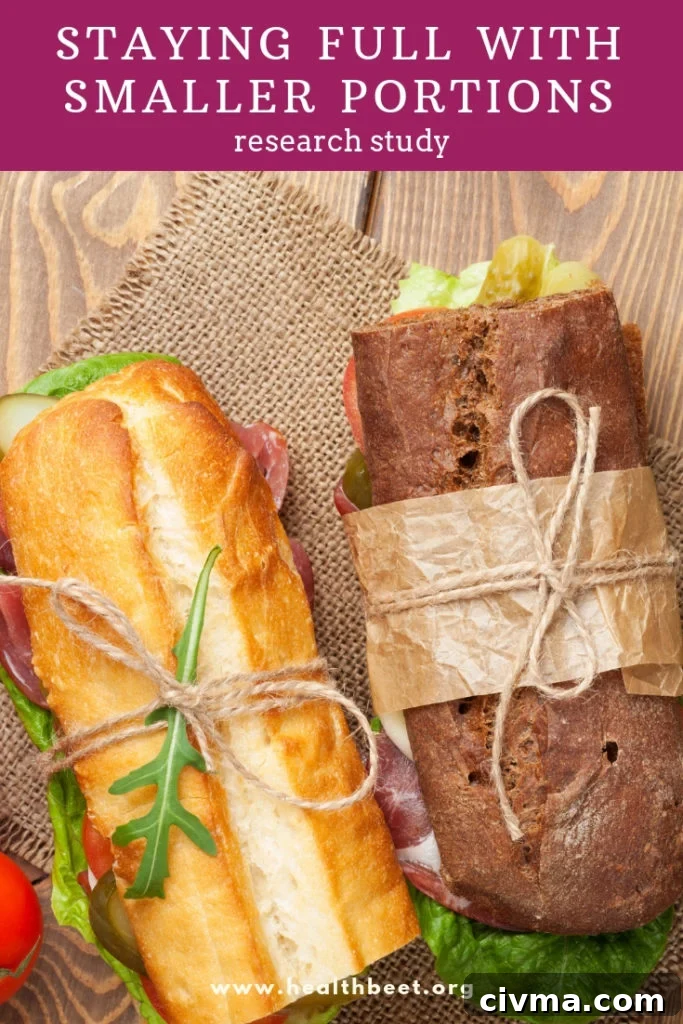
This finding is worth paying attention to, especially if you are working on portion control for weight loss or healthier eating. The people who ate the larger sandwich consumed more food and more calories, yet they did not feel noticeably more satisfied than those who ate the smaller sandwich. In other words, a larger portion did not automatically create a better eating experience.
For me, this highlights an important point: hunger and fullness are not only physical. They also have a mental and visual component. When a meal looks complete, feels like a full serving, and allows us to finish what is on the plate, we often feel satisfied. That is why portion control can be so effective. It is not always about forcing yourself to eat tiny amounts of food. Sometimes it is about choosing slightly smaller portions that still feel like a complete meal.
The specific study results state:
The portion size of the sandwich significantly influenced how much people ate at lunch. Most participants ate the entire 6-inch sandwich when it was served. When given the 12-inch sandwich instead of the 8-inch sandwich, women consumed 12% more energy, or about 74 additional calories, while men consumed 23% more energy, or about 186 additional calories. Even with these differences in calorie intake, hunger and fullness ratings were not significantly different after eating the 12-inch and 8-inch sandwiches. (source)
Increasing the portion size of a sandwich increases energy intake (Journal of the Academy of Nutrition and Dietetics, March 2004)
What can we learn from this study
The biggest lesson is that we often eat the portion we are given. If we are served a whole sandwich, a full muffin, a bowl of cereal, or a complete plate of food, we tend to treat that amount as the right amount. We finish it because it feels like the meal. When the difference between portions is not dramatic, our feelings of fullness may end up being very similar.
This is where small portion changes can make a real difference. If a slightly smaller sandwich, muffin, snack, or meal still feels complete, you may be able to reduce calories without feeling like you are missing out. That is very different from strict dieting, where portions can feel so small that you leave the table frustrated or hungry.
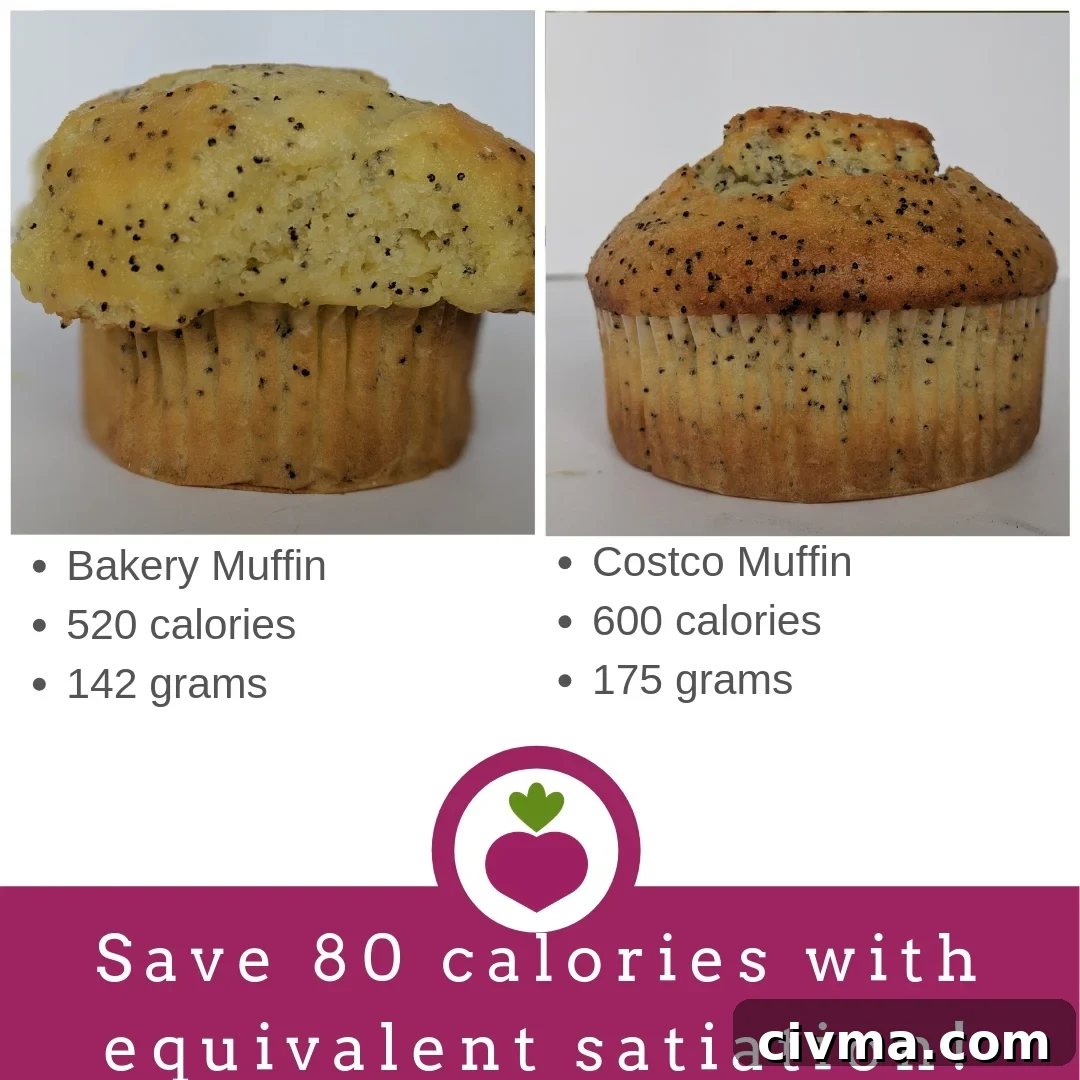
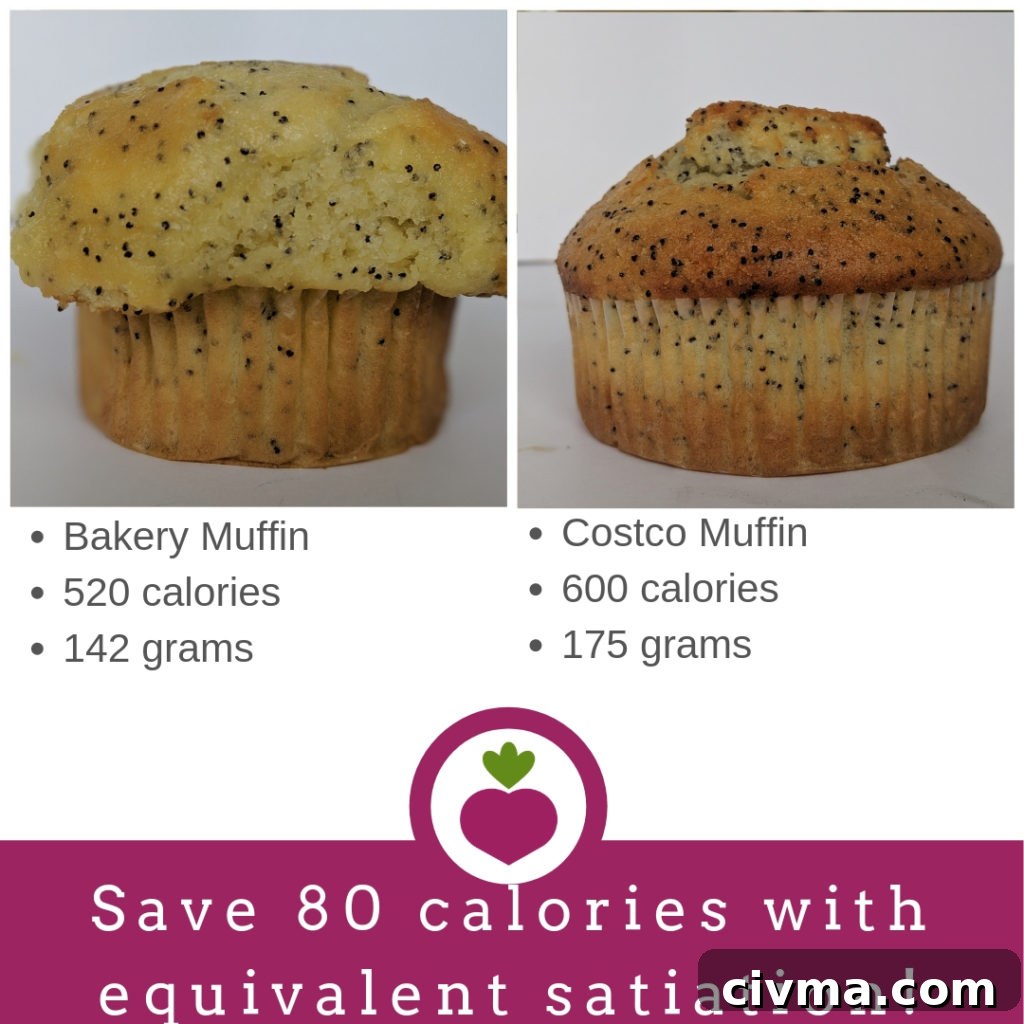
I thought about this recently after comparing two muffins that looked very similar in size. One was from a bakery and the other was from Costco. The bakery muffin weighed only 33 grams less than the Costco muffin, but it had 80 fewer calories. After eating each muffin, the level of satisfaction felt very similar. The smaller muffin did not feel like a disappointing choice, yet it saved 80 calories.
That may not sound like much in one snack or one meal, but small calorie savings can add up over time. If you can feel just as satisfied with a slightly smaller portion, there is no need to automatically choose the bigger one. Portion control works best when it feels realistic, repeatable, and satisfying.
This does not mean you should ignore hunger cues or eat less than your body needs. It means that bigger portions are not always better, and more food does not always equal more satisfaction. A smart portion can still be filling, enjoyable, and enough.
So, the bottom line here is, you can eat less and not feel deprived!
If you are trying to manage calories, build healthier habits, or feel more in control around food, start by making small changes to portion sizes. Choose a slightly smaller serving that still looks and feels complete. Use plates, bowls, or containers that help the portion look satisfying. Pay attention to how you feel after eating, rather than assuming the largest serving will leave you the most content.
The 2004 sandwich study is a helpful reminder that our eyes, habits, and expectations influence how much we eat. When we are served more, we often eat more. But when we are served a reasonable portion that still feels like a full meal, we may be just as satisfied. That is encouraging news for anyone who wants to eat fewer calories without feeling restricted.
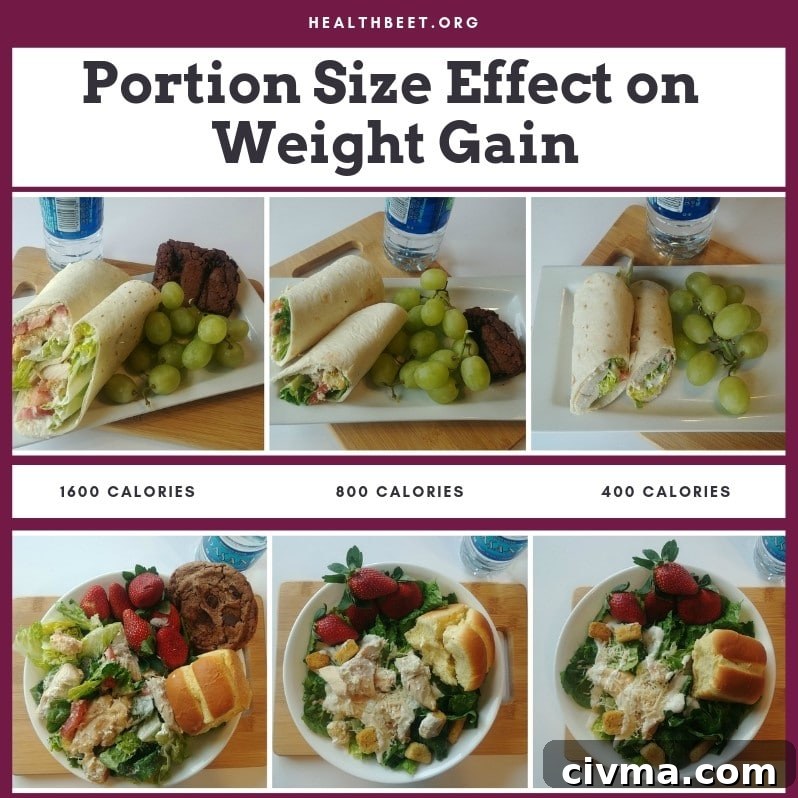
Exposure to Bigger Portion Sizes Leads to Weight Gain
- Stopping Food Noise Won’t Automatically Make You Lose Weight
- What I Eat in a Day: 6 Days of Low Carb, High Protein Meals
- What I Eat In A Day for Weight Loss (5 Days at 1300-1500 Calories)
- Easy High Protein Chicken Lettuce Wraps
- Protein Frosting Graham Cracker Snack (High-Protein Treat)
If you like this, you might also like
- Sugar Free Sugar Cookies! Only 44 calories
- Healthy Egg Salad Sandwich
- Protein Pumpkin Ice Cream Sandwiches
- The Best Bagel Egg Sandwich Recipe {with Cheese}
- Portion Control Plate vs. Dinner Plate {Research results!}