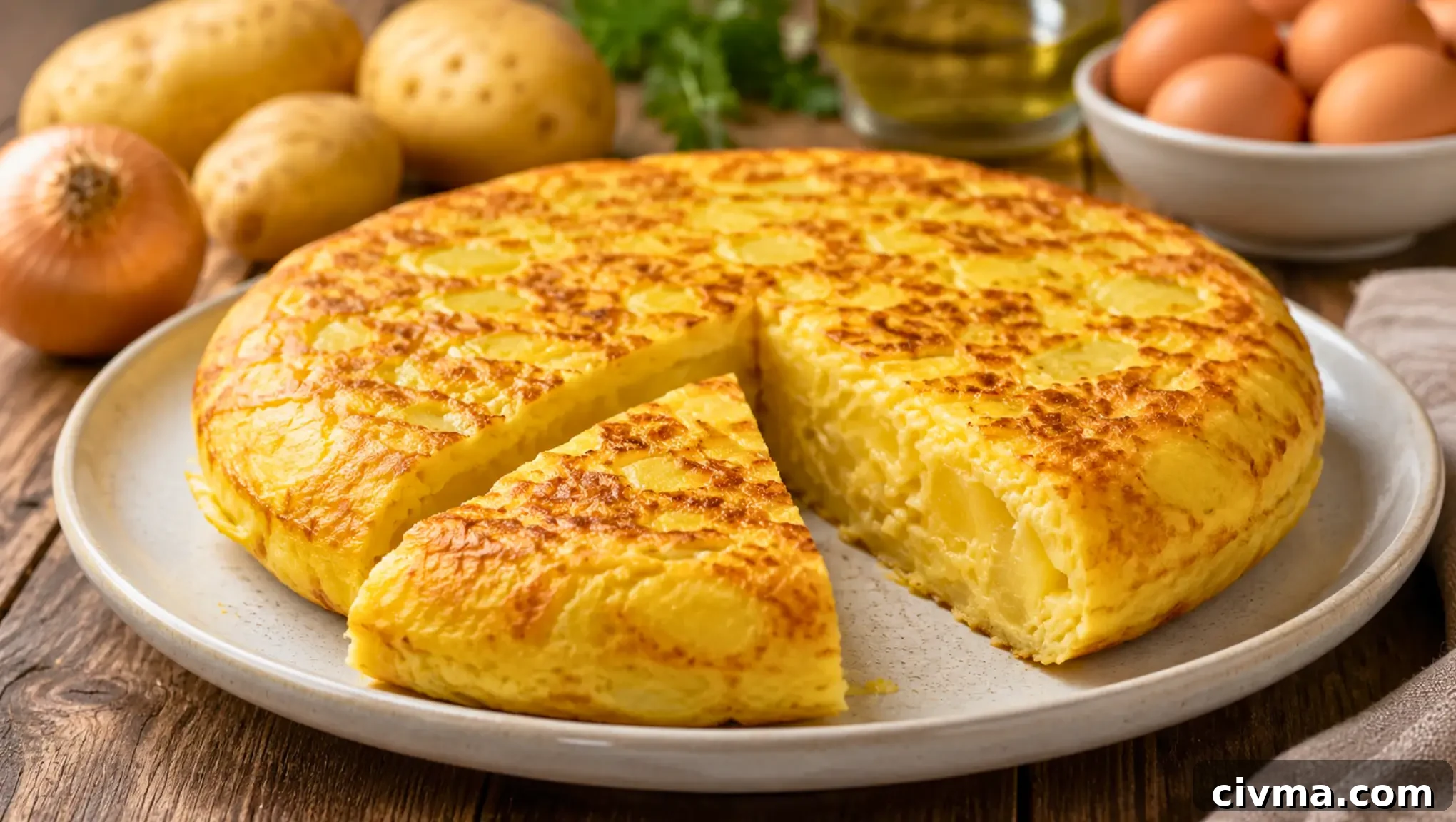
Should you fry or confit the potatoes?
The first common mistake is treating the potatoes like fries and cooking them at high heat. Professional cooks prefer to confit them slowly in a generous amount of olive oil, gently simmering until tender and almost melting into a soft confit. Olive oil tolerates long, gentle heat and imparts aroma without overwhelming the potatoes, so the result is moist and creamy rather than hard and overly browned.
Choose a floury potato with low water content, such as a Kennebec or similar variety. These hold up better in the pan and give a compact, tight texture to the tortilla. Their lower moisture prevents the egg mixture from becoming soggy during cooking.
With or without onion?
Adding onion is a matter of personal preference. Without it, the tortilla has a clean, straightforward potato-and-egg flavor; with it, the dish gains sweetness and extra juiciness. If you include onion, cook it slowly over low heat until it reaches a golden brown—this brings out the natural sugars without turning bitter. A slightly sweet yellow onion, thinly sliced, works especially well, whether you confit it together with the potatoes or prepare it separately.
The right egg-to-potato ratio, without overbeating
Texture depends on the balance between eggs and potatoes. A reliable guideline many chefs use is roughly one large egg per 100 g of potatoes—about six to eight eggs for 500 g of potatoes. Using fewer eggs risks a dry tortilla; using too many leaves it swimming in egg.
Beat the eggs just enough to combine yolks and whites without incorporating air or creating foam. Introducing too much air speeds coagulation during cooking and can lead to a drier, spongier texture rather than the desired tender, slightly creamy interior.
Why let the mixture rest before cooking
Once the confited potatoes are mixed with the beaten eggs, a short rest of 5 to 10 minutes makes a noticeable difference. During that pause the potatoes absorb some of the egg and the mixture evens out, so the tortilla cooks more uniformly and holds together better when sliced.
This resting period requires no special equipment—just patience. It also gives you a moment to taste and adjust seasoning before the pan.
Medium heat, salt at the right time and a good flip
Cooking over medium heat is essential. Too hot and the outside will brown before the center sets; at medium, the interior remains creamy while the surface develops a gentle color. A few minutes on each side are usually enough; the exact timing depends on whether you prefer the tortilla fully set, tender, or slightly runny.
Season the potatoes and onions after they have been cooked in the oil, rather than salting the beaten eggs. This approach prevents excess moisture being drawn out into the egg mixture and lets you fine-tune seasoning at the end. For turning the tortilla, the simplest method is to cover the pan with a large, flat plate and invert it, then slide the tortilla back into the pan to finish. A nonstick skillet around 20 to 24 cm with gently curved sides is ideal for an even flip and neat edges.
Follow these steps—slowly confit the potatoes in olive oil, choose a floury variety, decide on onions and caramelize them gently if using, use about one egg per 100 g of potato without overbeating, rest the mix briefly, and cook over medium heat while salting at the right moments—and you’ll get a well-textured, flavorful tortilla that slices cleanly and keeps the classic balance of tender potato and softly set egg.