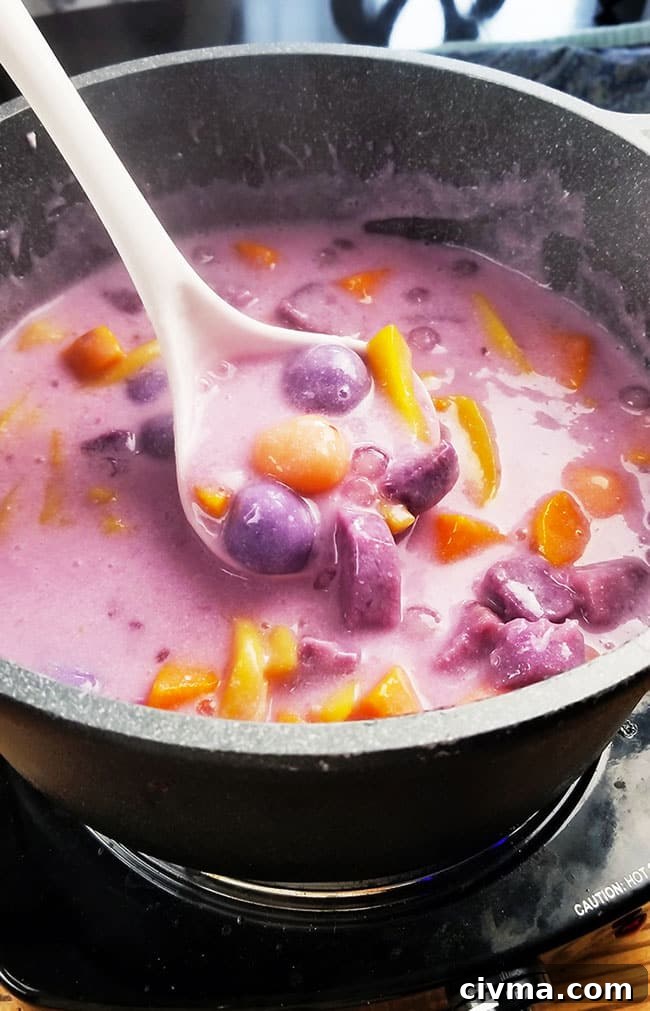
How to make Bilo-Bilo with langka (jackfruit). This easy, quick version of Bilo-Bilo uses simple ingredients you can find at most Asian markets. Make a big batch and portion it out — it freezes well for ready desserts and snacks.
Bilo-Bilo (also called Ginataang Bilo-Bilo) is a classic Filipino dessert made of glutinous rice balls cooked in sweetened coconut milk. This version includes langka (jackfruit), sweet potatoes, and tapioca pearls for texture and color. It’s comforting, subtly sweet, and great served warm.
What is Bilo-Bilo?
Bilo-Bilo is a Filipino coconut-milk dessert whose name refers to the chewy glutinous rice balls (bilo-bilo). The dessert usually combines these rice balls with ingredients like sweet potatoes, taro or yam, jackfruit, and tapioca pearls, all simmered in sweetened coconut milk (gata). This recipe is an approachable home-friendly version that uses canned coconut milk and ready-to-use jackfruit.
Tips before you start
- Prepare and measure all ingredients before cooking — this saves time and stress.
- Form the glutinous rice balls (bilo-bilo) ahead of time and refrigerate until needed.
- Cook tapioca pearls slowly. Small pearls often take much longer than expected, so consider using a slow cooker or giving them extra simmering time until fully translucent.
- Use canned coconut milk for convenience and consistent flavor.
Where to buy tapioca pearls
- Find them at local Asian grocery stores in the flour or dessert section.
- They are also available from many online retailers that sell Asian pantry staples.
Which sugar to use
- White granulated sugar is recommended if you prefer a clean, neutral sweetness and to keep the soup’s color bright.
- Brown or muscovado sugar will add deeper color and a molasses-like flavor, which changes the dessert’s traditional profile.
How to make the glutinous rice balls
- Combine glutinous rice flour, a little sugar, and water to form a pliable dough.
- Divide the dough and add a few drops of food coloring if desired for visual contrast (purple and orange are traditional playful options).
- Roll the dough into small bite-sized balls and set aside on a tray dusted with a little flour to prevent sticking.
Ingredients
- 1 medium purple sweet potato, sliced
- 1 medium yellow yam (ube or gabi if preferred), sliced
- 1 can (10 oz) jackfruit in syrup, drained and cut into strips
- 1 cup large tapioca pearls, cooked
- 1/2 cup white granulated sugar (adjust to taste)
- 2 cups water (for boiling the yams and potatoes)
- 1 can coconut milk (about 13–14 oz)
For the glutinous rice balls
- 1 to 1 1/4 cups glutinous rice flour
- 3/4 cup water (adjust to make a soft dough)
- A pinch of yellow and purple food color (optional)
- 1 tablespoon sugar (for the dough)
Instructions
To make the glutinous rice balls
- Mix glutinous rice flour, 1 tablespoon sugar, and water in a bowl. Stir by hand until a soft, non-sticky dough forms. If too wet, add 1 teaspoon of flour at a time.
- Divide the dough into portions and tint slightly with food coloring if using. Roll into small, bite-sized balls; set aside on a lightly floured tray.
To assemble the Bilo-Bilo
- In a large pot, combine 2 cups water and 1/2 cup sugar. Add the sliced sweet potato and yam. Bring to a boil over medium heat and cook until the root vegetables are tender but not falling apart.
- Pour in the coconut milk and gently stir to combine. Bring the mixture to a gentle simmer.
- Add the glutinous rice balls to the simmering coconut milk. Continue to simmer on low heat until the rice balls float and cook through—check one to ensure the center is no longer doughy.
- Stir in the drained jackfruit strips and cooked tapioca pearls. Simmer for another 2–3 minutes to allow flavors to meld. Do not boil vigorously to prevent the coconut milk from curdling.
- Adjust sweetness if needed, then remove from heat.
- Serve warm. Bilo-Bilo is best enjoyed hot or warm straight from the stove.
Notes and storage
- You can freeze large batches of Ginataang Bilo-Bilo. Thaw before reheating; the glutinous balls may firm up in the freezer, so reheat gently with a splash of water or coconut milk to restore texture.
- If the dessert becomes too thick when reheating, add a small amount of water and warm slowly until you reach the desired consistency.
This langka (jackfruit) version of Bilo-Bilo gives the classic Filipino dessert a fragrant, tropical twist. It’s colorful, comforting, and easy to adapt — swap root vegetables or omit the tapioca pearls to suit your pantry and taste.