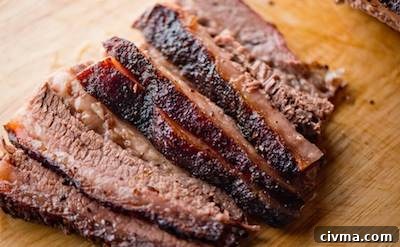
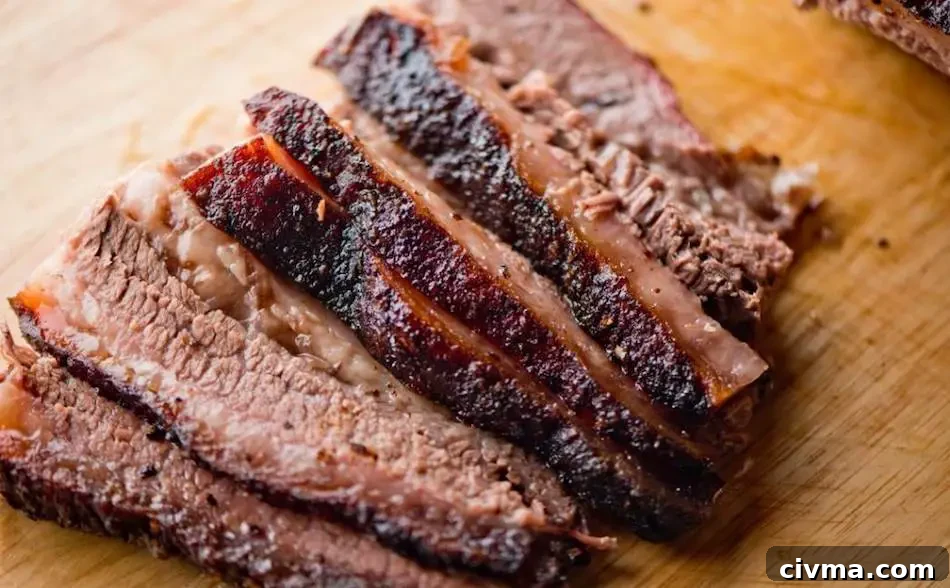
If you haven’t tried dry-aged brisket, now is a great time. Dry aging is a controlled process that concentrates beef flavor and breaks down muscle fibers to produce a more tender, complex piece of meat. The result is a richer, beefier taste with a subtle nutty character from the aging. Add a touch of smoke and the flavor becomes layered and memorable. This article explains what makes dry-aged brisket special, how the aging process works, and practical advice for aging and smoking brisket safely and successfully.
Dry-aged brisket refers to brisket that has been stored in a controlled cool environment for an extended period—commonly 28–35 days. During that time natural enzymes break down connective tissue while slow dehydration concentrates flavor. Proper dry aging requires control of temperature, humidity and airflow; done correctly it enhances tenderness and flavor, but done incorrectly it risks spoilage. Vacuum-sealing preserves meat but does not produce the same flavor development as true dry aging.
Key Points
- Dry aging concentrates flavor and increases tenderness through enzyme activity and slow dehydration.
- Typical dry-aging duration for brisket is 28–35 days, though some age for shorter or longer periods depending on preference.
- Temperature, humidity and airflow must be controlled to prevent spoilage and promote the desired tenderizing and flavor changes.
- Dry aging can be done at home with the right equipment and knowledge, but a proper cool room or dedicated dry-aging fridge is ideal.
- Expect approximately 25–35% weight loss from moisture evaporation and trimming; a crust forms and must be removed before cooking.
- Vacuum-sealed “wet-aged” meat preserves meat but does not produce the same dry-aged flavor profile.
| Factors | Ideal Range | Importance |
|---|---|---|
| Temperature | 32–39° F (0–4° C) | Prevents microbial growth while allowing enzymatic tenderization |
| Humidity | 60–85% (depending on setup) | Controls surface drying and prevents excessive mold |
| Airflow | Stable, controlled circulation | Promotes even drying and discourages spoilage |
| Aging duration | 14–35 days (commonly 28–35) | Longer aging intensifies flavor but increases weight loss |
| Equipment | Walk-in cool room or specialized dry-aging fridge | Ensures a stable environment |
Ageing and Enzyme Activity
After slaughter, natural enzymes in the muscle begin breaking down proteins and connective tissue. This activity is most active during the first two weeks and continues through the aging period, improving tenderness and shifting flavor compounds. While short aging can help, the commonly preferred window for brisket flavor and texture is around 28–35 days.
Why Dry-Aged Beef Tastes Better
- Slow dehydration concentrates flavors within the meat.
- Enzymatic breakdown of muscle reduces chewiness and enhances mouthfeel.
- Dry aging creates complex, often described as nutty and intensely beefy, flavor notes.
| Dry-Aging Method | Pros | Cons |
|---|---|---|
| Wet-aging | Consistent, less weight loss | Less flavor concentration |
| Dry-aging | Deeper flavor, better tenderness | More weight loss, higher equipment needs |
| Vacuum/Cryovac | Lower spoilage risk, consistent | Minimal dry-aged flavor development |
Can You Dry-Age Meat at Home?
Yes, but only with the right environment and careful monitoring. Safe dry aging depends on maintaining precise temperature, humidity and airflow. A dedicated cool room or a purpose-built dry-aging fridge is the safest option. If using a home refrigerator, limit door openings and ensure stable conditions, understanding that most household fridges are not ideal for extended dry aging.
Three Critical Factors
- Temperature of the cooler
- Relative humidity of the environment
- Airflow around the meat
Storage Recommendations
Use wire racks or hang the brisket so air circulates around the entire piece. In a walk-in cooler, a fan will help stabilize airflow. Maintain temperature between 32–39° F (0–4° C). Aim for moderate humidity—too high encourages mold, too low causes excessive drying. Monitor conditions regularly and remove the dried outer crust before cooking.
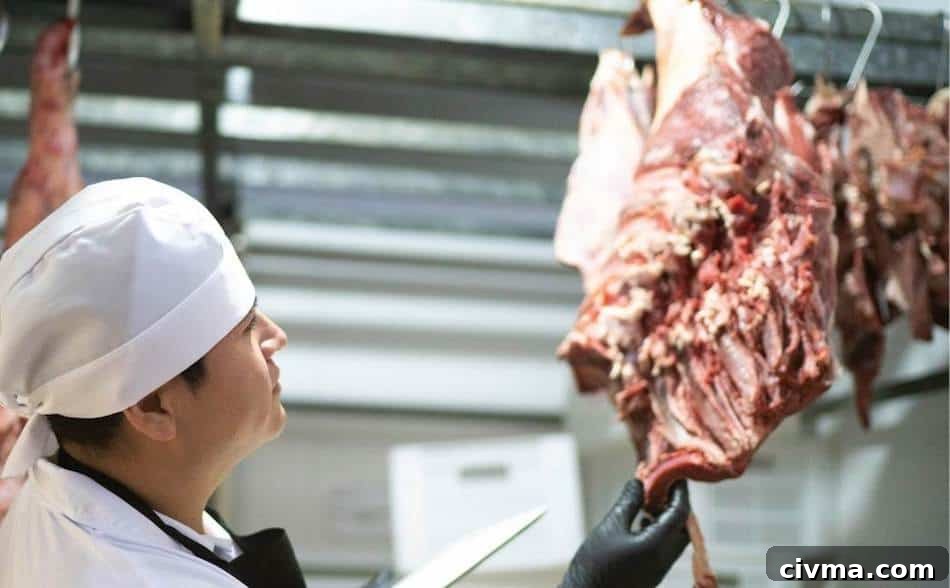
Airflow and UV
Moderate, steady airflow prevents surface spoilage and helps form the protective crust. UV light is sometimes used in professional facilities to reduce airborne bacteria, but proper environmental controls are the primary safety measures.
How to Age Brisket (Basic Steps)
- Remove brisket from any vacuum packaging.
- Place on a metal rack with full airflow or hang with S hooks in a cool room.
- Aging window: minimum 14 days, commonly 28–35 days depending on desired flavor.
- After aging, trim away the dry crust and excess fat before cooking.
- Cook the trimmed brisket promptly; do not re-store the trimmed piece for extended periods.
| Brisket Type | Description | Flavor Profile |
|---|---|---|
| Dry-Aged | Aged in a controlled environment to intensify flavor and tenderness | Nutty, beefy, complex |
| Prime/Choice/Select | USDA grading reflects marbling and expected tenderness | Ranges from rich and well-marbled to leaner and milder |
| Wagyu/Angus/Grass- or Grain-Fed | Breed and diet influence marbling and flavor | Varies from buttery and intense to leaner and more pronounced beefiness |
Smoking an Aged Brisket — Practical Tips
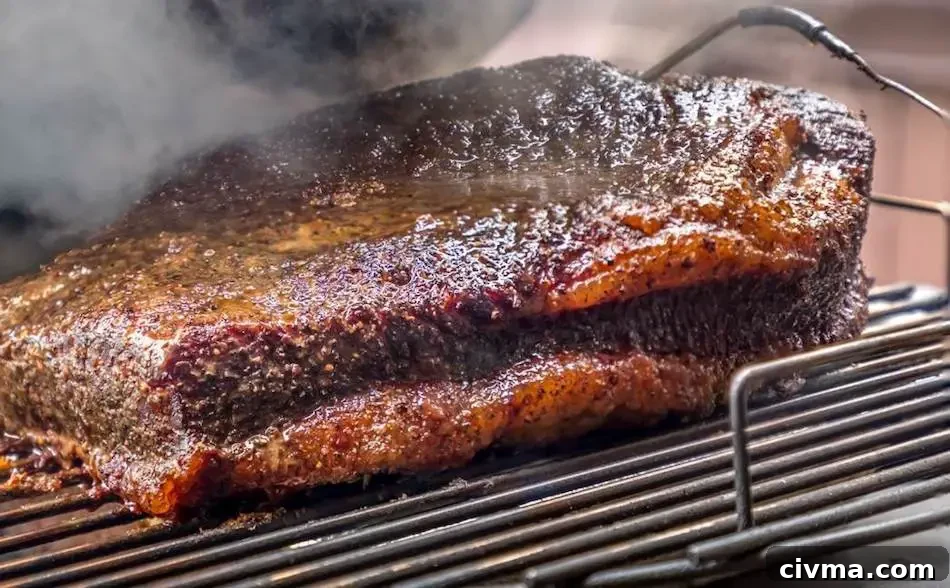
Dry-aged brisket already carries pronounced flavor, so keep smoke and seasoning simple to let the beef shine. Smoke low and slow to break down collagen: 225–250° F is an ideal smoker temperature. Use mild-to-moderate woods like oak, pecan or hickory. Protect the meat from direct heat and monitor internal temperature and tenderness rather than relying on time alone.
Preparing and Smoking
- Dry brine with kosher salt for flavor and moisture retention; be mindful if your rub includes salt.
- Trim excess, leaving some fat if possible to protect the meat during the long cook.
- Use a binder (olive oil or mustard) if needed so rub adheres evenly.
- Apply a simple rub—salt and coarse pepper are often enough for quality brisket.
- Place brisket fat side down if heat comes from below and position the thickest section toward the heat source.
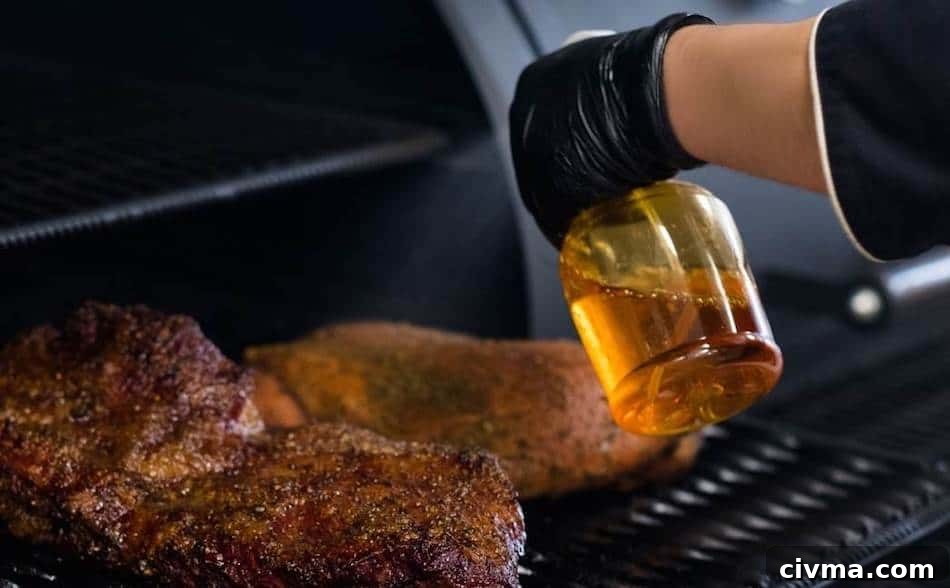
- Develop a bark during the initial phase; spritzing with apple cider vinegar or apple juice can help after several hours.
- Wrap (foil or butcher paper) to push through the stall and retain moisture; paper preserves a firmer bark while foil produces a softer, pot-roast-like texture.
- Cook to probe tenderness (often 195–203° F) rather than an exact time, and rest the brisket about an hour before slicing.
Thermometers and Monitoring
A reliable leave-in thermometer and a secondary instant-read probe are essential. Dual-probe thermometers allow monitoring both smoker temperature and internal meat temperature without frequent lid openings. Minimize opening the smoker to maintain stable conditions and consistent smoke absorption.
Yield and Cost Considerations
Dry-aged brisket will cost more because of the time, storage and weight loss involved. Expect to trim away a crust and lose moisture weight—plan accordingly when purchasing. The enhanced flavor and tenderness are the trade-offs for that extra cost.
Final Notes
Dry-aged brisket is a premium product with intensified flavor and improved tenderness when done correctly. Whether you choose to age brisket professionally or experiment at home, prioritize food safety by controlling temperature, humidity and airflow. Keep preparation and smoking methods simple to highlight the meat’s natural qualities, and enjoy one of the most rewarding barbecue experiences.