There are plenty of good reasons to clean your toddler’s shoes regularly. Kids get messy fast, and shoes often pick up dirt, mud, and stains from playgrounds, parks, and everyday play. Clean shoes look better, last longer, and feel more comfortable for little feet. I’ve always been hard on shoes myself, and now my son seems to wear his out at the same energetic pace.
I also buy second‑hand shoes and clothing when I can. Toddlers outgrow items quickly, so choosing used pieces saves money and reduces waste. Whenever I bring home used shoes, I wash them before my child wears them — shoes should be fresh and safe, whether new or preowned.
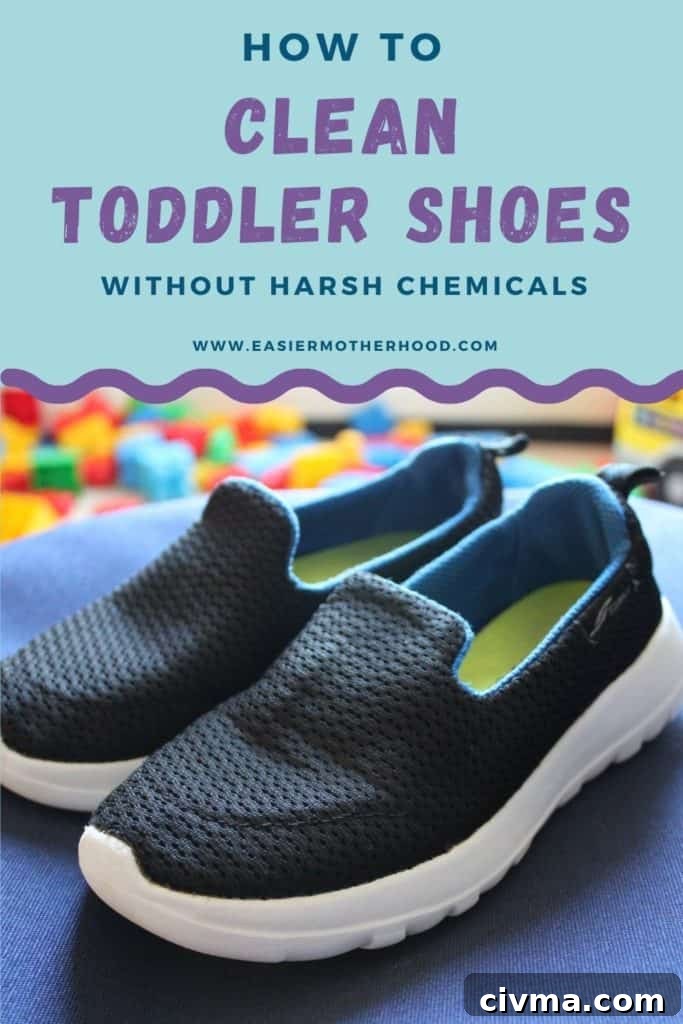
The pair pictured here were Skechers I found at a local consignment sale for $3. They looked structurally fine but stained from outdoor use. With a few simple supplies and a little elbow grease, they came back looking much better.
This post may include mentions of products I use; I sometimes earn a small commission if you choose to purchase through an affiliate link at no extra cost to you.
What You Need to Clean Toddler Shoes
Cleaning toddler shoes doesn’t require harsh chemicals. I prefer mild, kid‑safe methods that work for most materials. For basic cleaning you’ll need dish soap (or a mild laundry detergent), baking soda, a sponge, and an old toothbrush for scrubbing small areas. These supplies handle canvas, fabric sneakers, flip‑flops, Velcro closures, and many slip‑on styles.
Avoid this method on leather or suede — those materials need specialized care. Also skip baking soda on delicate, paint‑finished, or lightweight materials since the abrasive action can cause damage. Use your judgment based on the shoe’s material and condition.
How to Wash Toddler Shoes Using Dish Soap and Baking Soda
Initial wash
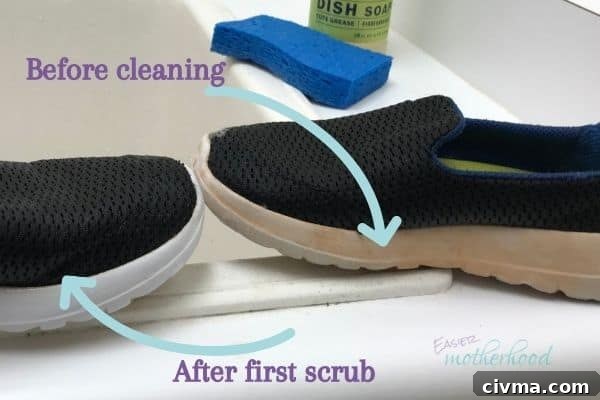
Start by filling a bucket or laundry sink with warm water that covers at least the soles of the shoes. Add a small amount of dish soap or mild laundry detergent to create a soapy soak. Let the shoes sit for about five minutes to loosen dirt. Next, apply a dime‑sized amount of soap to a sponge and scrub the shoes, focusing on the soles and heavily soiled areas. Use an old toothbrush to work into crevices, seams, and textured soles.
Detail wash
Rinse the soap off and inspect the shoes. In many cases, the initial scrub removes most of the visible dirt. For stubborn stains, apply another small amount of soap to the sponge and sprinkle a little baking soda on the wet sponge. The baking soda adds gentle abrasiveness to lift tougher grime. Scrub the affected areas again, being careful with delicate fabrics or finishes.
Drying
Rinse the shoes thoroughly to remove all soap and baking soda residue. Shake out excess water, then blot with a towel. Allow the shoes to air dry indoors, in a garage, or outside in the shade. Avoid direct sunlight and high heat sources like dryers, which can warp materials, weaken adhesives, or fade colors. If a shoe needs help holding shape while drying, stuff it lightly with a towel or paper to support the toe and sides.
Why air dry?
Air drying preserves the shape and material integrity of most shoes. High heat can distort soles, loosen glue, or shrink fabrics. Taking the slower route by air drying keeps shoes fitting better and lasting longer.
How often should you clean kids’ shoes?
If you buy shoes used, wash them before your child wears them. Beyond that, cleaning frequency depends on how your family uses footwear and how quickly shoes get dirty. Families who leave shoes at the door and avoid wearing them indoors may only need to deep clean shoes a few times a year. If shoes are worn inside or through particularly messy play, you may want to clean them more often.
Ultimately, clean shoes when stains, odors, or visible dirt bother you or when a pair looks noticeably tired. A quick scrub here and there keeps shoes presentable, can extend their life, and helps maintain comfort and hygiene for little feet.