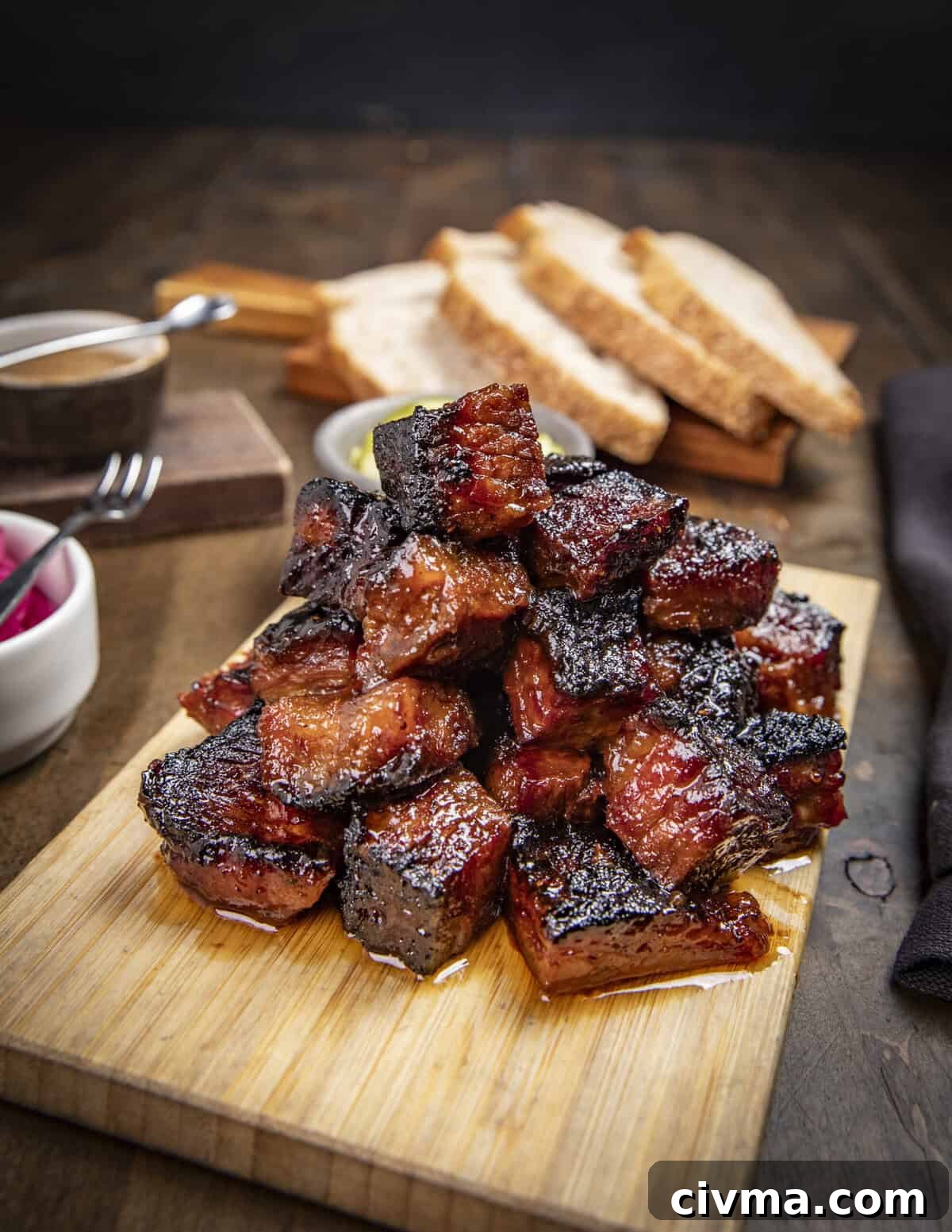
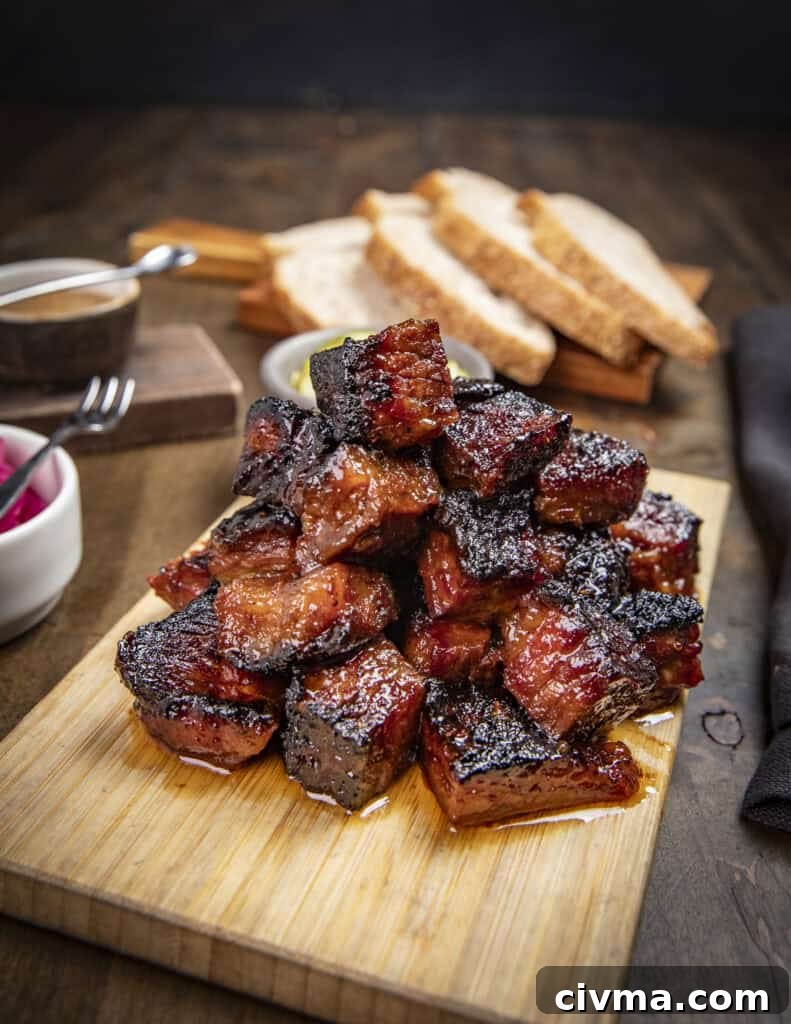
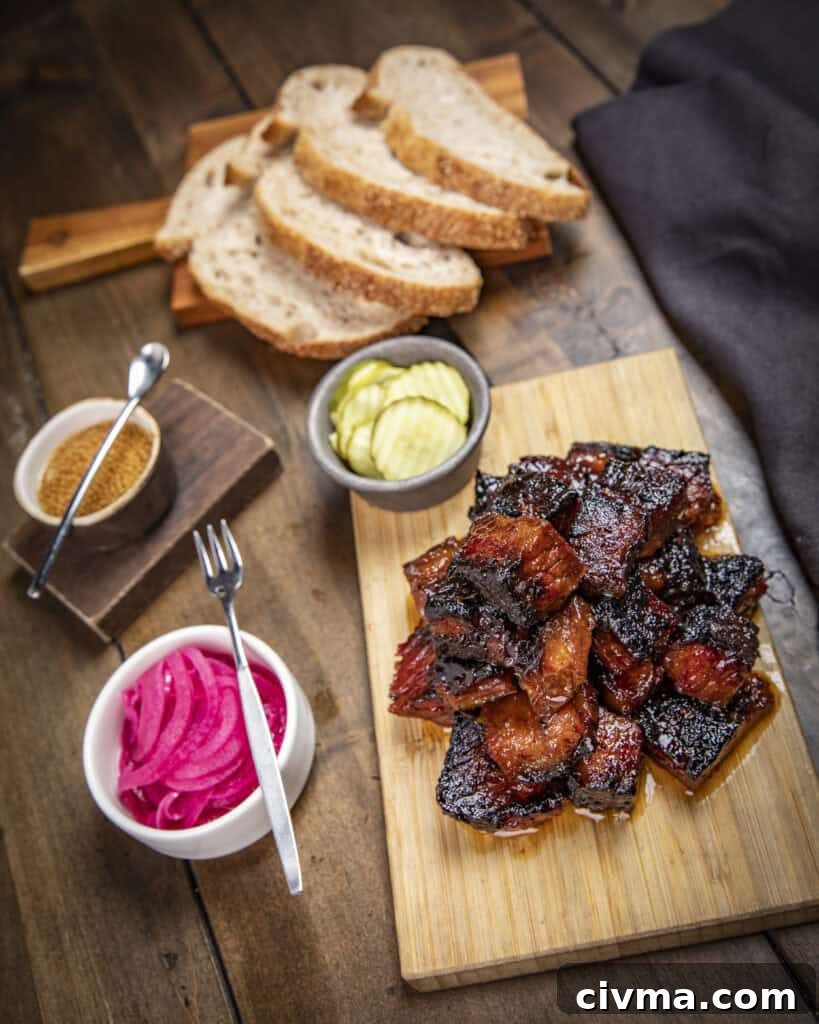
Brisket burnt ends are the quintessential bite-sized BBQ indulgence: deeply smoky, richly flavored, and finished with a sticky, caramelized crust. Made from the well-marbled point of a whole packer brisket, these cubes are smoked low and slow, then sauced and returned to the smoker to develop a glossy, candy-like bark. Whether you’re a seasoned pit master or new to barbecue, burnt ends are a rewarding project that delivers big flavor for relatively little fuss.
This guide explains the history, why burnt ends are so prized, what ingredients produce the best results, and step-by-step instructions for turning a brisket point into irresistible burnt ends.
Where did Brisket Burnt Ends originate?
Burnt ends trace back to Kansas City barbecue traditions. Originally they were the flavorful, well-cooked trimmings left over when pitmasters sliced brisket—pieces with a deeply caramelized exterior and tender interior. What began as a freebie snack evolved into a sought-after menu item, and today many barbecue chefs prepare burnt ends intentionally by double-smoking and saucing the brisket point to maximize caramelization and flavor.
Are brisket burnt ends popular?
Absolutely. Their concentrated beef flavor, soft interior and sticky, smoky crust make burnt ends a staple at BBQ joints and backyard cooks alike. As a signature Kansas City item, burnt ends are now celebrated nationwide and often offered as a highlight at competitions and restaurants.
What makes brisket burnt ends so good?
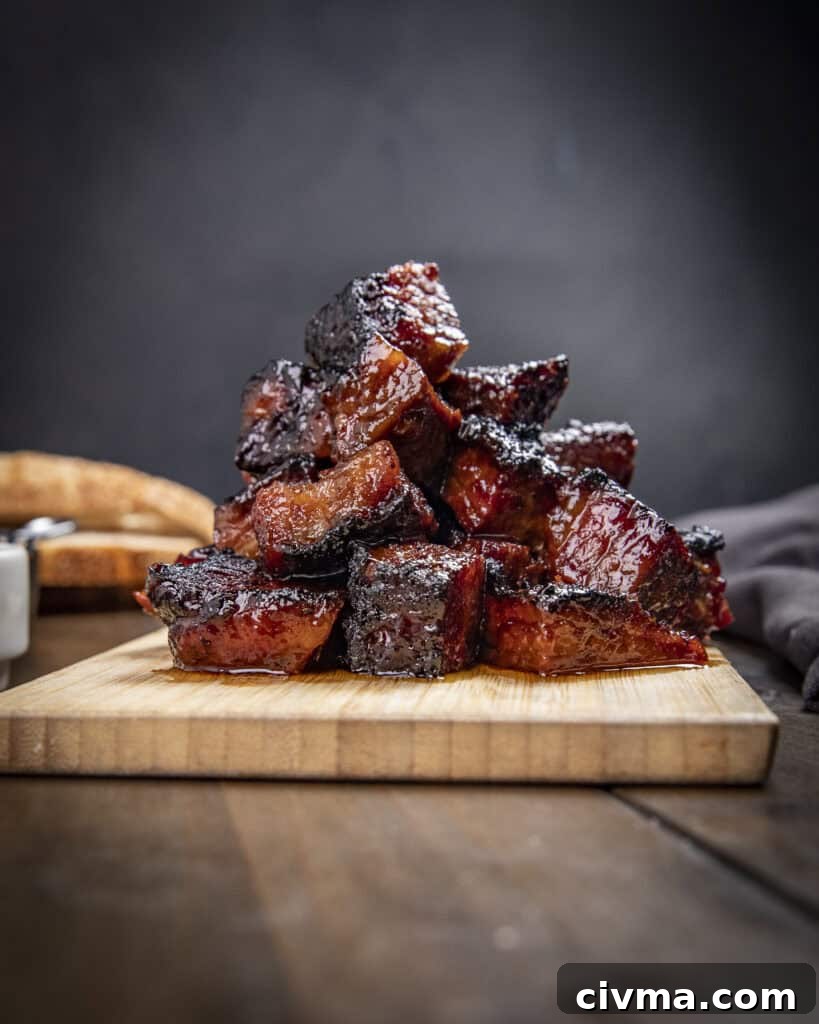
The secret to outstanding burnt ends is the brisket point’s high marbling. Fat melts into the meat during a low-and-slow smoke, keeping the cubes juicy while the exterior forms a deeply flavored, slightly sweet bark. Turning the point into bite-sized cubes, saucing them and returning them to the heat concentrates the flavors and creates that signature “meat candy” texture and gloss.
Ingredients for the perfect burnt ends
Good burnt ends start with quality ingredients and a few simple additions that enhance caramelization and mouthfeel.
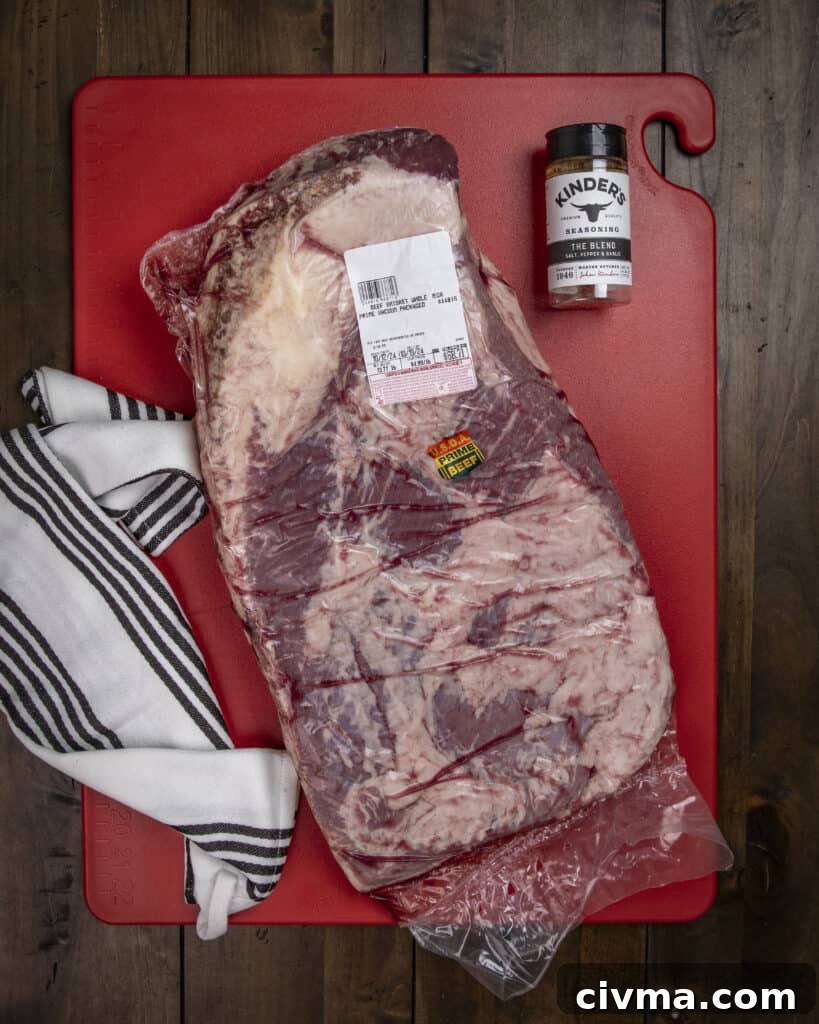
1. Whole packer brisket
- Why it matters: The packer includes both the point and the flat; burnt ends come from the point because of its higher fat content and marbling.
- Choosing one: Aim for a brisket with good marbling and even thickness in the 12–15 lb range for best results.
2. Salt, pepper and garlic (SPG) rub
- Simple and effective: SPG lets the beef and smoke shine without masking them.
- Typical amounts: ½ cup coarse kosher salt, ½ cup freshly cracked black pepper, ¼ cup garlic powder for a larger batch — scale down as needed.
- Tip: Season generously and let the brisket rest with the rub; overnight refrigeration yields deeper seasoning.
3. Barbecue sauce
- Finish glaze: A good sauce caramelizes on the burnt ends and balances smoke with sweetness and tang.
- Choose wisely: Kansas City–style or a smoky-sweet sauce works well; homemade or store-bought both do the job.
4. Sweeteners and fats
- Brown sugar and honey: Small amounts boost caramelization and create a sticky crust.
- Butter: Pats of butter in the pan add richness and help keep the cubes moist.
With quality beef, a balanced rub, a flavorful sauce and a touch of sugar and fat, you’re ready to create classic burnt ends. The method below walks through trimming, smoking, separating the point, cubing, saucing and finishing the burnt ends to tender, sticky perfection.
Preparing your brisket for burnt ends
Success begins with a properly trimmed and seasoned brisket and a steady, low smoker temperature. The goal is an even cook that builds a solid bark on the exterior while rendering fat into the meat.
Trim the brisket
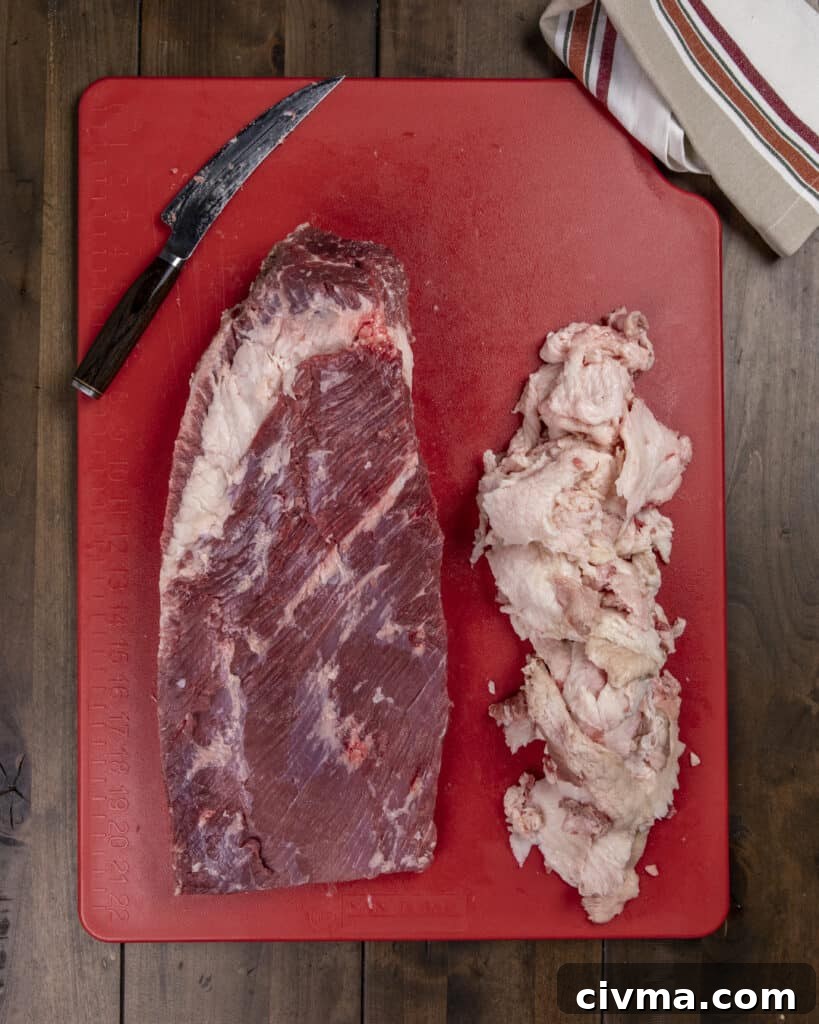
Place the brisket on a large cutting board and remove thick pockets of fat and any silver skin. Leave a thin fat layer of about ¼” on the fat side to protect the meat and keep it juicy. Pay special attention to the point end—this is where your burnt ends will come from, so leave enough fat to render but not so much that it overwhelms the bite.
Season the brisket
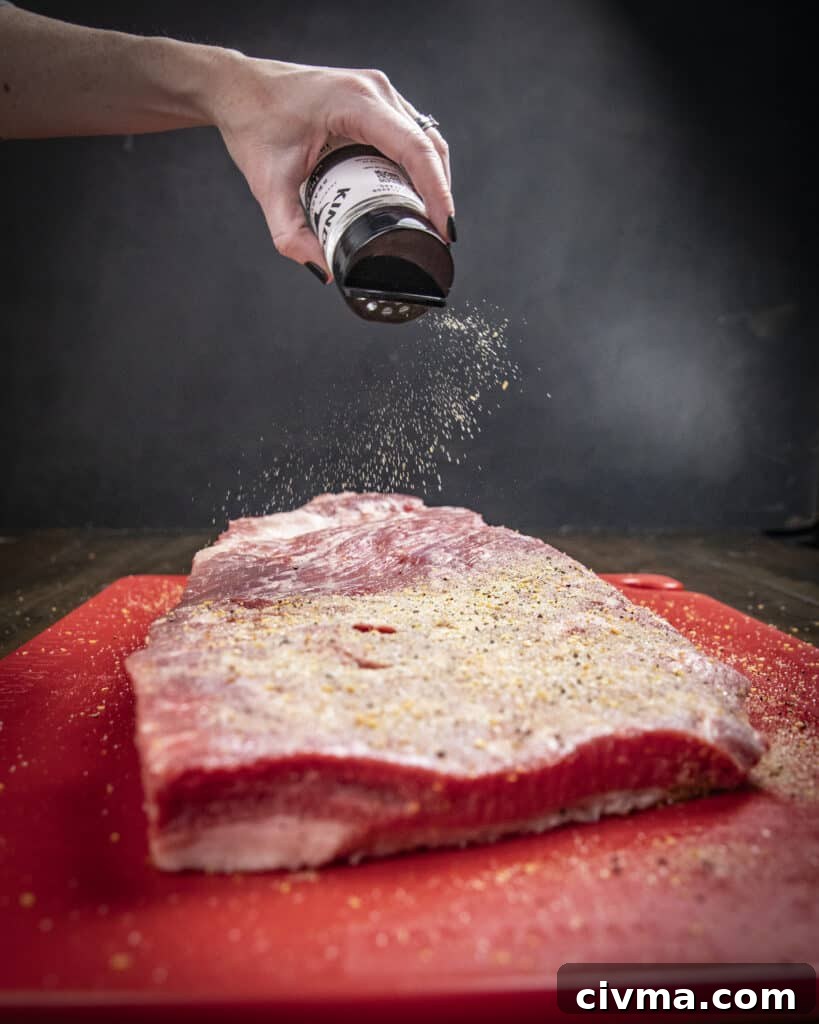
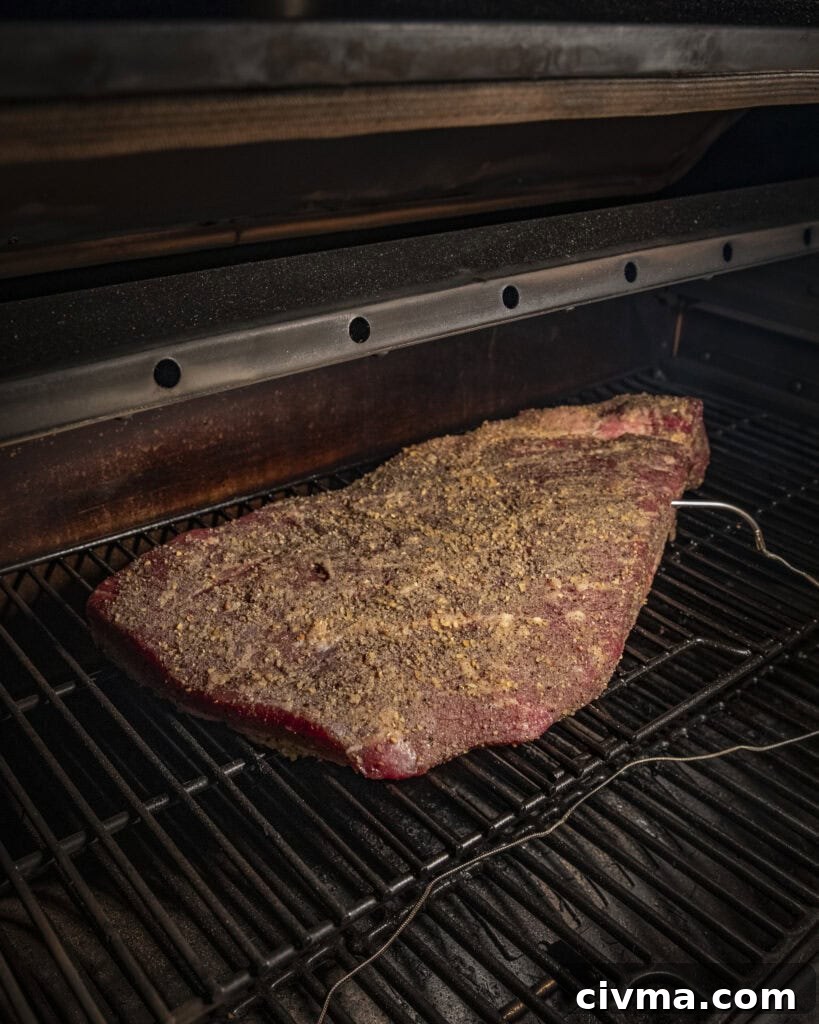
Apply the SPG rub generously on all sides, pressing it into the meat. If possible, season the brisket the night before and refrigerate to let the flavors penetrate; at minimum let it rest an hour at room temperature before smoking.
Smoke the brisket
Preheat your smoker to 225°F and use hardwoods like hickory, oak or pecan for beef. Place the brisket on the smoker with the point facing the heat and the fat cap down. Maintain a steady temperature, resist opening the lid frequently, and smoke until the internal temperature reaches about 175°F. This can take several hours depending on size.
Separate the point from the flat
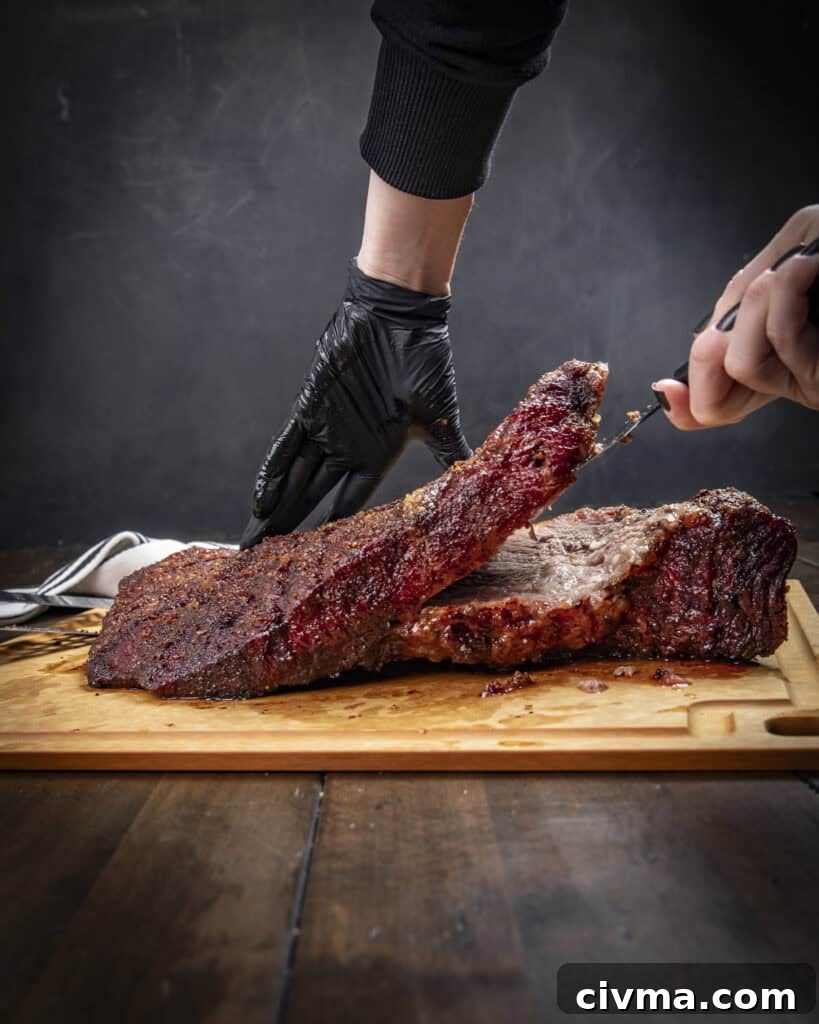
When the brisket reaches roughly 175°F, remove it and slice along the seam of fat that separates the point from the flat. The flat can return to the smoker to finish; the point is ready to be cubed and transformed into burnt ends.
Saucing and finishing
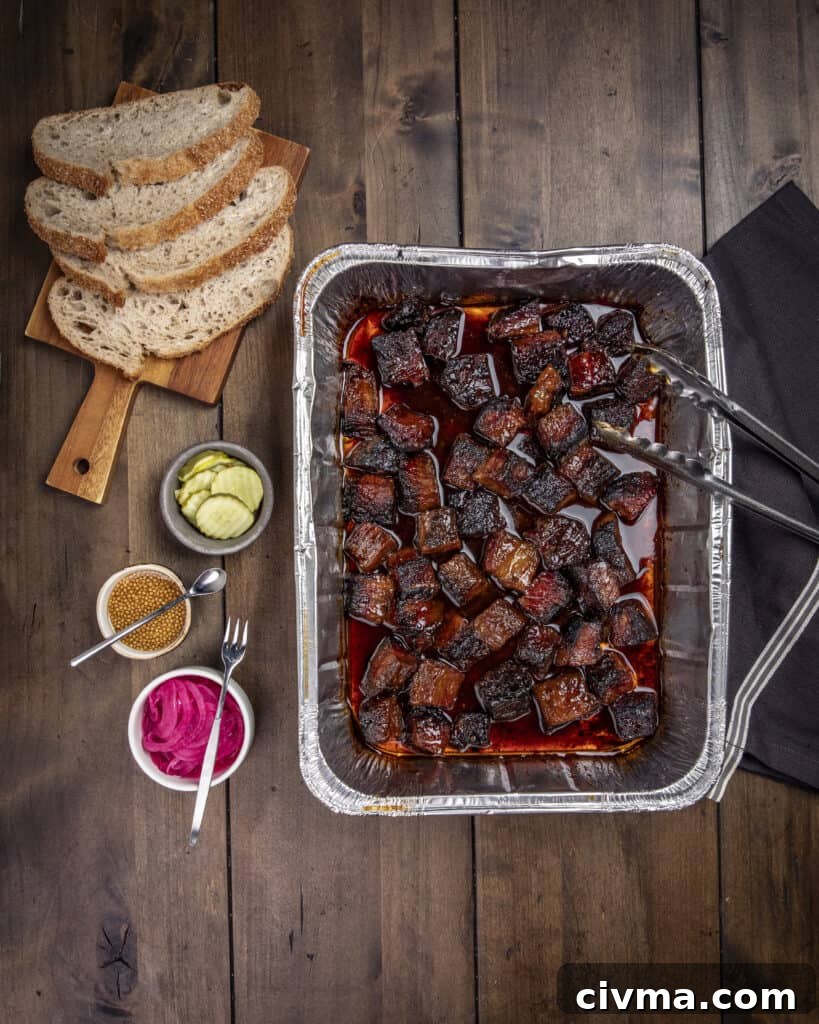
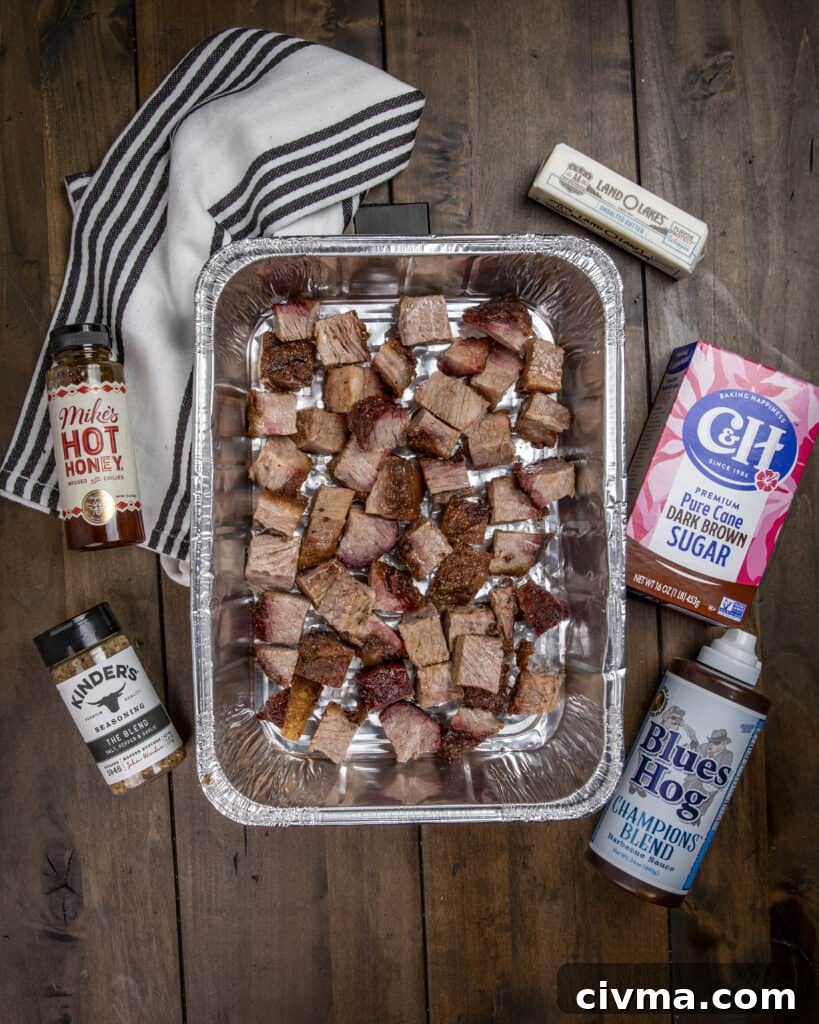
Cube the point into 1″–1½” pieces and place them in a large foil pan with a little space between cubes. Add more rub, a generous coat of barbecue sauce, pats of butter, a sprinkle of brown sugar and a drizzle of honey. Toss gently to combine so each cube is coated.
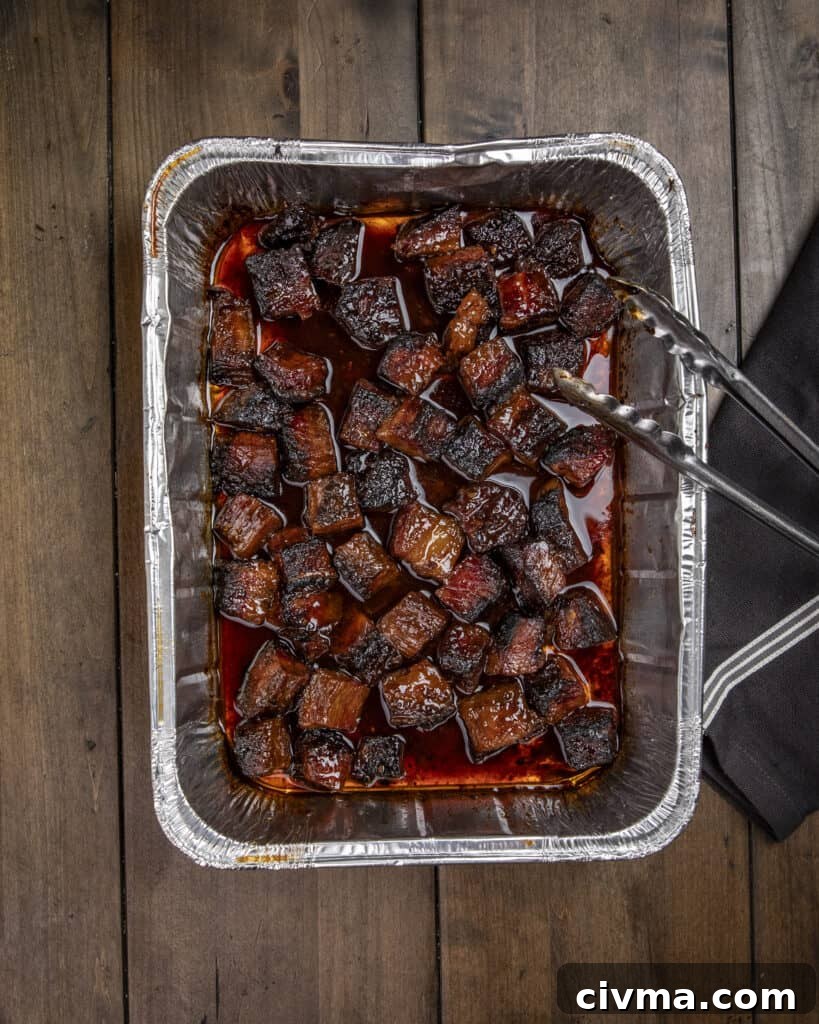
Return the uncovered pan to the smoker at 225°F and cook until the burnt ends reach about 205°F internal temperature and the sauce is thick and glossy, usually another 2–4 hours. Stir the pan halfway through to ensure even glazing and heat distribution. When the cubes are deeply caramelized, tender and sticky, remove and let rest briefly before serving.
Expect the full process to take roughly 10–12 hours for a 12–15 lb packer brisket, though times vary with weight and smoker performance.
Conclusion
Brisket burnt ends showcase the best aspects of slow-smoked barbecue: rich beef flavor, tender texture and a deeply caramelized, sticky exterior. With simple seasonings, steady heat and a final saucing step, you can turn the brisket point into small, unforgettable bites that are perfect for sharing.
Ingredients
- Whole packer brisket (12–15 lbs)
- 2 tablespoons kosher salt
- 2 tablespoons black pepper
- 1 tablespoon granulated garlic
- 1 cup barbecue sauce
- 4 tablespoons butter (cut into 1-tablespoon pats)
- ¼ cup brown sugar
- 3 tablespoons honey
Instructions
- Trim silver skin and thick fat, leaving about ¼” fat cap on the bottom.
- Mix salt, pepper and garlic. Season the brisket generously and rest for at least 1 hour or overnight in the fridge.
- Preheat smoker to 225°F using hickory, oak or pecan.
- Place brisket fat-side down and smoke until internal temperature reaches ~175°F (6–8 hours).
- Remove and separate the point from the flat along the fat seam; return the flat to the smoker if desired.
- Cube the point into 1″ pieces and place in a foil pan.
- Coat with barbecue sauce, pats of butter, brown sugar and honey; mix to combine.
- Smoke the uncovered pan at 225°F until the burnt ends reach ~205°F and are sticky (about 2–4 hours), stirring once halfway through.
- Remove, let rest briefly, then serve warm.
- Author: Jordan Hanger
- Prep Time: 30 minutes
- Cook Time: 12 hours
- Total Time: 12 hours 30 minutes
- Yield: Serves about 8