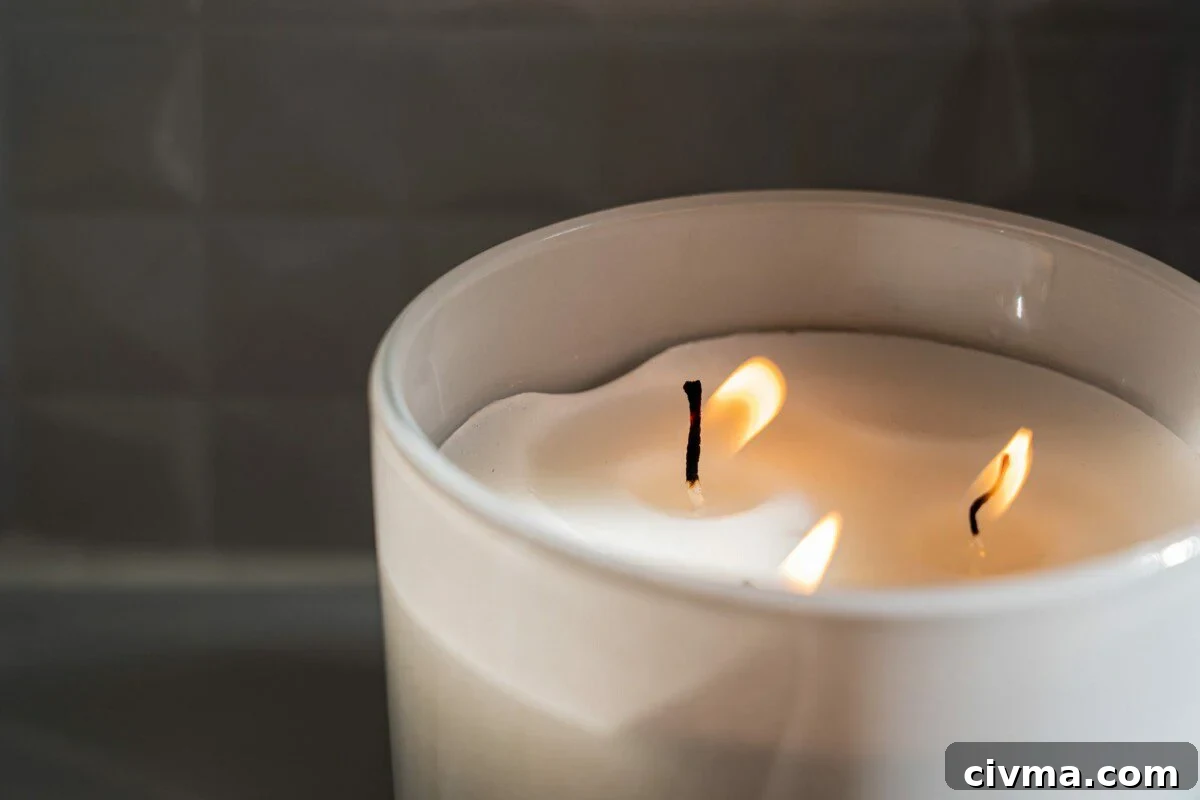
Many people enjoy the rich, familiar scents of Yankee and Bath & Body Works candles, as well as scented wax melts. For many of us, lighting a candle is part of creating a cozy home. I used to go through several Warm Vanilla Sugar candles each month without thinking twice. That was before I understood what conventional candles can contain and what may be released into indoor air when they burn.
There are three main concerns with many conventional scented candles:
- The wax is often made from petroleum byproducts, which may not be the healthiest material to burn indoors.
- Synthetic fragrance formulas can contain chemicals such as phthalates, carcinogens, VOCs, allergens, and other undisclosed ingredients.
- If wicks are not sourced carefully, they may contain a metal core, including lead in some cases.
In this guide, we’ll look at each of these issues in more detail so you can better understand what may be in your favorite scented candles. Then we’ll cover what to look for when shopping for organic, natural, and non-toxic candles. The good news is that there are many safer candles available, including options made with soy wax, coconut wax, beeswax, tallow, and naturally derived scents.
Table of Contents
- Paraffin Wax: When Burning Candles is Like Burning Fossil Fuels in Your Home
- Why Are Synthetically Scented Candles Bad?
- What’s Up With Lead Wicks?!
- Sooo, What are the Healthiest Candles to Burn?
- 1) Petroleum-Free Wax
- 2) Transparent, Natural Fragrances
- 3) Lead-Free Cotton, Wood, or Hemp Wicks
- “Natural” vs. “Organic” vs. “Non-Toxic” Candles: What’s the Difference?!
- Which Wax is Best?
- Good: Soy Wax Candles
- Better: Coconut Wax Candles
- Best: Beeswax Candles (They’re the Bee’s Knees!)
- Tallow and Other Types of Unconventional Wax Candles
- What About “Vegetable Wax” and “Palm Wax” Candles?
- Be Careful of Wax “Blends”
- What About Non-Toxic Wax Melts?
- Are All Natural/Non-Toxic Candles Also Vegan?
- Looking for More Non-Toxic Candle Buying Guides?
- Conclusion: What to Look for in Non-Toxic Candles
Paraffin Wax: When Burning Candles is Like Burning Fossil Fuels in Your Home
Most conventional candles are made primarily with paraffin wax. Paraffin wax is derived from petroleum, coal, or oil shale, and one of the biggest reasons it is so widely used is simple: it is inexpensive.
Petroleum-based products can raise concerns for both human health and the environment. When it comes to paraffin wax candles specifically, one of the main concerns is a group of chemicals known as BTEX, which includes benzene, toluene, ethylbenzene, and xylene.
- Benzene and ethylbenzene are classified as carcinogens.
- Toluene may cause headaches, confusion, fatigue, and irritation of the eyes, nose, and throat. It has also been associated with reproductive harm and developmental toxicity.
- Xylene exposure may contribute to issues such as headaches, dizziness, pulmonary edema, and long-term effects on the nervous system.
Another issue is that candles are usually burned indoors. When a paraffin candle burns inside your home, any pollutants released do not disperse the same way they would outdoors. Instead, they can linger in the room and contribute to indoor air pollution. This matters because the EPA notes that indoor air pollution can be two to five times worse than outdoor air pollution.
Why Are Synthetically Scented Candles Bad?
After wax, the next major issue is fragrance. If you have ever researched non-toxic personal care products, cosmetics, or cleaning products, you may already know how confusing the word “fragrance” can be.
The concern comes from what is often called the fragrance loophole. This loophole allows companies to keep scent formulas hidden from consumers because fragrance blends are considered trade secrets.
There are now nearly 4,000 different chemicals that can be used in scented products and listed simply as “fragrance” or “parfum.” Some of these ingredients may be harmless, while others, such as phthalates, can be problematic. The challenge is that shoppers usually have no way to know exactly what is inside a candle when the label only says “fragrance.”
If you want a deeper explanation of this issue and the difference between natural and synthetic fragrance, you can read more right here.
Home
What is the “Fragrance Loophole”? How Toxic Chemicals Hide in Products
Learn what the fragrance loophole is, why it matters, and how synthetic and natural fragrances differ.
What’s Up With Lead Wicks?!
In the past, some candle manufacturers used cotton wicks with lead cores to help the wick stand upright. Lead is extremely concerning, especially for babies, children, and pregnant people.
The good news is that the U.S. Consumer Product Safety Commission banned the manufacture and sale of lead-cored wicks and candles containing lead-cored wicks in 2003. Because of that ban, this problem is much less common than it used to be.
That said, candles imported from some overseas sources may still be a concern. It is worth checking the label and buying from candle brands that clearly state what their wicks are made from and how they are sourced.
Sooo, What are the Healthiest Candles to Burn?
If conventional candles are not ideal, what should you choose instead? Fortunately, there are many safer, non-toxic candles available today. The healthiest candles to burn are generally made with petroleum-free wax, transparent fragrance ingredients, and lead-free wicks.
1) Petroleum-Free Wax
Start by looking for candle wax made from natural, non-toxic, and more sustainable sources. Common paraffin-free options include soy wax, coconut wax, beeswax, and tallow. Each type has its own pros and cons, which we’ll cover below.
2) Transparent, Natural Fragrances
Choose brands that use natural botanicals and essential oils instead of undisclosed synthetic fragrance blends whenever possible.
Not every ingredient allowed under the fragrance loophole is automatically harmful. However, the safest brands are transparent and willing to disclose their full ingredient lists. If a brand does use synthetic fragrance, it should clearly state that the formula is free from phthalates and concerning VOCs.
Candle makers that use essential oils should also source them responsibly and formulate them carefully. Even natural essential oils can be irritating for some people, especially those with allergies or sensitivities to certain plants.
It is also helpful to know that non-toxic, naturally scented candles may not smell as strong as conventional candles. Some people prefer this because strong synthetic scents can feel overwhelming, while others may need time to adjust if they are used to candles that fill an entire room with heavy fragrance.
3) Lead-Free Cotton, Wood, or Hemp Wicks
Look for candles made with natural cotton, wood, or hemp wicks that do not contain a lead core or other unnecessary metal components.
“Natural” vs. “Organic” vs. “Non-Toxic” Candles: What’s the Difference?!
These terms can be confusing because they are often used as marketing language. A candle labeled “natural,” “organic,” or “non-toxic” is not automatically safe or fully transparent. This type of misleading marketing is often called greenwashing.
In general, here is how these labels are commonly used:
- “Natural” candles are typically made with waxes and scent materials that come from nature and are processed with minimal chemical intervention. Examples include soy, coconut, beeswax, tallow, and natural essential oils.
- “Organic” candles are made with natural materials grown and processed without synthetic herbicides, pesticides, or insecticides. When a product claims to be organic, it is best to look for a third-party certification such as USDA. However, it is important to note that there is technically no such thing as certified organic soy wax.
- “Non-toxic” usually refers to candles made without ingredients such as phthalates, VOCs, and petroleum-derived waxes. Since this term can mean different things to different brands, it is always smart to read the label and ask questions when ingredients are unclear.
Some candle makers use a few natural or non-toxic ingredients, while others use 100% natural, organic, or non-toxic ingredients. The difference matters, so transparency is key.
Which Wax is Best?
Now let’s look at common paraffin-free candle waxes so you can decide which option makes the most sense for your home, preferences, and budget.
Good: Soy Wax Candles
Supporters of 100% soy wax candles often point out that soy burns cleaner than paraffin, produces less soot, and comes from a renewable source. These points are mostly true, which is why soy candles can be a better option than conventional paraffin candles.
However, soy wax has some downsides. Candle manufacturers may market a candle as “pure soy” even when other waxes, such as palm wax or beeswax, are added. Because labeling is not always well regulated, paraffin may also be included in a “soy wax blend” to reduce cost. For this reason, always check the ingredient list.
Another important point: 100% pure organic soy candles do not really exist. Even when soybeans are organically grown, soy wax is processed with hexane, which prevents it from being certified organic.
Soy wax is also commonly bleached with chlorine, deodorized with boric acid, and hydrogenated to make it solid. Hydrogenation often involves a catalyst such as nickel, palladium, or platinum.
The soybean industry can also raise sustainability concerns. Soy farming is associated with deforestation, heavy herbicide and pesticide use, reduced biodiversity, and large-scale mono-cropped agriculture. Many soybeans in the U.S. are also genetically modified.
Still, soy wax candles are usually better than paraffin or vague “vegetable wax” candles. They are also widely available, making them one of the more accessible non-toxic candle options.
You can find our guide to favorite non-toxic soy candle brands right here.
Home
The 5 Best Brands for Non-Toxic, Natural Soy Candles
Soy candles have drawbacks, but they can be a much better alternative to conventional paraffin candles. This guide explains why and shares vetted brands.
Better: Coconut Wax Candles
Coconut wax is often considered a safe candle wax option. It tends to burn cleanly and can offer a good scent throw, meaning it can help fragrance a room effectively. Coconut wax candles may cost more than conventional candles, but they are a strong choice for those looking for cleaner-burning, plant-based candles.
As with any candle, the full ingredient list matters. Look for brands that clearly list their essential oils or scent ingredients, and be cautious if the label only says “fragrance” or “parfum” without further explanation.
Soy and coconut wax candles can both be good options for vegans. One downside is that coconut wax is commonly blended with other waxes for stability, so 100% coconut wax candles can be difficult to find. You can see our guide to favorite coconut wax candle brands here.
Home
Pros & Cons of Coconut Wax Candles (+ The Best Non-Toxic Brands)
Learn the benefits and drawbacks of coconut wax candles, plus brands that make cleaner, non-toxic options.
Best: Beeswax Candles (They’re the Bee’s Knees!)
Beeswax candles are often considered one of the best natural candle choices. When burned, beeswax candles are said to produce negative ions, similar to the way an ionic air purifier works without electricity. These negative ions may attach to particles in the air, such as dust, odors, mold, and pollen.
Beeswax also burns cleaner, longer, and brighter than many conventional waxes, especially when the wick is trimmed properly. Pure beeswax candles do not contain the same petroleum-based waxes found in paraffin candles, and they have a naturally sweet scent that often does not require added fragrance.
Although beeswax candles are usually more expensive, they can burn around 55% longer than an equal-sized paraffin candle. For many people, that longer burn time helps balance the higher upfront cost.
Buying pure beeswax candles can also support local beekeepers and help protect bee populations, which are currently in danger.
You can find some favorite non-toxic beeswax candle brands here.
Home
10 Non-Toxic Beeswax Candles for a More Natural Home Ambiance
If you want to avoid paraffin wax and create a more natural atmosphere at home, these beeswax candle brands are worth considering.
Tallow and Other Types of Unconventional Wax Candles
You may also find candles made with less common types of natural wax. Tallow, for example, was one of the earliest materials used for candles, along with beeswax.
Tallow is rendered beef fat, sometimes called beef lard. Historically, it was used not only for candles but also for soap and cooking before inexpensive, highly processed vegetable oils became widespread.
Tallow can still be a useful candle wax option, especially when it comes from regenerative or grass-fed beef farms that aim to use the whole animal and reduce waste.
You can view our picks for non-toxic tallow candles right here.
Other unconventional natural candle waxes include sumac, which comes from what is sometimes called the Japanese wax tree, rice wax, and flower wax.
Home
Where to Shop for the Best Tallow Candles
Tallow candles are not as common as they once were, but they can be a non-toxic alternative to paraffin wax.
What About “Vegetable Wax” and “Palm Wax” Candles?
Some manufacturers use terms such as “vegetable wax blend” or “palm wax.” These labels can refer to waxes made from many different plants, including soy, coconut, palm, rapeseed, sunflower, and others. Despite the name, “vegetable wax” does not necessarily mean the wax comes from a vegetable.
These plant-based waxes may be better than paraffin in some cases, but sourcing can be a major issue. Palm wax in particular is often linked with sustainability concerns. For that reason, it is best to choose candle companies that are transparent about exactly what is in their wax blends.
Be Careful of Wax “Blends”
Wax blends are not always bad. Many safe candles use thoughtful blends, such as coconut wax and beeswax, to improve texture, stability, or burn quality. However, some brands use the word “blend” to hide less desirable ingredients. For example, Bath and Body Works includes paraffin in its “soy wax blend.” This is why ingredient transparency is so important.
What About Non-Toxic Wax Melts?
If you have pets, young children, or simply prefer to avoid an open flame, wax melts may be a better choice. Non-toxic wax melts can be harder to find than candles, but there are brands that use safer, natural ingredients. You can see our guide here.
Home
The Best Natural & Non-Toxic Wax Melts
Safe wax melts can be harder to find than candles, but these options use natural ingredients and smell great.
Are All Natural/Non-Toxic Candles Also Vegan?
No, not all natural or non-toxic candles are vegan. Soy wax and coconut wax candles are usually suitable for vegans, while beeswax and tallow candles are animal-derived. If avoiding animal products is important to you, choose plant-based candles and always double-check the label for wax blends and fragrance ingredients.
Looking for More Non-Toxic Candle Buying Guides?
Here are more guides to help you choose safer candles and home fragrance products:
- These are the best non-toxic soy candles.
- Here are the best brands for non-toxic coconut wax candles.
- If you are looking for natural beeswax candles, click here.
- For tallow candles, check this article out.
- Are Bath & Body Works candles bad for you?
- What about Yankee Candles?
- The best non-toxic holiday & winter candles
- Our picks for non-toxic fall candles, including cozy seasonal options
Conclusion: What to Look for in Non-Toxic Candles
Choosing non-toxic candles does not mean giving up a cozy, beautifully scented home. It simply means paying closer attention to wax, fragrance, wick materials, and brand transparency.
- Avoid colored or dyed candles when possible, since some pigments may raise health or environmental concerns.
- Choose candles with 100% cotton, wood, or hemp wicks that are clearly labeled lead-free.
- Look for candles scented with 100% pure essential oils or fully disclosed natural fragrance ingredients.
- Avoid vague labels such as “fragrance” or “parfum” unless the brand clearly explains what those terms mean.
- Be aware that some essential oils may bother sensitive individuals or may not be ideal for certain pets.
- Consider more sustainable waxes such as coconut wax, beeswax, or carefully sourced alternatives.
- Try other home fragrance options too, such as simmer pots, essential oil sprays, or non-toxic wall plug-ins.
When shopping for the best non-toxic candles, the most important rule is simple: choose brands that clearly disclose their ingredients. A safer candle should be made with paraffin-free wax, a lead-free wick, and fragrance ingredients you can actually identify.