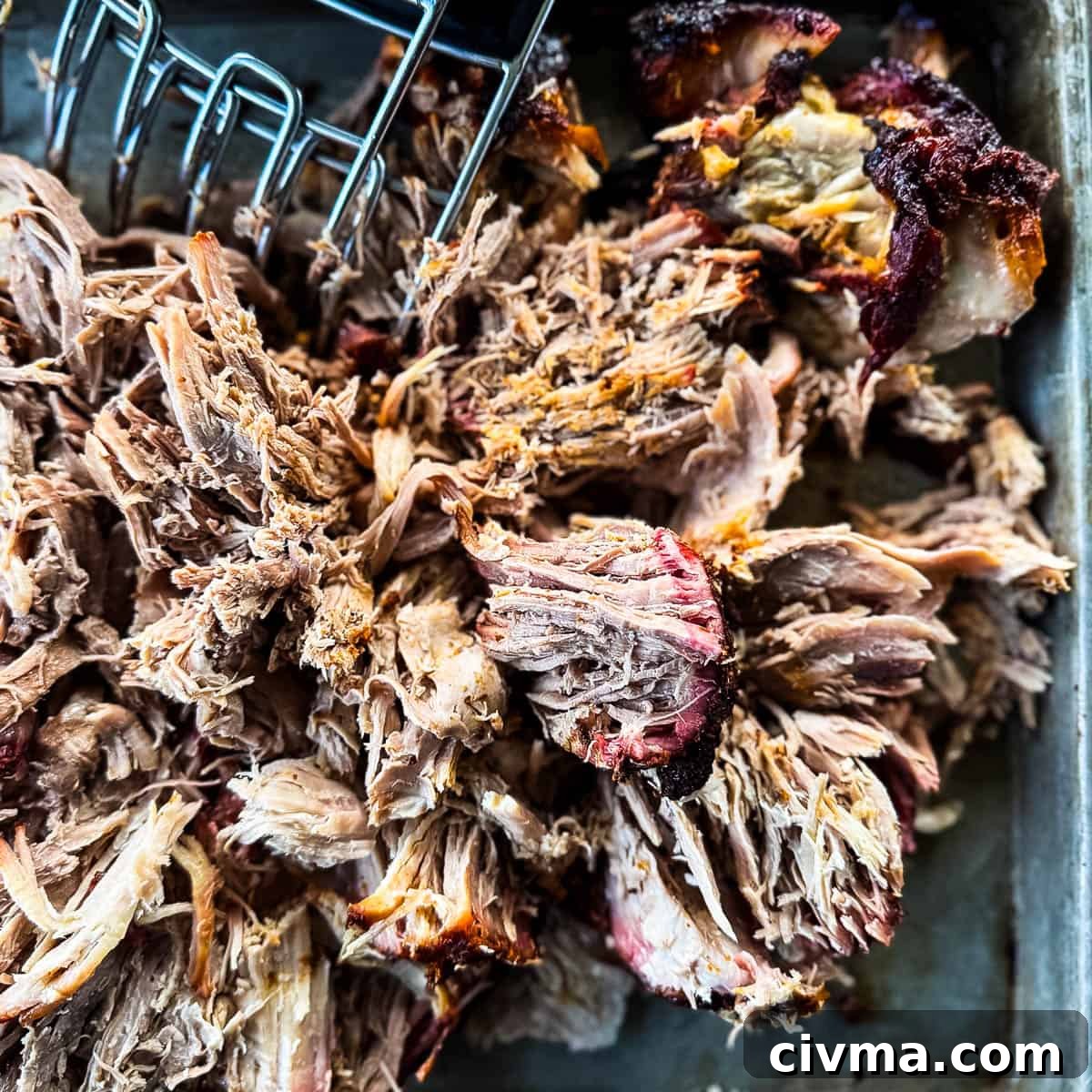
This brown sugar rubbed Pit Boss pulled pork is a reliable backyard barbecue recipe for tender, juicy, smoky shredded pork. The method is simple: season the pork shoulder well, smoke it low and slow, wrap it at the right temperature, cook until it is perfectly tender, and let it rest before shredding.
The result is classic smoked pulled pork with a flavorful bark, rich smoke flavor, and meat that pulls apart easily. Serve it on buns, in tacos, with barbecue sides, or straight from the pan.
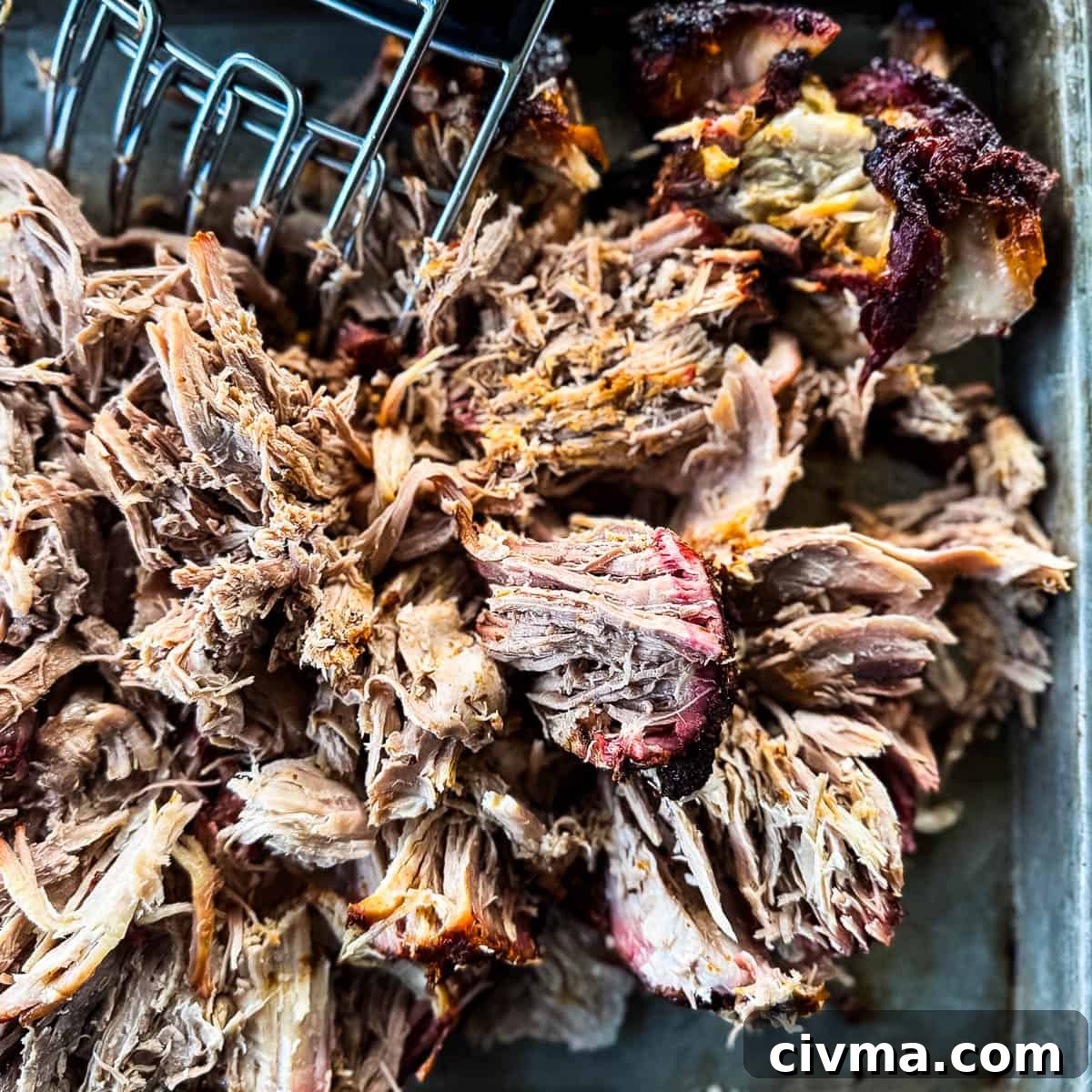
Looking for more pulled meat recipes? Smoked pork butt, pulled pork loin, braised pulled pork, and smoked pulled chicken are all great options when you want tender meat for sandwiches, tacos, or barbecue platters.
What Makes This Recipe Work
This Pit Boss pulled pork recipe works because it focuses on temperature, moisture, and patience. Pork shoulder is a tough cut with plenty of connective tissue, but when it is cooked low and slow, that tissue breaks down and turns the meat tender and juicy.
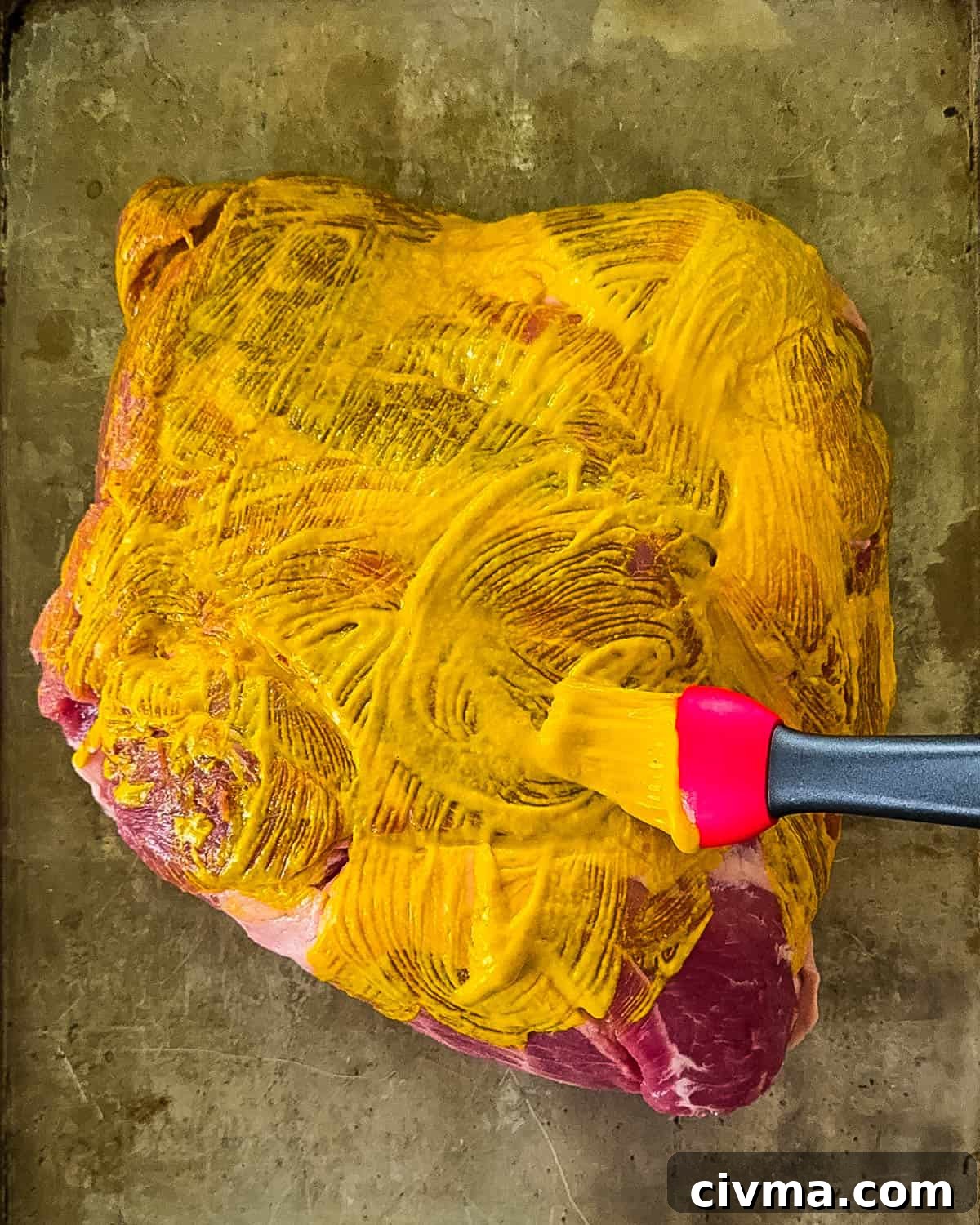
Yellow mustard helps the rub stick. It creates a thin, tacky coating so the brown sugar rub clings evenly to the pork. The mustard flavor mellows during the long smoke, so it will not overpower the meat.
Wrapping at 165°F keeps the cook predictable. Pork shoulder often stalls around 160°F as moisture evaporates from the surface. Wrapping the meat in butcher paper or foil helps push it through the stall while protecting moisture.
Cooking to 203°F gives the best texture. At this temperature, the pork should be tender enough to shred easily. Pulling it too early can leave you with firm, chewy pieces instead of soft, juicy strands.
Resting is essential. Letting the wrapped pork rest in towels inside a cooler gives the juices time to settle back into the meat. This one step makes the finished pulled pork noticeably more moist.
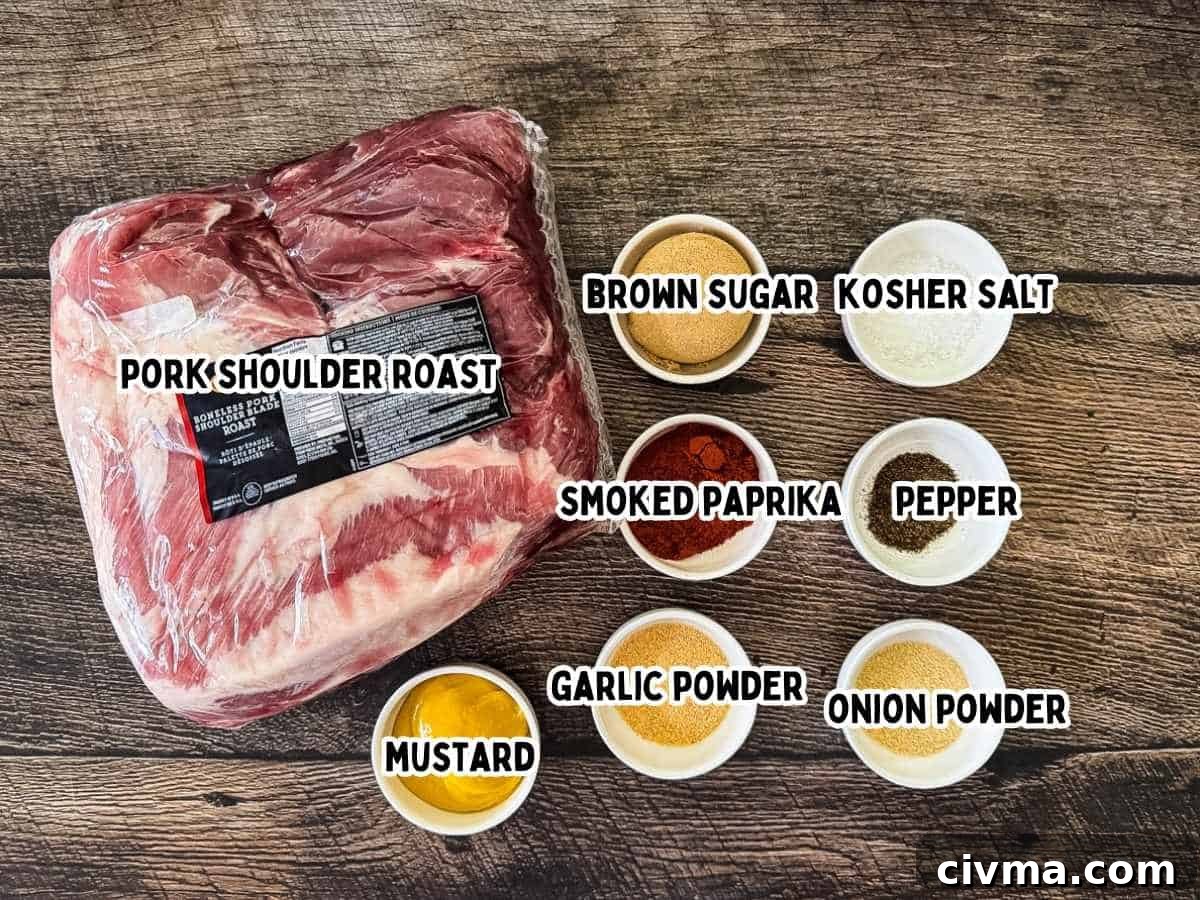
Ingredients for Pit Boss Pulled Pork
- Pork Shoulder (5-8 pounds): Pork shoulder, picnic shoulder, picnic roast, pork butt, or Boston butt can all be used. Pork butt usually has more marbling and may be boneless or bone-in.
- Yellow Mustard: Regular yellow mustard works as a binder and helps the dry rub adhere to the meat.
- Pulled Pork Dry Rub: A simple blend of brown sugar, smoked paprika, kosher salt, black pepper, garlic powder, and onion powder creates a sweet, savory, smoky crust.
- Peach Butcher Paper or Heavy-Duty Foil: Butcher paper helps preserve the bark, while foil holds in more steam and moisture.
How To Make Pit Boss Smoked Pulled Pork
Quick Overview
- Preheat the Pit Boss pellet grill to 225°F.
- Trim the pork shoulder, pat it dry, coat it with mustard, and apply the dry rub.
- Smoke the pork unwrapped until it reaches 165°F.
- Wrap it in butcher paper or foil and continue smoking to 203°F.
- Rest the wrapped pork in a cooler for at least 1 hour.
- Shred, mix with the reserved juices, and serve warm.
Getting Started
Fire Up the Pit Boss: Preheat your Pit Boss pellet grill to 225°F. Fill the hopper with your preferred pellets, such as apple, cherry, hickory, oak, or pecan.
Prepare the Pork Roast: If the pork has a thick fat cap, trim it to about ¼ inch. This leaves enough fat to help keep the meat moist without preventing the rub from reaching the surface. Pat the pork dry with paper towels.
Brush or rub yellow mustard over the entire pork shoulder. Combine the brown sugar, smoked paprika, salt, pepper, garlic powder, and onion powder in a bowl, then coat every side of the pork. Press the seasoning into the meat so it forms an even layer. You can season the pork right before smoking or prepare it the night before and refrigerate it.
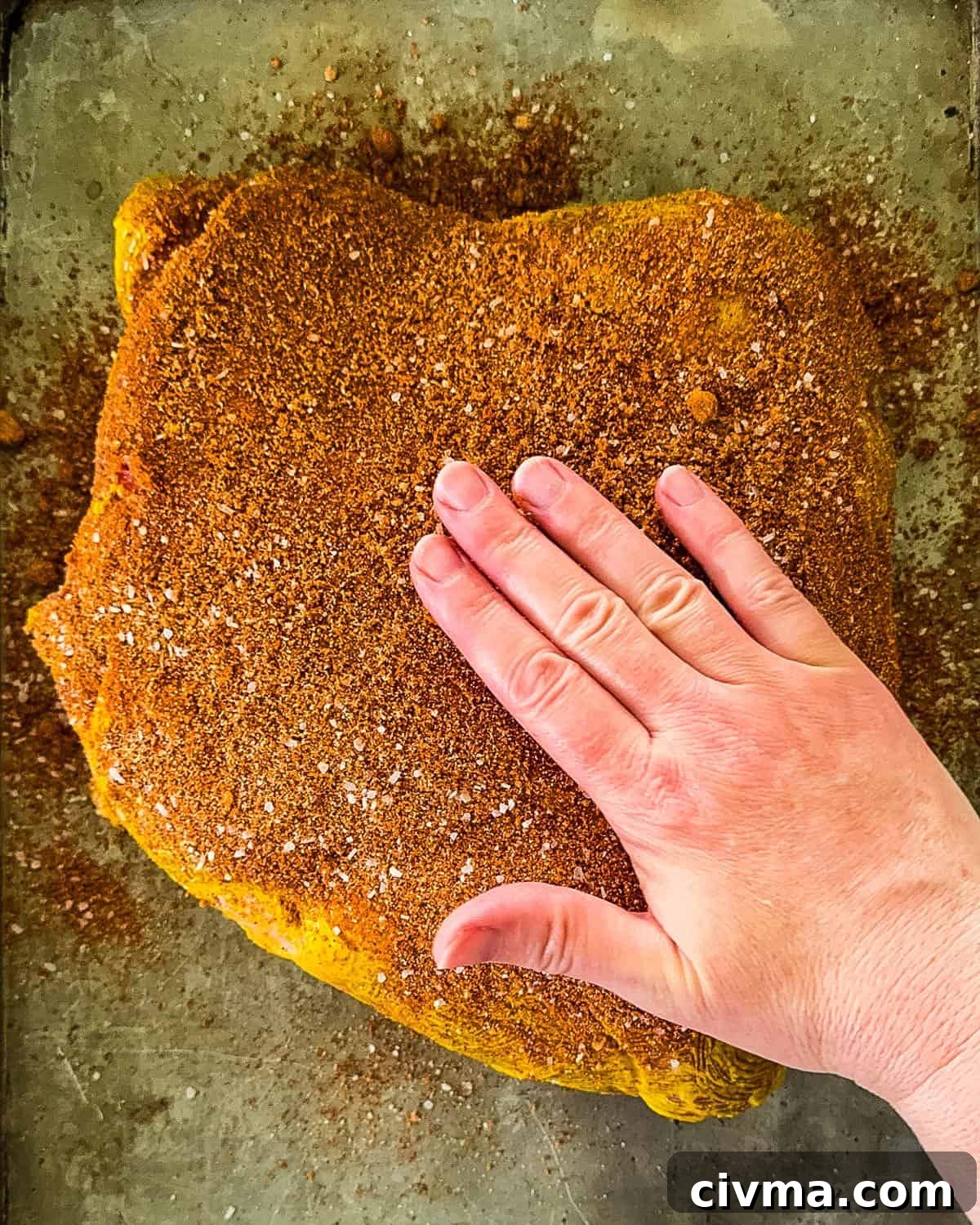
Smoking Pit Boss Pulled Pork
First Phase: Place the pork shoulder directly on the grill grates with the fat side up. Insert a meat thermometer probe into the thickest part of the meat, close the lid, and let it smoke without opening the grill often. During this stage, the outside will darken and develop bark.
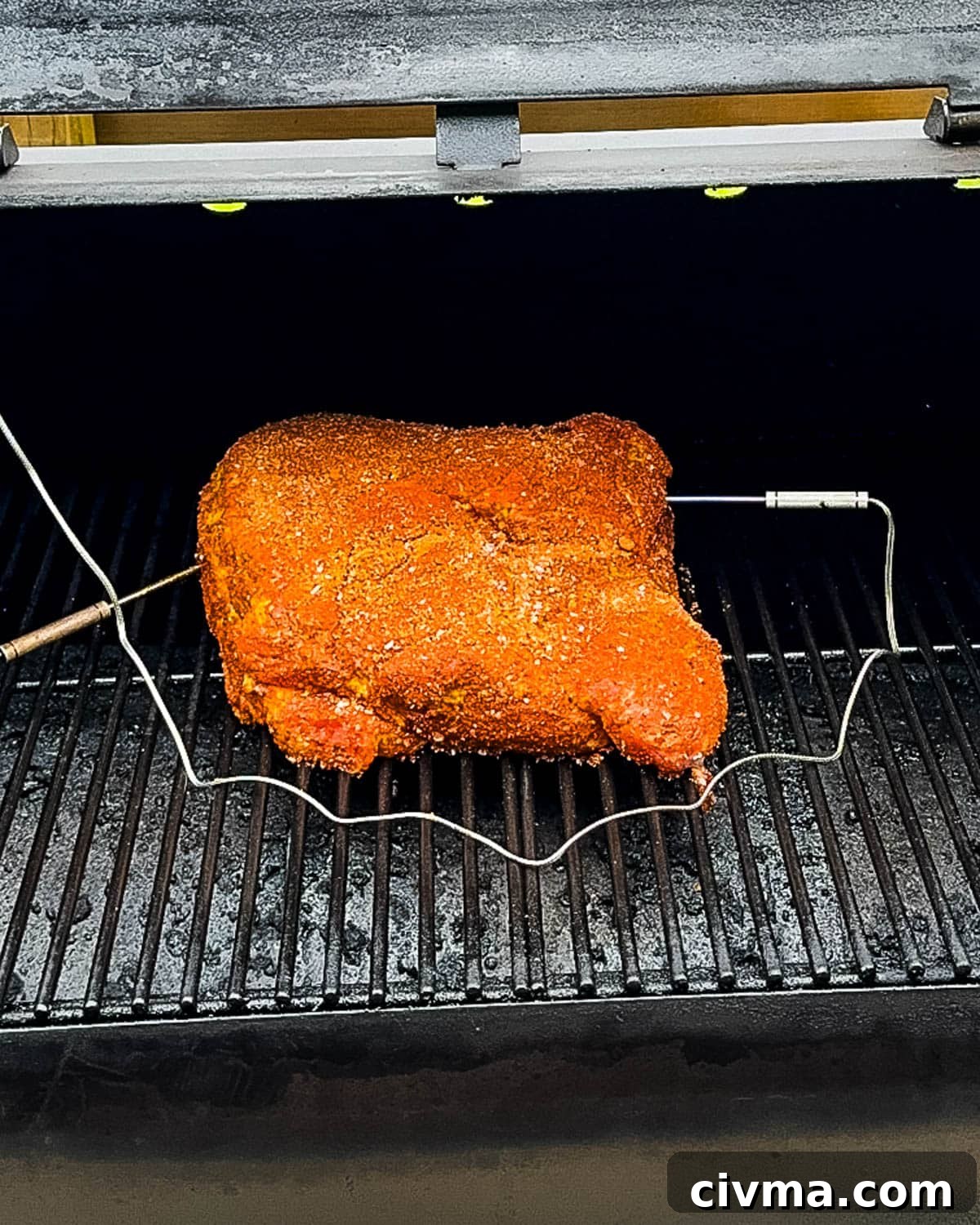
The Stall: Around 160°F, the internal temperature may stop rising for a while. This is normal and happens when moisture evaporates from the surface of the meat. Keep the smoker steady and continue cooking.
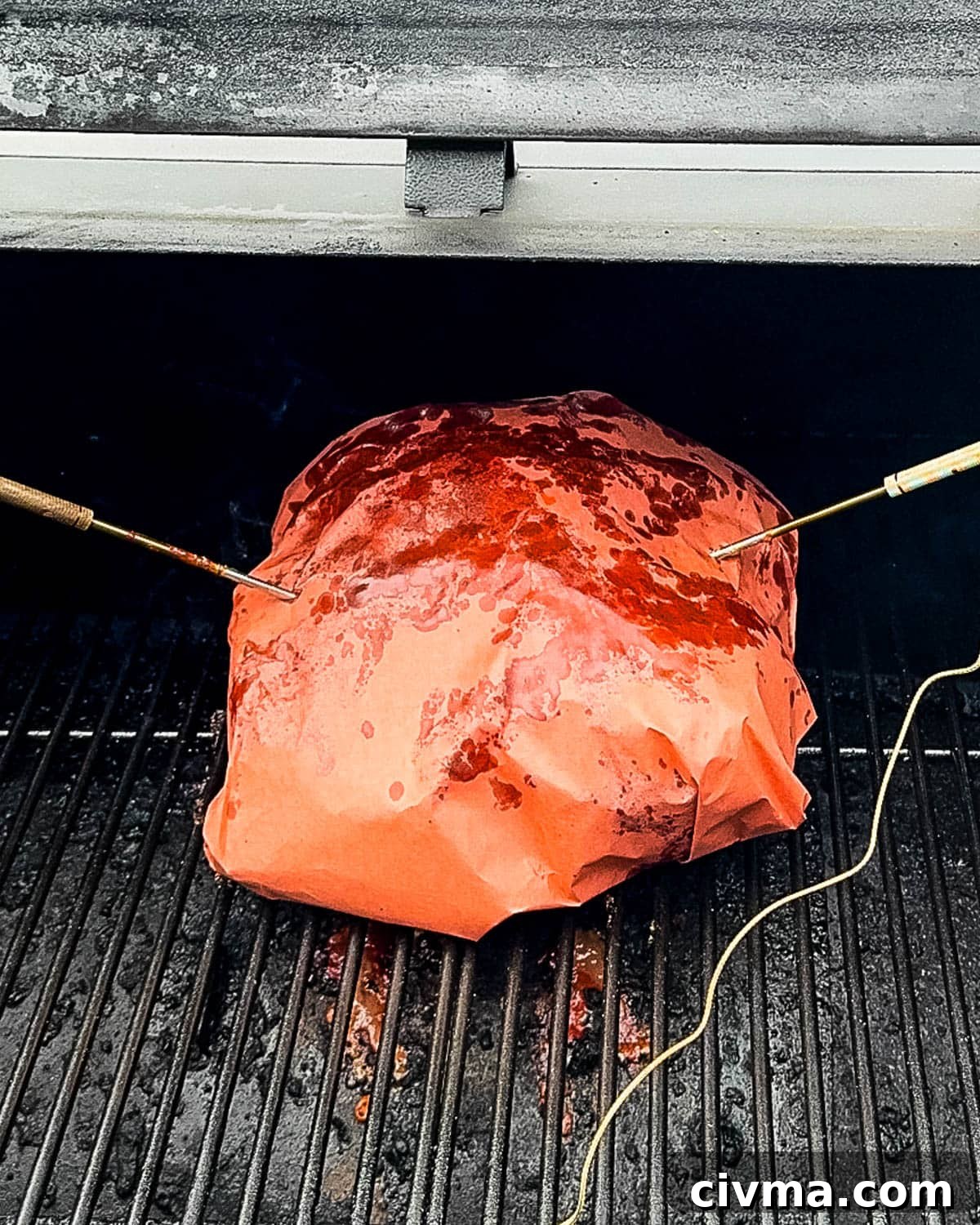
Time to Wrap: When the pork reaches 165°F internally, remove it from the smoker and wrap it tightly in peach butcher paper or heavy-duty foil. Wrapping helps the pork move through the stall and keeps it moist as it finishes cooking.
💡 Pro Tip: Foil works well if you do not have butcher paper, but it traps more steam and may soften the bark slightly.
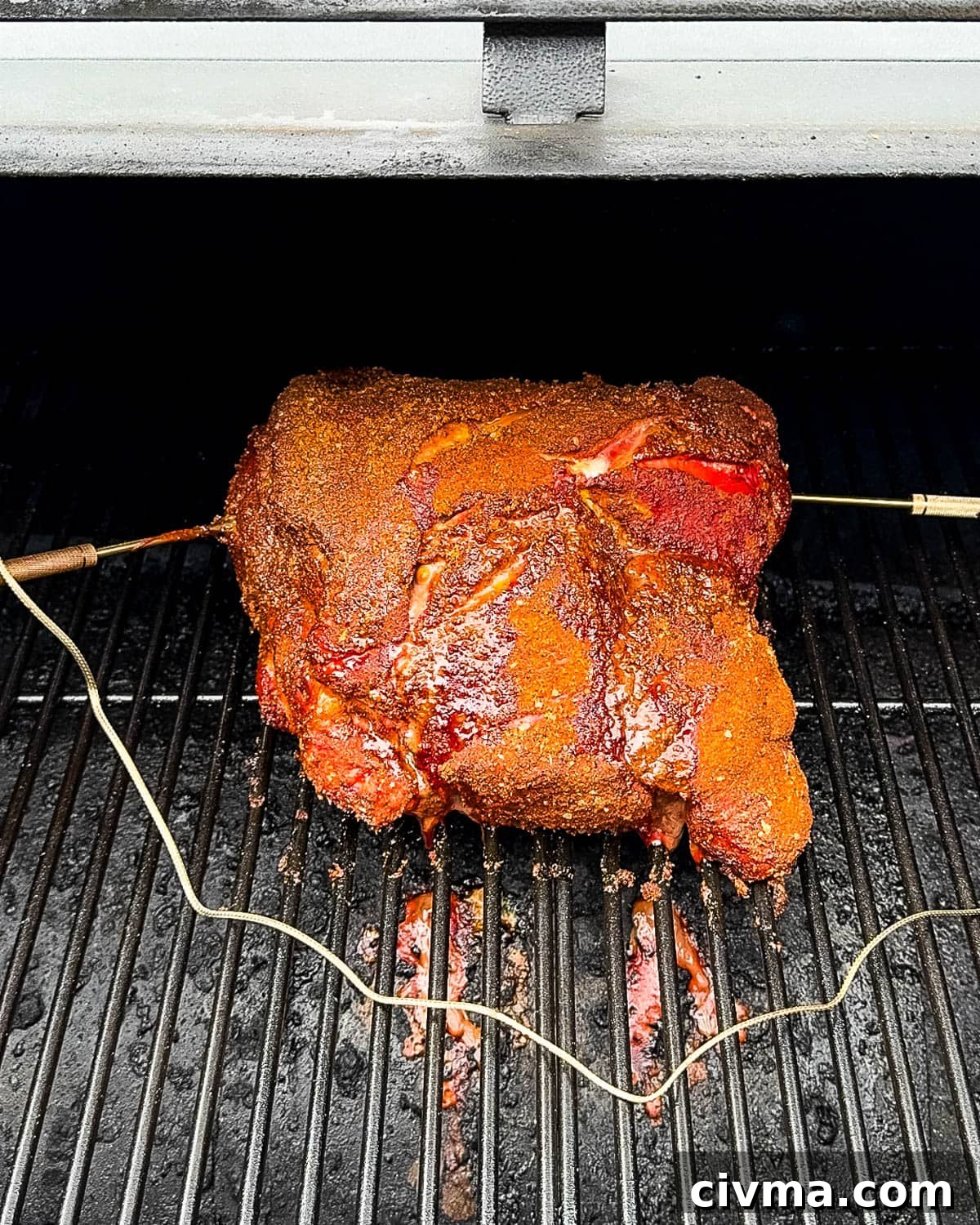
Back on the Smoker: Return the wrapped pork to the Pit Boss and continue smoking at 225°F. Insert the probe again and cook until the internal temperature reaches 203°F. This second phase often takes another 4 to 5 hours, but the timing can vary depending on the size and shape of the pork shoulder.
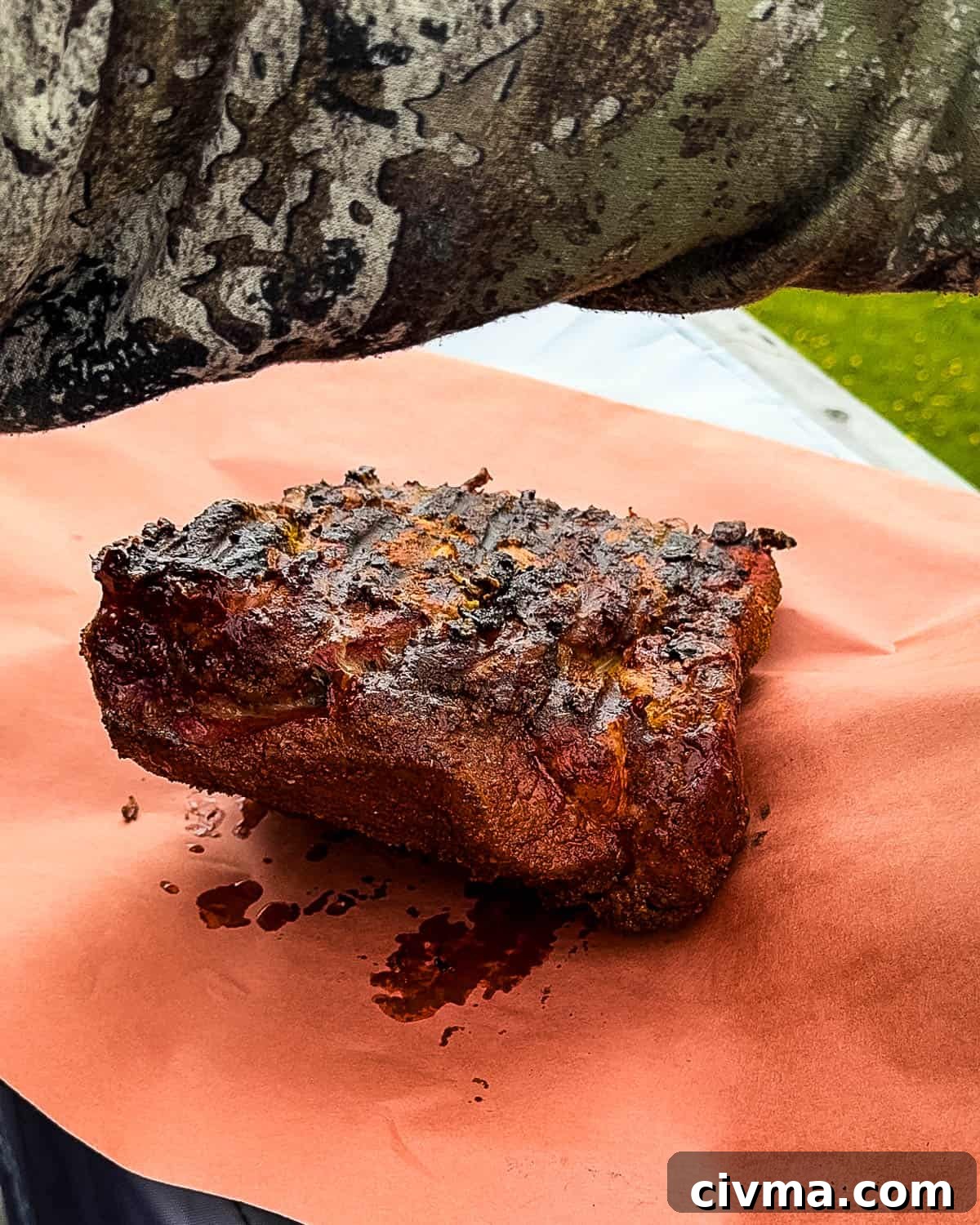
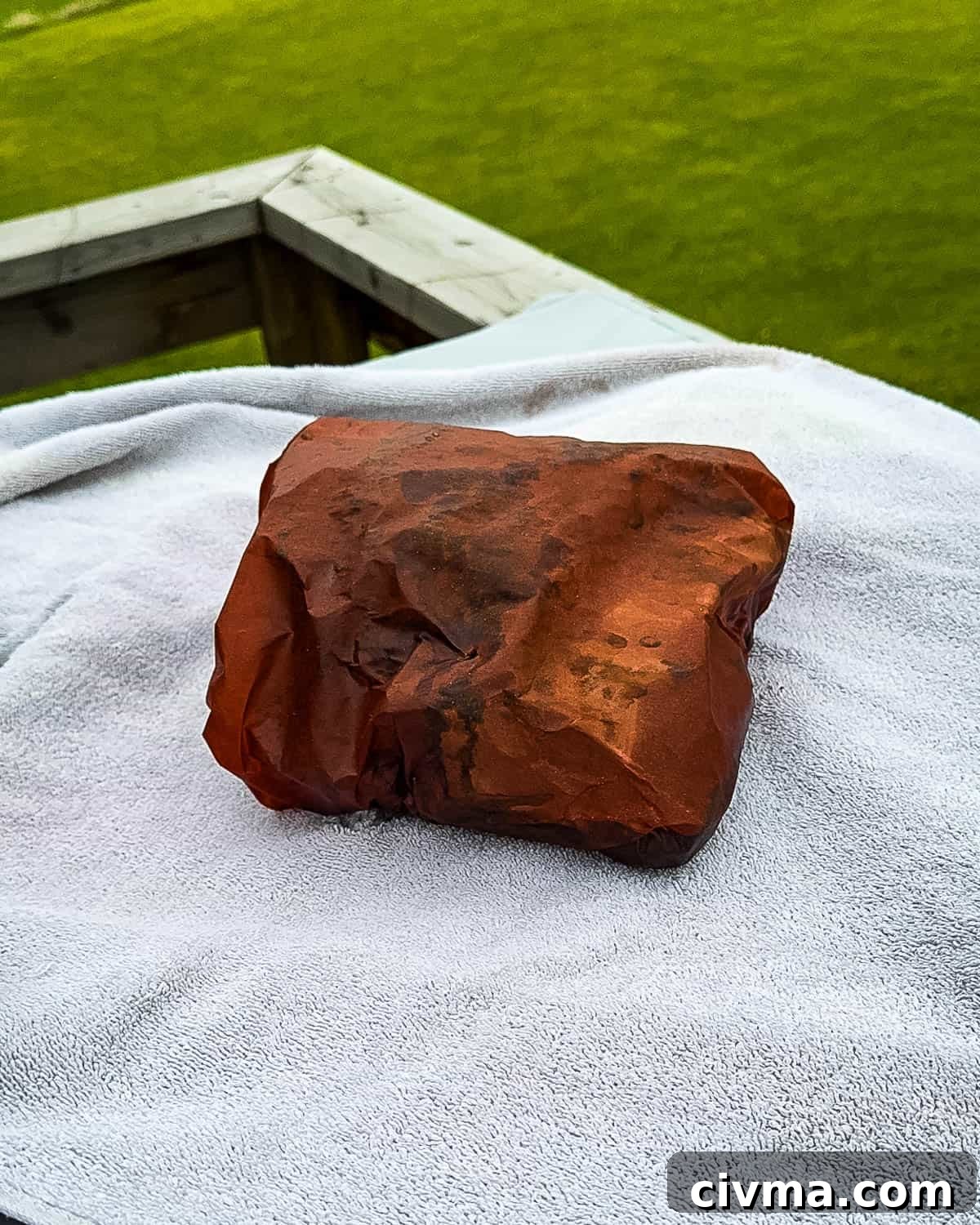
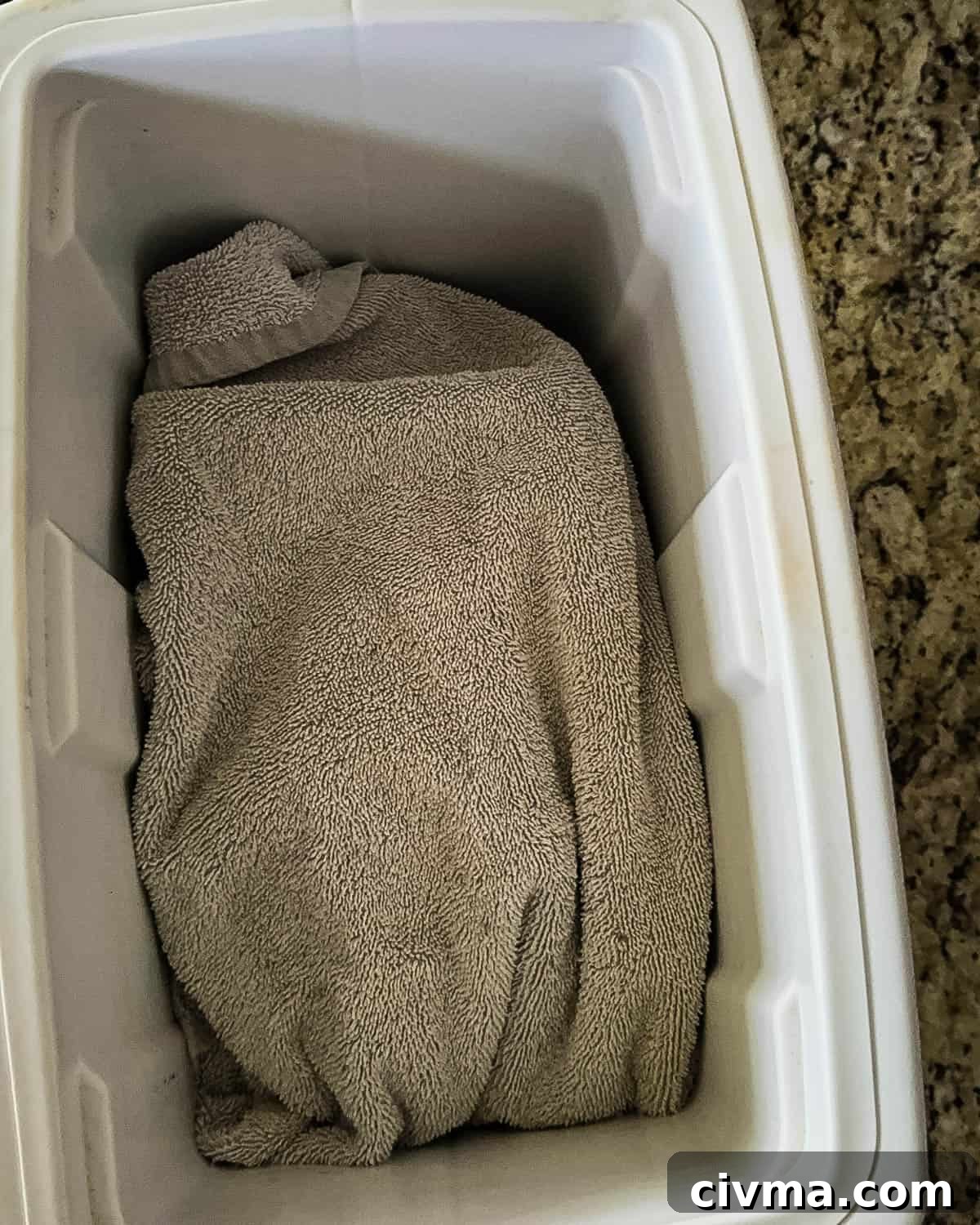
The Rest: Once the pork reaches 203°F, remove it from the smoker. Keep it wrapped, cover it with clean towels, and place it in an empty cooler. Rest it for at least 1 hour. A longer rest of 2 to 3 hours also works well if you need extra time before serving.
Pulling Time
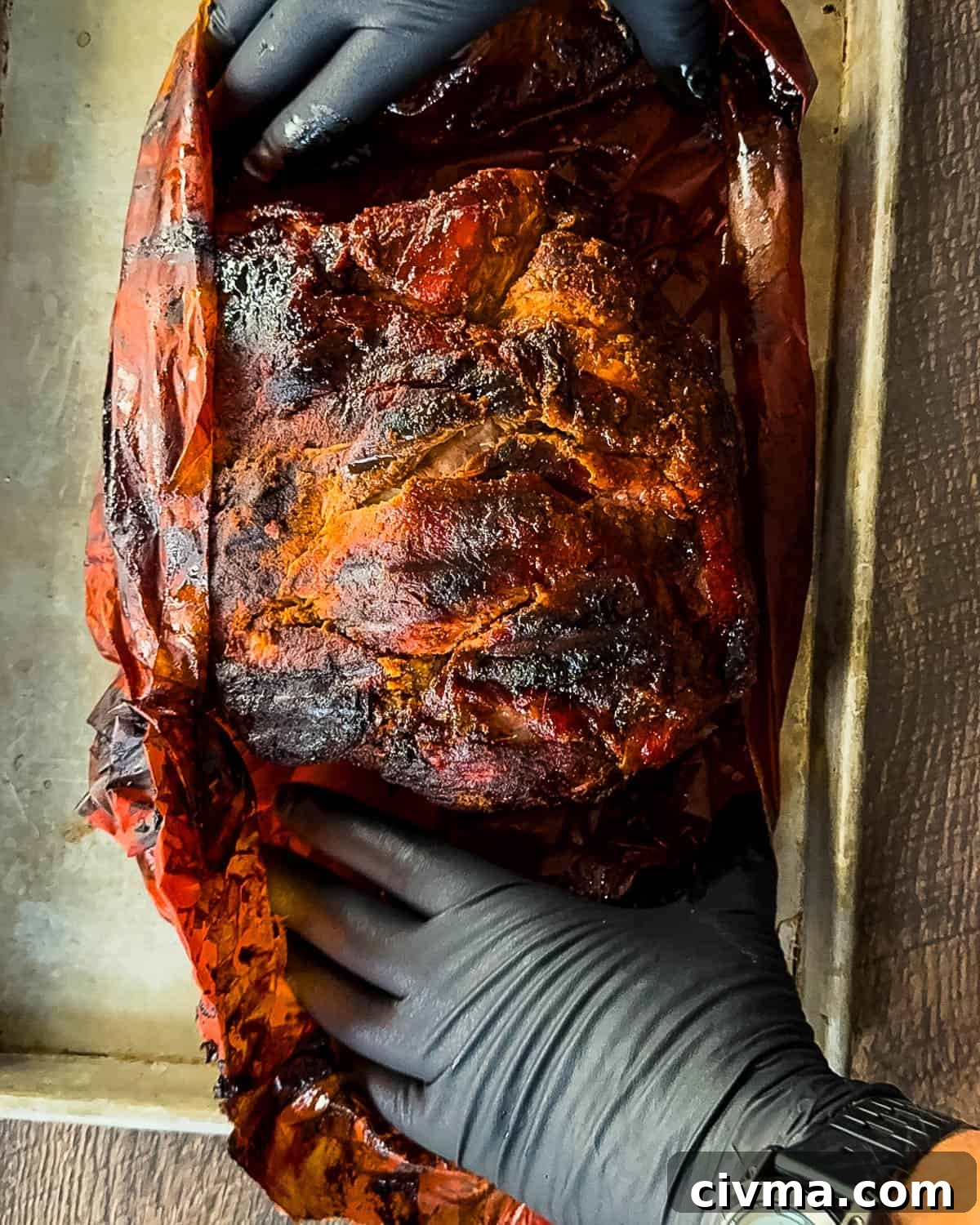
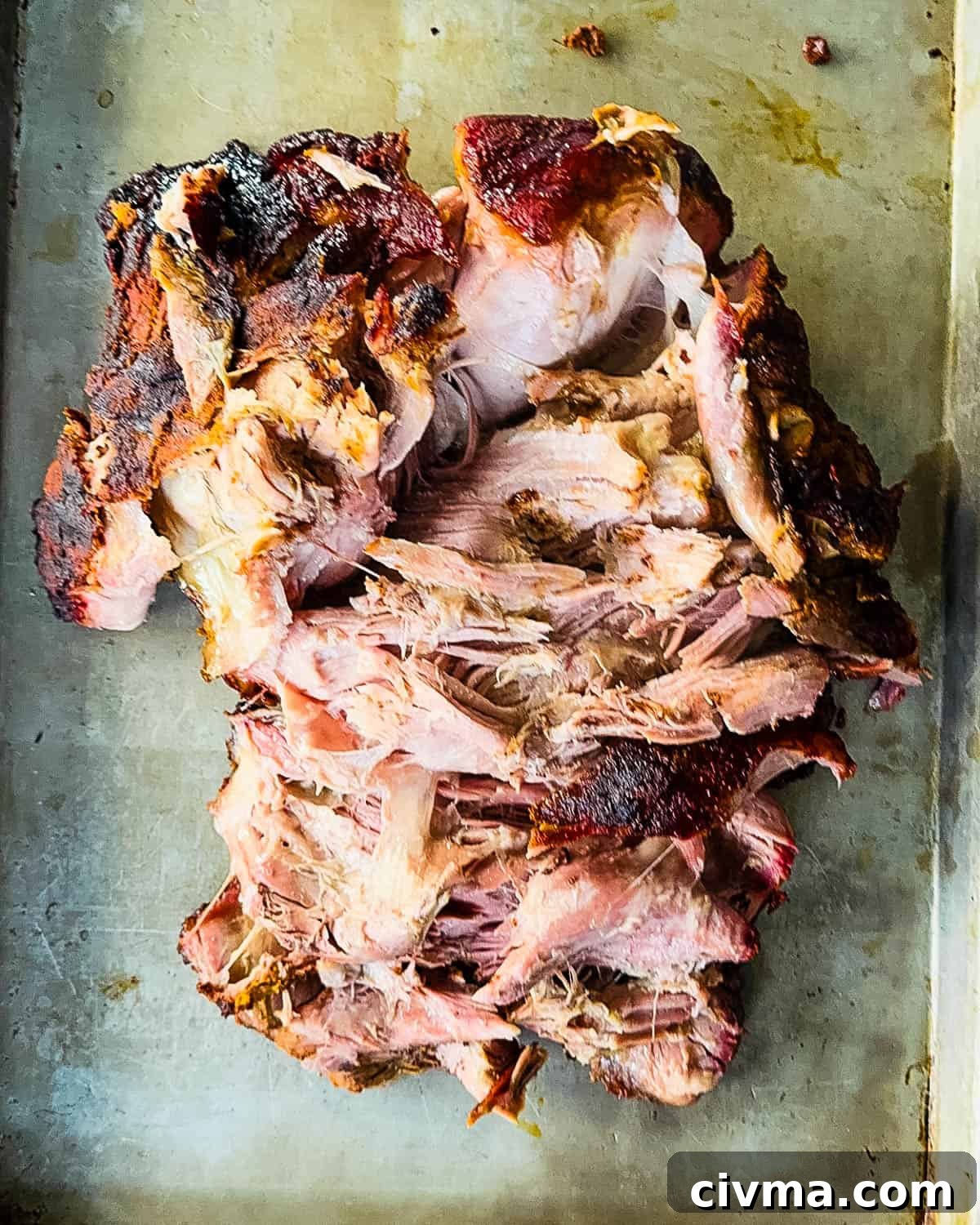
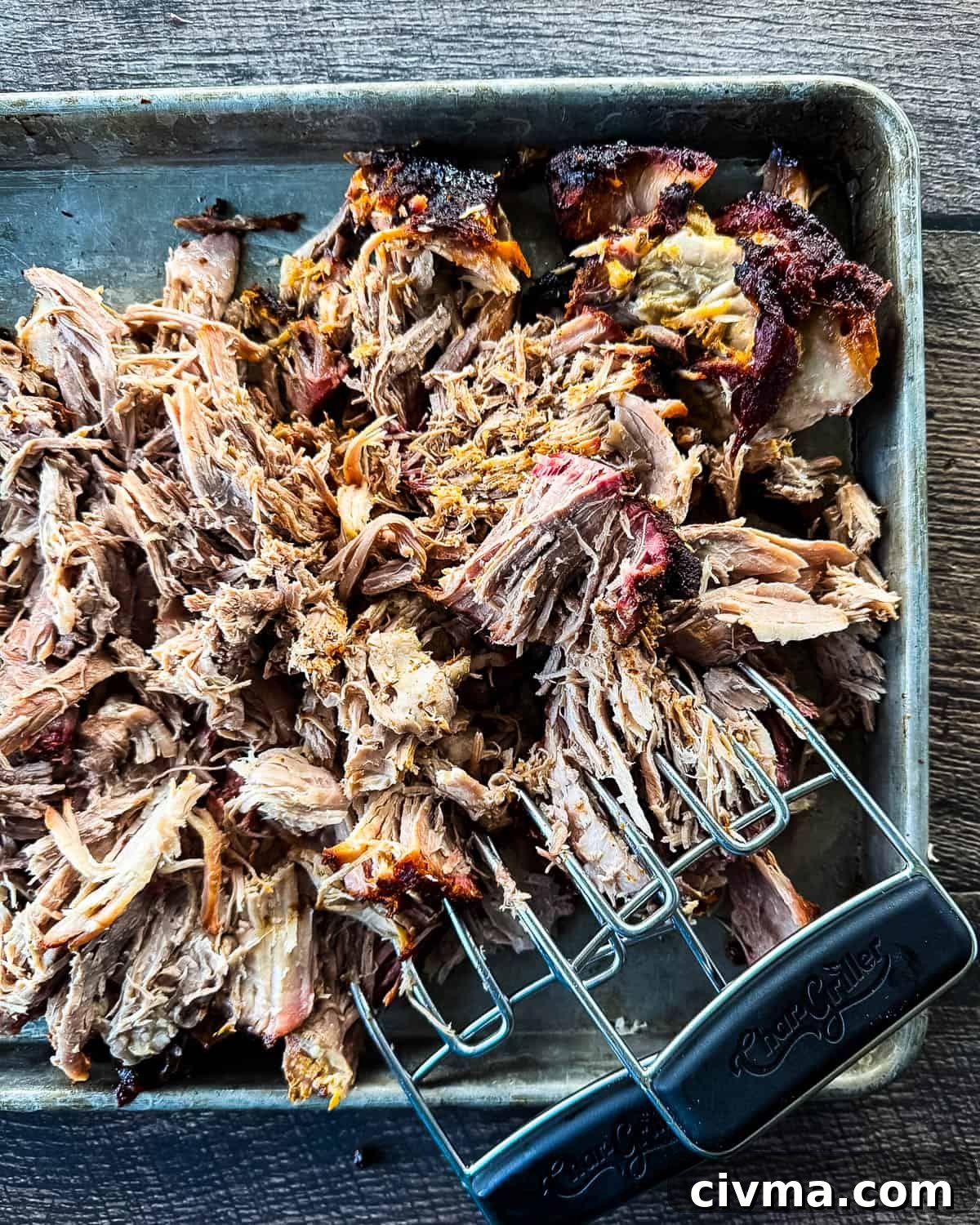
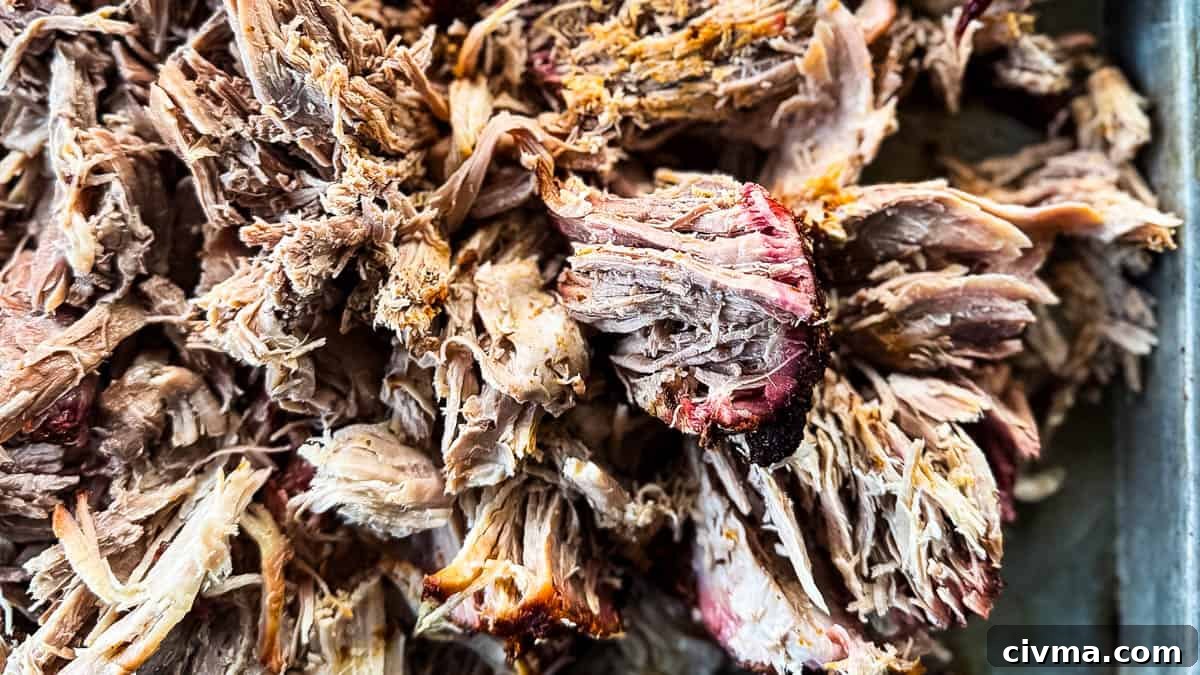
Unwrap the pork carefully and save the juices collected in the paper or foil. Transfer the pork to a large tray or pan and shred it with meat claws, two forks, or gloved hands. The meat should pull apart easily. Pour the reserved juices over the shredded pork and toss lightly before serving.
Top Wood Pellets for Smoking Pork
Apple, cherry, and hickory pellets are excellent choices for smoked pulled pork. Apple and cherry give a slightly sweeter smoke flavor, while hickory is stronger and more traditional. Oak and pecan are also good options. Competition-style pellet blends work well if you want a balanced smoke profile.
Tools I Use for Smoked Pulled Pork
These tools make the process easier and help you get consistent results:
- Wireless meat thermometer: A probe thermometer lets you monitor the internal temperature without repeatedly opening the smoker.
- Butcher paper: Peach butcher paper helps the bark breathe while holding in moisture during the final cooking stage.
- Shredding claws: Meat claws make it easier to pull apart a large pork shoulder quickly.
Tips That Actually Matter
- Use a reliable thermometer. Temperature matters more than time when smoking pork shoulder.
- Plan for extra time. A 6-pound pork shoulder may finish sooner than an 8-pound one, but every roast cooks differently.
- Do not panic over dark bark. A deep, dark crust is normal and packed with flavor.
- Taste before adding sauce. Well-smoked pulled pork may only need its own juices and a light toss before serving.
Variations
- Coffee Rub: Replace 1 tablespoon of brown sugar with finely ground coffee or espresso powder for a deeper, slightly earthy flavor.
- Spicy Version: Add 1 teaspoon of cayenne pepper to the rub for a mild kick.
Leftover Storage Tips
Store leftover pulled pork in airtight containers in the refrigerator for up to 4 days. Add a little reserved cooking juice to each container before chilling so the meat stays moist.
To reheat, place the pork in a covered dish and warm it slowly in a 300°F oven until heated through. Pulled pork can also be frozen in portions for up to 3 months. Thaw it in the refrigerator before reheating.
Serving Suggestions
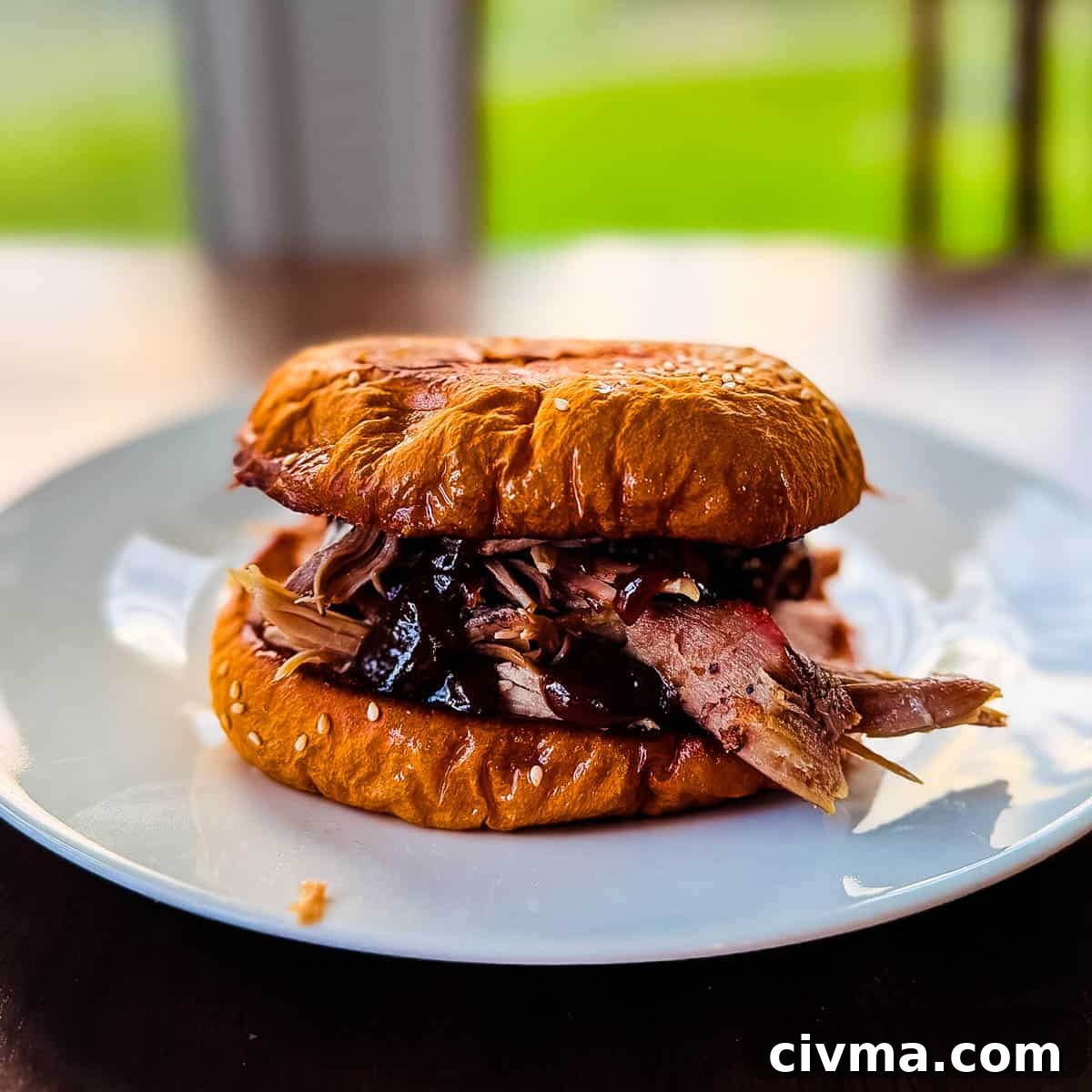
Pit Boss pulled pork is perfect for barbecue sandwiches, sliders, tacos, nachos, rice bowls, baked potatoes, or a classic smoked meat platter. Serve it with coleslaw, baked beans, cornbread, pickles, potato salad, or toasted buns.
Use your favorite barbecue sauce if you like, but taste the pork plain first. The brown sugar rub, smoke, bark, and juices may provide enough flavor on their own.
Leftovers are also excellent in taquitos, loaded fries, quesadillas, breakfast hash, or stuffed into soft rolls for easy lunches.
Common Mistakes to Avoid When Smoking Pork Shoulder
- Pulling it too early: Pork shoulder needs time for the connective tissue to break down. If you stop cooking around 190°F, the meat may be chewy instead of tender.
- Skipping the rest: Resting for at least 1 hour helps keep the pork juicy after shredding.
- Judging doneness by looks: Bark color is not enough. Always check the internal temperature with a thermometer.
- Using poor-quality pellets: Dusty or low-quality pellets can affect the flavor. Use pellets you trust and keep them dry.
Recipe FAQs
Plan for about 10 to 12 hours total, depending on the size and shape of the pork shoulder. Always cook by internal temperature rather than time.
Yes. Foil works well and holds moisture, but it traps more steam, so the bark may be softer than it would be with butcher paper.
More Smoked Pork Recipes
If you enjoy smoked pork recipes, try similar dishes using pork butt, pork loin, pork chops, or pork tenderloin. Each cut has a different texture and cook time, but all work well with smoke, simple seasonings, and a steady pellet grill temperature.
- Smoked pork butt for classic barbecue pulled pork
- Smoked pulled pork loin for a leaner option
- Smoked pork loin roast for a juicy sliced pork dinner
- Apple smoked pork chops for a faster meal
- Pit Boss pork chops for a simple weeknight smoke
- Smoked pork tenderloin for smaller gatherings
Did you love this recipe?
Save this Pit Boss pulled pork recipe for your next barbecue and make it whenever you need tender, smoky shredded pork for sandwiches, tacos, or family-style dinners.
Printable Recipe

Pit Boss Pulled Pork
Equipment
-
Pit Boss pellet grill
-
Meat thermometer
-
Peach butcher paper or heavy-duty aluminum foil (for wrapping)
Ingredients
For the Pork:
- 1 pork shoulder or pork butt (5-8 lbs) (boneless or bone-in)
- ¼ cup yellow mustard
For the Brown Sugar Rub:
- ¼ cup brown sugar
- 2 tablespoons smoked paprika
- 1 tablespoon garlic powder
- 1 tablespoon onion powder
- 1 tablespoon kosher salt
- 1 tablespoon black pepper
Instructions
-
Preheat your Pit Boss pellet grill to 225°F. Load the hopper with apple, cherry, hickory, or your preferred pork-smoking pellets.
-
Trim the fat cap on the pork shoulder to about ¼ inch if needed. Pat the pork dry, then coat all sides evenly with yellow mustard.
-
Mix the brown sugar, smoked paprika, garlic powder, onion powder, kosher salt, and black pepper. Apply the rub generously, pressing it into the pork.
-
Place the pork shoulder directly on the grill grates, fat side up. Insert a thermometer into the thickest part and smoke until the internal temperature reaches 165°F.
-
Remove the pork from the smoker and wrap it tightly in butcher paper or heavy-duty foil. Return it to the grill and continue smoking until it reaches 203°F.
-
Remove the wrapped pork from the smoker, cover it with clean towels, and place it in an empty cooler. Rest for at least 1 hour.
-
Unwrap the pork and save the juices. Shred the meat with claws, forks, or gloved hands, then mix the juices back into the pulled pork.
-
Serve warm on buns, in tacos, or with your favorite barbecue sides. Add sauce only if desired.
Notes
- If you do not have butcher paper, heavy-duty foil will still work. The bark may be slightly softer.
- Apple, cherry, and hickory pellets all work well. Mesquite can be strong and may overpower the sweetness of the rub.
- Store leftover pulled pork in the refrigerator for up to 4 days. Reheat slowly, covered, at 300°F with a little moisture added.
Nutrition
|
Carbohydrates: 8g
|
Protein: 10g
|
Fat: 2g
The provided nutrition information is automatically calculated. Accuracy is not guaranteed.