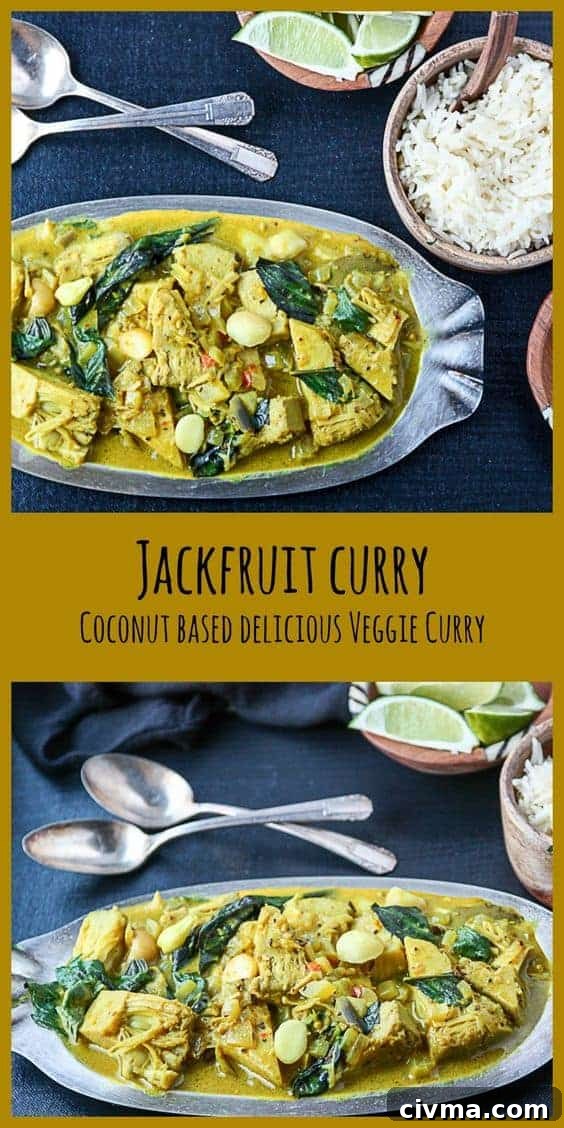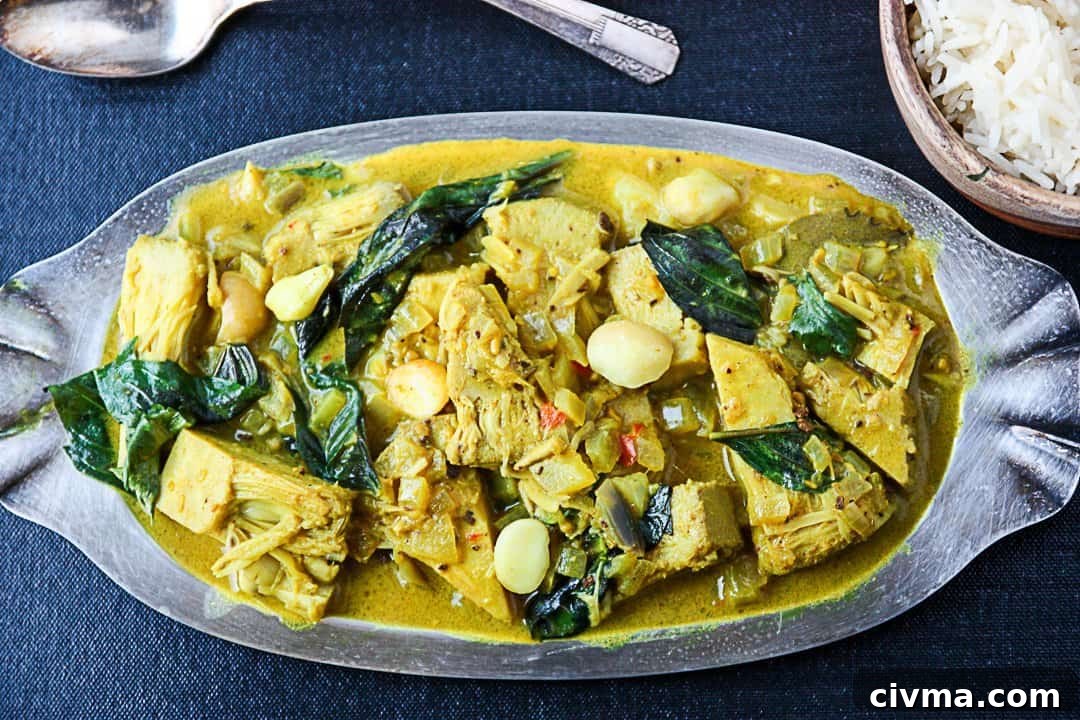
Jackfruit Curry was a delightful discovery for me on a trip to Maui, Hawaii. While visiting, I shopped at a favorite local market known for fresh produce and unique island fruits. The friendly family who run the market happily explained unfamiliar items, offered samples, and gave helpful tips for cooking and serving. Among the treats we tried were ripe jackfruit, cherimoya, breadfruit, eggfruit, strawberry guava, and the ever-present pineapple, papaya, mango, and tiny sweet bananas.
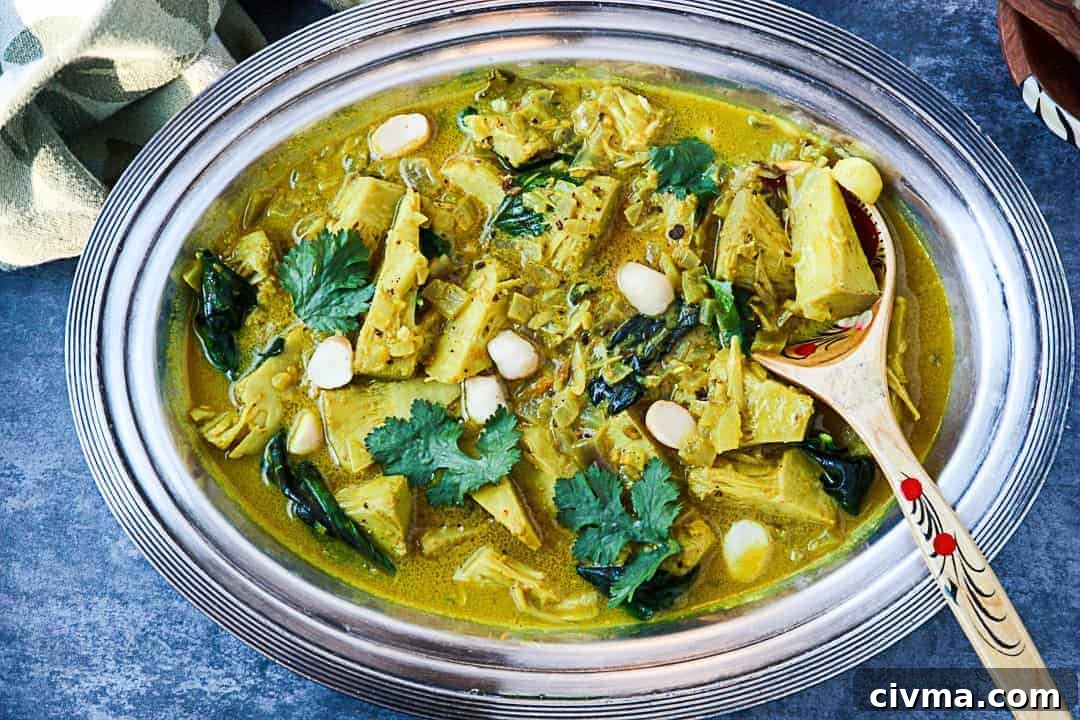
That first taste of ripe jackfruit in Hawaii left an impression. The fruit can grow enormous—up to 100 pounds—and is the largest tree-borne fruit in the world. Ripe jackfruit is sweet, creamy, and often described as having banana and pineapple notes, making it excellent for eating fresh or using in desserts and ice creams. Young or unripe jackfruit, often called green jackfruit, has a neutral flavor and a fibrous texture that works brilliantly in savory dishes like curries.
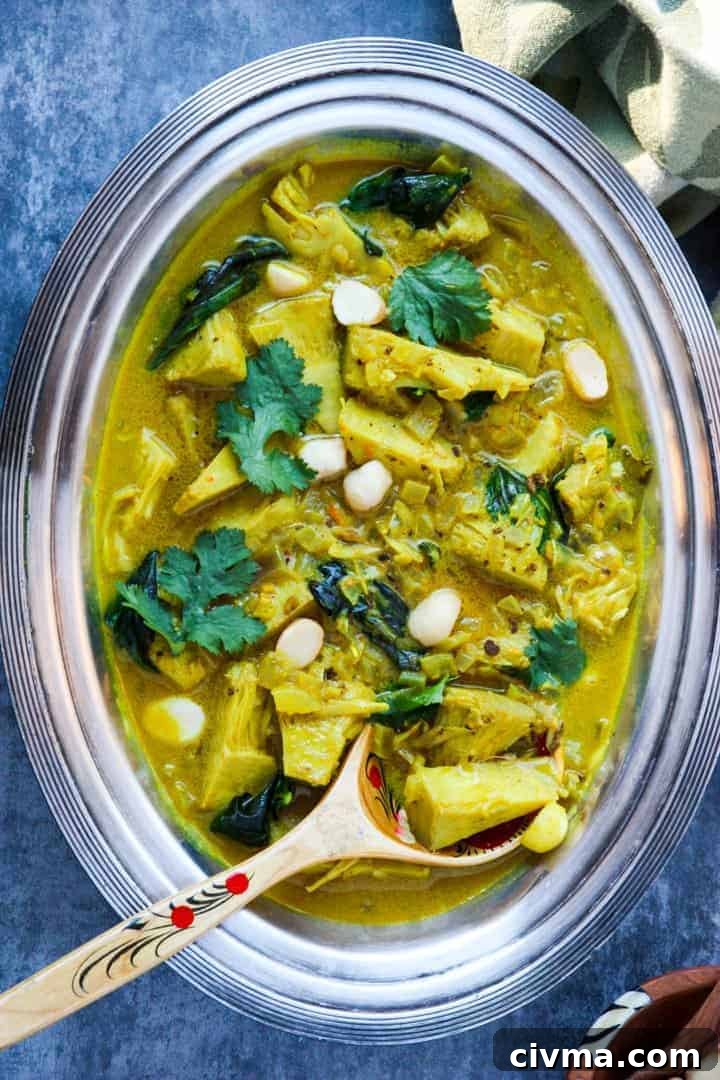
What is Jackfruit?
Jackfruit is native to Southeast Asia and is prized both for its ripe, sweet pods and for the young fruit used as a plant-based meat substitute. The unripe fruit pulls apart into stringy pieces that mimic the texture of shredded meat or poultry, and because it has a very mild taste, it absorbs spices, sauces, and aromatics well. That makes it ideal for curries, stews, tacos, and pulled “meat” recipes for vegetarian and vegan dishes.
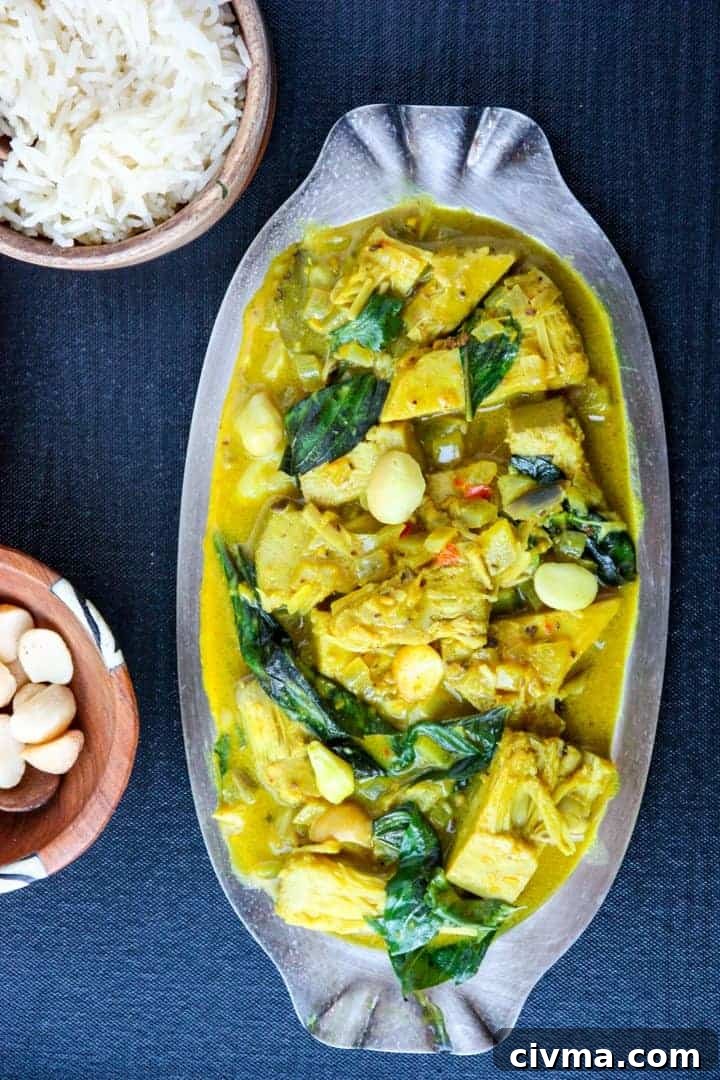
Jackfruit: A Great Meat Substitute in Vegetarian Cooking
I first tried jackfruit curry at an Indonesian restaurant and loved it. The unripe jackfruit soaked up the curry’s coconut, ginger, and spice flavors and provided a satisfying texture. Lately, jackfruit has become trendy in vegetarian cooking for that very reason—its ability to take on the flavors of whatever you cook it with makes it versatile and useful for plant-based meals.

Fresh Jackfruit vs Canned Jackfruit
For convenience, this recipe uses canned young jackfruit in brine, available at many Asian groceries and in the ethnic aisle of larger supermarkets. Preparing a whole fresh jackfruit is possible but can be time-consuming and messy; unless you have many hands and plenty of time, canned jackfruit is a practical, accessible choice that still delivers excellent texture and flavor when cooked.
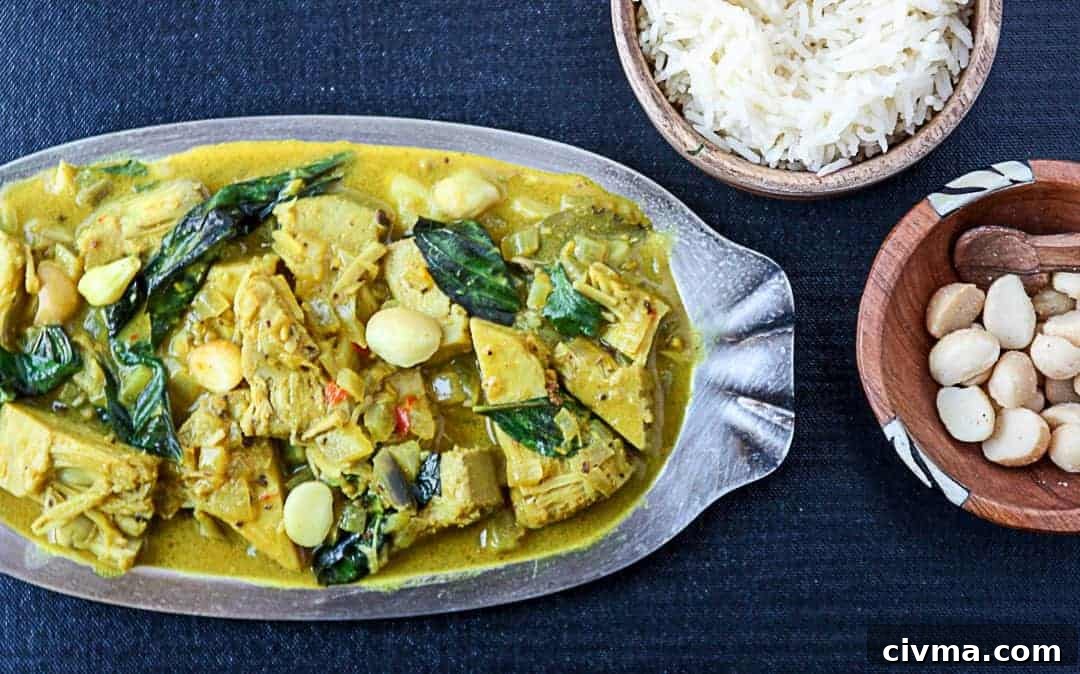
Regional Jackfruit Dishes
Jackfruit curries appear across South and Southeast Asia, including India, Indonesia, Thailand, Malaysia, and Singapore. Each region has its own spices and methods. The recipe below is my personal version without a strict regional label. I used macadamia nuts for a Hawaiian touch, but cashews or peanuts work well as protein-rich alternatives. Omit nuts for allergies or personal preference.
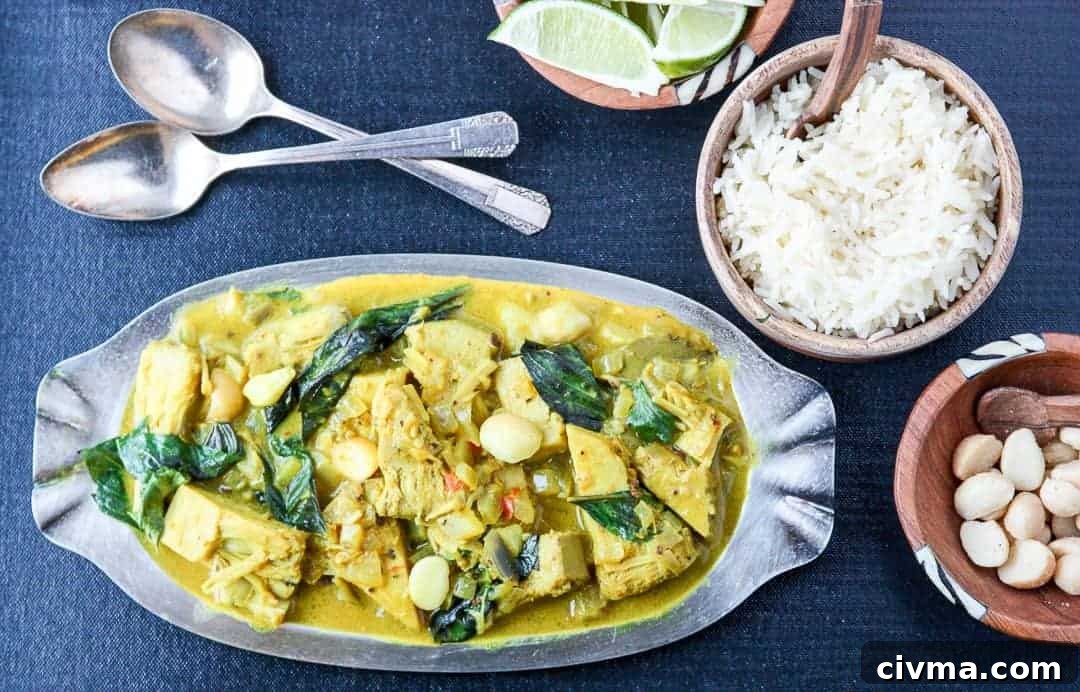
Recipe
Jackfruit Curry
Main Course
South Asian, Vegetarian
5 minutes
35 minutes
40 minutes
4 servings
189kcal
Colleen Milne
Ingredients
- 1 tablespoon coconut oil
- 1 onion, diced
- 2 inches fresh ginger, peeled
- 2 garlic cloves
- 1 bird’s eye (or Thai) chile, seeded (or ½ tsp dried red chili flakes)
- 2 tablespoons dried turmeric
- 1 teaspoon mustard seed
- 1 teaspoon fenugreek seed
- 1 teaspoon fennel seed
- 1 teaspoon dried lemongrass
- 1 can light coconut milk (398 ml)
- ½ cup vegetable stock
- 1 can green jackfruit in brine, drained and rinsed well (550 ml)
- 2 bay leaves
- ¼ teaspoon fish sauce (omit for a vegan dish)
- 1 cup Thai basil leaves (or regular basil)
- ¼ cup chopped cilantro or flat-leaf parsley
- Juice of one lime
- ½ cup roasted macadamia nuts (or cashews/peanuts)
Instructions
- In a grinder or food processor, combine ginger, garlic, chile, turmeric, mustard seed, fenugreek, fennel, dried lemongrass, and salt. Process until a smooth paste forms.
- In a large saucepan, heat the coconut oil over medium-high heat. Add the diced onion and cook until softened, about 3 minutes.
- Add the spice paste and cook, stirring, until fragrant, about 2 minutes.
- Add the coconut milk, vegetable stock, drained jackfruit, bay leaves, and fish sauce (if using). Bring to a boil.
- Reduce heat and simmer, stirring occasionally, about 30 minutes, until the jackfruit is tender and the curry has thickened to your liking.
- Stir in the lime juice, basil leaves, and chopped cilantro or parsley. Taste and add more salt if necessary.
- Remove from heat and stir in the roasted nuts. Serve hot with basmati or jasmine rice.
Notes
*Thai chilies are quite hot. Use caution when handling them—wear gloves if sensitive. One seeded chili gives a subtle heat; adjust to taste.
*If Thai basil is unavailable, regular basil works well in this recipe.
*Substitute cashews or peanuts for macadamia nuts, or omit nuts for allergies.
*While simmering, the curry will reduce and thicken. If you prefer a saucier curry, add more vegetable stock during cooking.
*Fish sauce varies in saltiness. Start with ¼ teaspoon, taste, and add more if needed, or omit for a vegan dish.
Nutrition
Serving: 1 serving | Calories: 189 kcal | Carbohydrates: 10 g | Protein: 2 g | Fat: 16 g | Saturated Fat: 5 g | Sodium: 532 mg | Potassium: 219 mg | Fiber: 3 g | Sugar: 2 g | Vitamin A: 445 IU | Vitamin C: 6.5 mg | Calcium: 46 mg | Iron: 2.7 mg